



By: Julius Konton
A long-simmering national debate over religious equality, constitutional silence, and political symbolism has resurfaced sharply in Liberia, as Muslim leaders once again press the government to recognize an exclusive Muslim public holiday, a demand that exposes deeper questions about state neutrality, religious dominance, and post-war inclusivity in Africa’s oldest republic.
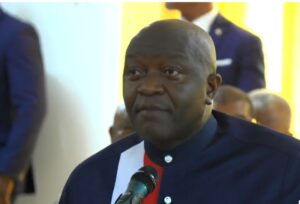
The renewed call came during the official launch of President Joseph Nyuma Boakai’s Ramadan food distribution exercise, where Liberia’s Chief Imam, Ali Krayee, publicly reminded the presidency that material gestures cannot substitute for institutional recognition.
“We have said it over and over again.
At some point, we told government to take their bags of rice, we wanted the holiday,” Imam Krayee declared, reigniting a debate that successive administrations have quietly avoided.
Rice, Respect, and the Politics of Symbolism
While the Muslim community accepted the government’s Ramadan food support, Imam Krayee made it clear that this acceptance does not signal retreat from their central demand.
Instead, he framed the gesture as a temporary concession driven by goodwill toward the current administration, particularly for reforms that have eased longstanding frustrations around Liberia’s participation in the Hajj pilgrimage.
For years, Liberian Muslims faced bureaucratic bottlenecks, visa embarrassments, and logistical failures during Hajj, an issue that carried both spiritual and diplomatic consequences.
According to Muslim leaders, recent cooperation with government agencies has reduced these challenges significantly.
“The embarrassment Liberian Muslims used to face during Hajj is no longer happening,” Krayee said, crediting improved coordination under the current government.
The Numbers Behind the Margins
Muslims constitute an estimated 12–20 percent of Liberia’s population, depending on data source roughly 600,000 to 1 million people in a nation of just over 5.3 million.
Yet Liberia’s public holiday calendar overwhelmingly reflects its Christian-majority identity, with Christmas and Easter fully enshrined, while Muslim observances such as Eid al-Fitr and Eid al-Adha remain unofficial.
Critics argue this imbalance reflects historical exclusion rooted in Americo-Liberian dominance, where Christianity was deeply woven into state identity, governance, and lawmaking from the 19th century onward.
Despite Liberia branding itself as a secular republic, religious symmetry has never fully materialized.
A Strategic Pause, Not a Retreat
Imam Krayee acknowledged that the Muslim community has deliberately adopted a measured political posture, choosing dialogue over confrontation at least for now.
Islamic schools, he noted, are currently operating successfully in two counties with government cooperation, evidence that progress is possible when engagement replaces protest.
“When government sincerely gives some of what we ask for, we pause to watch what happens next,” he said, before stressing: “But the holiday question is key.”
The statement underscores a calculated strategy: patience paired with persistence.
Government’s Response: Unity Without Commitment
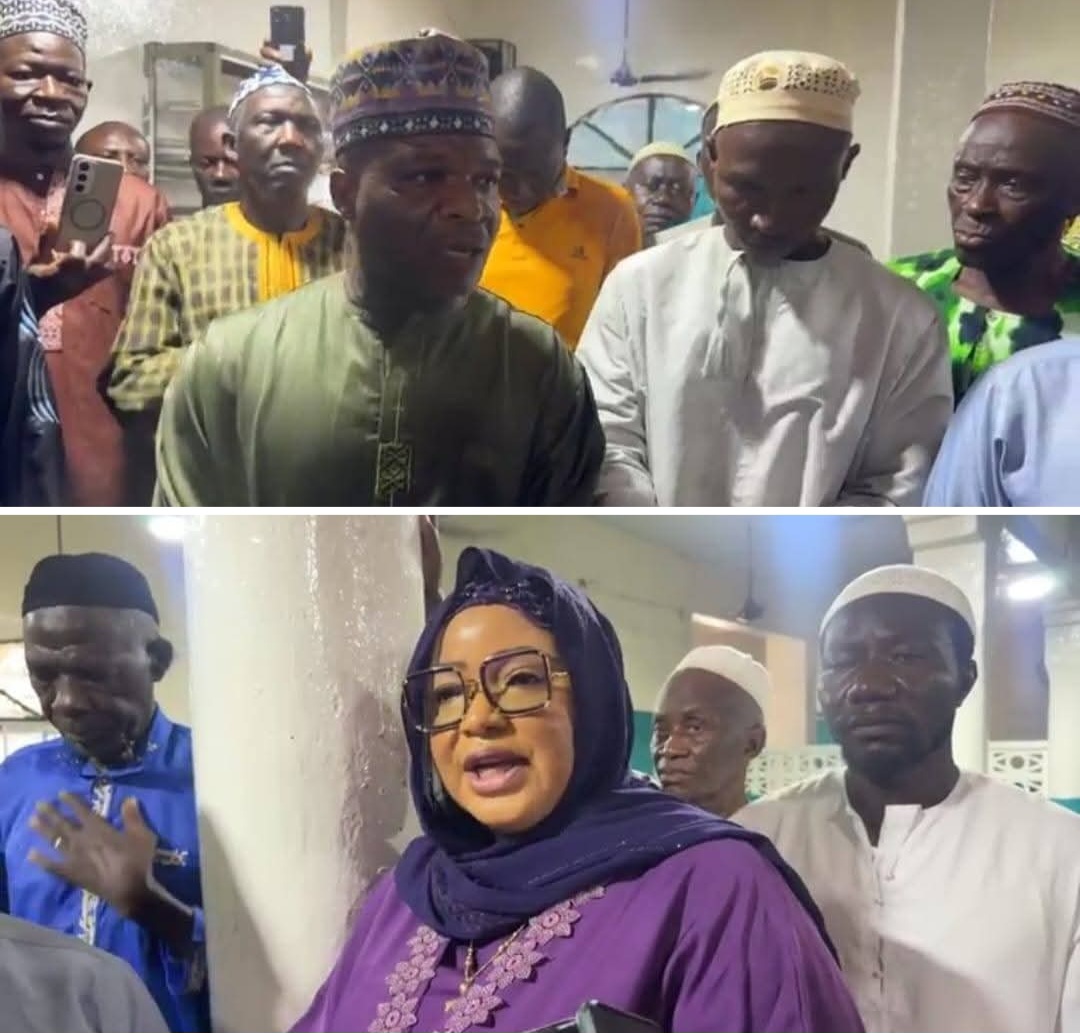
Delivering official remarks at the launch, Liberia’s Minister of State without Portfolio, Hadja Mamaka Bility, framed the food distribution as an expression of religious harmony rather than political concession.
She announced that President Boakai had provided 3,000 bags of 50kg rice, along with undisclosed cash support for soup ingredients, to be distributed nationwide across Muslim communities.
“This is not a donation,” Bility said. “It is a symbol of solidarity, respect, and shared nationhood.”
Yet notably absent from her remarks was any commitment to address the holiday demand, a silence that analysts say speaks louder than words.
A Familiar Pattern Across Administrations
Liberia’s Muslim holiday debate is not new.
Similar calls surfaced under previous governments, often gaining traction during election cycles or religious seasons only to fade without legislative action.
Political observers argue that recognizing a Muslim public holiday would require confronting conservative religious blocs, many of whom fear it could set precedents for broader constitutional reforms.
Others counter that refusal to act risks institutionalizing second-class citizenship for religious minorities.
Beyond Faith: A Test of Democratic Maturity
At its core, the controversy raises uncomfortable questions:
Can Liberia credibly claim religious neutrality while privileging one faith in its national calendar?
Does food aid reinforce unity or deflect from structural inequality?
Is the Muslim holiday debate about faith, or about power, visibility, and belonging?
As the Ramadan season closes, the government’s rice will be consumed, the prayers will end but the question remains unresolved.
And for Liberia’s Muslim community, patience, it seems, is not infinite.


