





By: Julius Konton
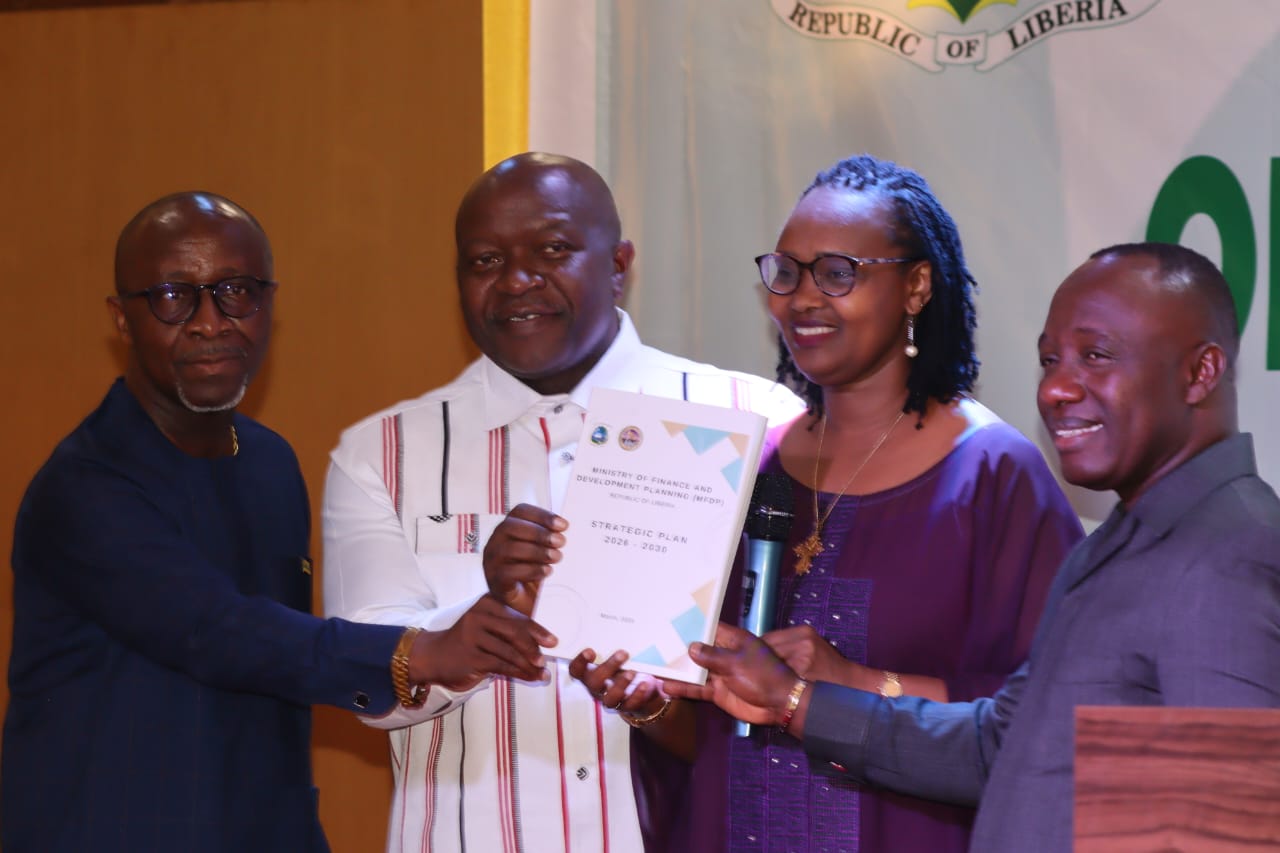
The Ministry of Finance and Development Planning (MFDP) has officially launched a far-reaching Five-Year Strategic Plan (2026–2030), outlining sweeping reforms aimed at strengthening public financial management, improving debt sustainability, expanding domestic revenue mobilization, and accelerating Liberia’s long-delayed economic transformation.
The plan was unveiled at a high-level ceremony in Monrovia, with Liberia’s development partners, senior government officials, diplomats, and technocrats in attendance.
The launch comes at a critical juncture for Liberia, a country still grappling with post-conflict recovery challenges, fiscal fragility, and structural economic vulnerabilities.
A Symbol of Partnership and Credibility
Speaking at the event, Finance and Development Planning Minister Augustine Kpehe Ngafuan paid tribute to the United Nations Resident Coordinator, who served as the chief launcher of the document, describing her presence as “both an honor and a powerful testament to the enduring partnership between Liberia, the United Nations, and the broader international development community.”
Minister Ngafuan also commended deputy ministers, technocrats, and Liberian consultants for what he described as a rigorous, evidence-based drafting process.
“Politicians may win elections,” Ngafuan said, “but the people only win after elections when leaders deliver on their aspirations.”
A Ministry at the Heart of National Performance
The Finance Minister underscored the central role of the MFDP in Liberia’s governance architecture, arguing that the performance of the ministry directly determines the effectiveness or paralysis of the entire government.
“If the Ministry of Finance performs well, the government performs well. If we fail, the consequences of action or inaction are enormous,” he warned.
Liberia’s fiscal challenges are well documented.
According to recent public finance data, the country’s domestic revenue-to-GDP ratio has hovered between 13 and 15 percent, well below the 20 percent benchmark recommended for sustainable development in low-income economies.
Public debt levels, though moderated under international debt relief initiatives, continue to pose long-term risks if not prudently managed.
People-Centered Governance
In a striking metaphor, Ngafuan described public officials as “tenants” of the ministry, emphasizing that the true owners are the Liberian people.
“This plan is not for me, nor for officials of the ministry. It is for vendors, contractors, civil servants, line ministries, and ultimately every Liberian citizen.”
The strategy, he said, is designed to ensure timely payments to government suppliers, predictable budget execution for ministries and agencies, and improved confidence among development partners.
Key Reform Pillars (2026–2030)
Over the next five years, the MFDP will pursue reforms described as both ambitious and pragmatic, including:
Modernization of Financial Management Systems, including expanded coverage of the Integrated Financial Management Information System (IFMIS);
Stronger Fiscal Reporting and Accountability, with improved audit outcomes and reduced processing times;
Enhanced Debt Sustainability, guided by strategic debt management frameworks;
Expansion of Domestic Resource Mobilization, to reduce aid dependence;
Nationwide Digital Transformation, aimed at reducing inefficiencies and leakages;
Professionalization of the Public Financial Management Workforce.
“These are not aspirations in a vacuum,” Ngafuan stressed. “They are targets grounded in fiscal realities.”
Institutional Reforms and Infrastructure
Beyond core fiscal reforms, the plan also addresses long-standing institutional weaknesses.
The ministry intends to conduct feasibility studies toward the construction of a new permanent MFDP headquarters, a move seen as symbolic of institutional renewal.
Additionally, the government has begun reviewing the MFDP’s enabling legislation to introduce structural reforms aimed at improving efficiency.
Particular emphasis will be placed on strengthening the office of the Comptroller and Accountant General, including granting greater operational independence to enhance integrity and compliance with international standards.
Transparency, Tracking, and Accountability
The Finance Minister pledged that implementation would be rigorously monitored, with progress reported publicly.
“Accountability will be non-negotiable,” he said, adding that measurable targets have been clearly defined across all strategic pillars.
Alignment with National Development Goals
The MFDP strategy is aligned with Liberia’s broader national ambitions to scale up investments in roads, energy, healthcare, education, and social services, sectors that continue to absorb the bulk of public expenditure.
“A ministry that enhances revenue growth is a ministry that plans for Liberia’s future,” Ngafuan noted.
A Call to Government and Donors
Addressing cabinet colleagues and public institutions, Ngafuan described the plan as an invitation to deepen coordination, strengthen budget discipline, and maximize value for money.
To development partners and the diplomatic community, he framed the document as a signal of renewed credibility.
“We are strengthening country systems, enhancing fiduciary safeguards, and committing to transparency and predictability.
We seek not only your support but your confidence.”
From Strategy to Results
In closing, Ngafuan issued a sobering reminder that well-written plans alone do not deliver development.
“Good plans and good intentions are not enough. We must work the plan, sweat the plan, and walk the talk.”
He pledged his full personal commitment alongside his deputies and partners to ensure disciplined execution.
“Tomorrow’s Liberia depends on today’s reforms and actions.”
As Liberia embarks on this new reform cycle, the success of the 2026–2030 Strategic Plan will likely be judged not by its vision, but by its ability to translate fiscal discipline, transparency, and institutional reform into tangible improvements in the lives of ordinary Liberians.


