



By: Julius Konton
The Association of Female Lawyers of Liberia (AFELL) has issued a strong appeal for the immediate passage of the National Anti-Corruption Bill, warning that corruption continues to undermine justice, weaken public institutions, and disproportionately affect women, children, and other vulnerable populations across the country.
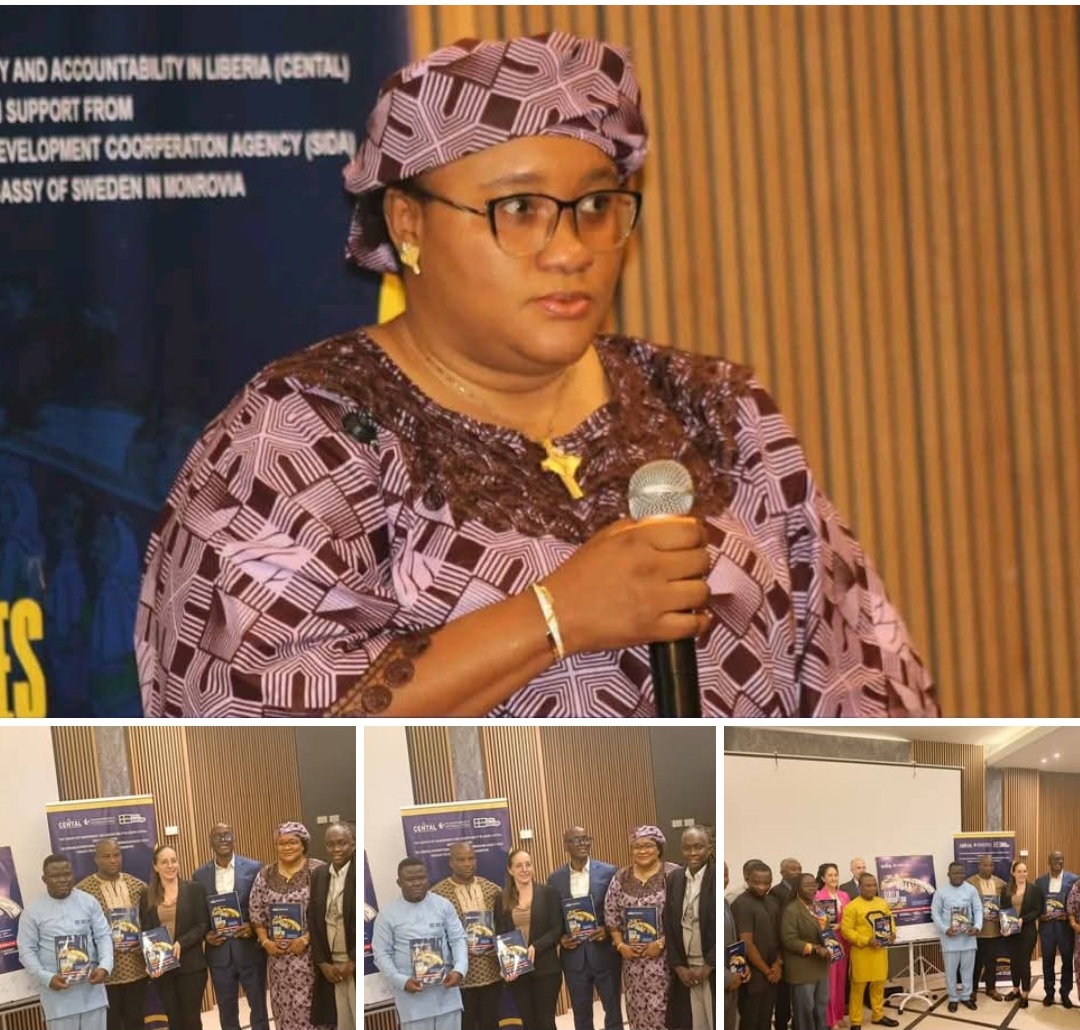
The call was made by AFELL Vice President Cllr. Bowoulo Taylor Kelley during the official launch of the Center for Transparency and Accountability in Liberia (CENTAL) State of Corruption Report (SCORE) 2025 in Monrovia, where government officials, civil society organizations, members of the diplomatic community, development partners, and governance experts gathered to assess Liberia’s anti-corruption landscape.
Addressing participants after the presentation of the report, Cllr. Kelley described SCORE 2025 as “a mirror held up to our national conscience,” emphasizing that the report should serve not merely as an assessment of governance but as a catalyst for meaningful institutional reforms.
She commended CENTAL for sustaining national conversations on transparency and accountability, noting that independent governance assessments remain essential to strengthening democratic institutions and promoting responsible public administration.
“Corruption is not an abstract issue,” Kelley said. “It affects real lives, weakens public services, erodes citizens’ trust in government institutions, restricts access to justice, and places the greatest burden on those who are already vulnerable.”
According to international governance assessments, corruption continues to pose one of the most significant barriers to sustainable development across many developing nations.
The United Nations estimates that approximately US$1 trillion is paid in bribes annually worldwide, while more than US$2.6 trillion about 5 percent of global GDP is lost each year through corrupt practices. Such losses significantly reduce governments’ ability to invest in education, healthcare, infrastructure, and social protection.
Liberia has made notable progress in strengthening its anti-corruption architecture over the past two decades following the end of its civil conflict.
Institutions such as the Liberia Anti-Corruption Commission (LACC), the General Auditing Commission (GAC), the Financial Intelligence Agency (FIA), and the Public Procurement and Concessions Commission (PPCC) were established to improve transparency and accountability in public administration.
Despite these reforms, governance experts have consistently noted that challenges remain in the areas of enforcement, public procurement oversight, prosecution of corruption cases, asset recovery, and implementation of audit recommendations.
Speaking from the perspective of the legal profession, Kelley stressed that corruption and access to justice are inseparable issues.
She explained that when justice systems are weakened by corruption, the consequences extend beyond financial losses, affecting the delivery of legal services, protection of victims, and public confidence in the rule of law.
“For women, children, survivors of gender-based violence, indigent persons, and marginalized communities, corruption can determine whether justice is delivered fairly and promptly or whether it remains beyond reach,” she noted.
AFELL welcomed the findings and recommendations contained in SCORE 2025, describing the report as an important tool for evidence-based policymaking, civic engagement, institutional reform, and national advocacy.
However, Kelley cautioned that the report’s true significance would not be measured by its publication alone but by the willingness of public institutions and policymakers to implement its recommendations.
“The value of this report will be measured by what Liberia does after today,” she said. “Its recommendations must move beyond discussion and be translated into practical, measurable, and sustained reforms.”
AFELL called on government ministries and agencies, integrity institutions, civil society organizations, the media, professional associations, the private sector, academic institutions, and Liberia’s international development partners to deepen collaboration in combating corruption.
Among the priorities highlighted were stronger legal protections for whistleblowers and witnesses, improved transparency in public procurement, enhanced oversight of public institutions, stronger enforcement mechanisms, and safer channels for citizens to report corruption without fear of intimidation or retaliation.
The association reaffirmed its commitment to working alongside national stakeholders to promote integrity, accountability, and equal access to justice, particularly for women and disadvantaged communities.
Kelley also urged lawmakers to expedite passage of the proposed National Anti-Corruption Bill, describing the legislation as a critical component of Liberia’s broader governance reform agenda.
“The time for action is now,” she declared.
“Liberia cannot afford further delay in strengthening the laws, systems, and institutions necessary to prevent corruption, protect public resources, and restore citizens’ confidence in governance.”
She concluded by calling for a collective national commitment to transform SCORE 2025 from a policy document into a practical roadmap for reform.
“Let us move from discussion to implementation, from concern to coordinated action, and from isolated efforts to sustained national partnership,” Kelley said.
“The fight against corruption requires courage, consistency, and cooperation, and AFELL stands ready to work with all stakeholders in advancing a more transparent, accountable, and just Liberia.”
The launch of SCORE 2025 comes at a time when Liberia continues implementing governance reforms aimed at strengthening public financial management, improving accountability, and enhancing investor confidence as part of broader efforts to accelerate economic growth and achieve the country’s long-term development objectives.


