



By : Julius Konton
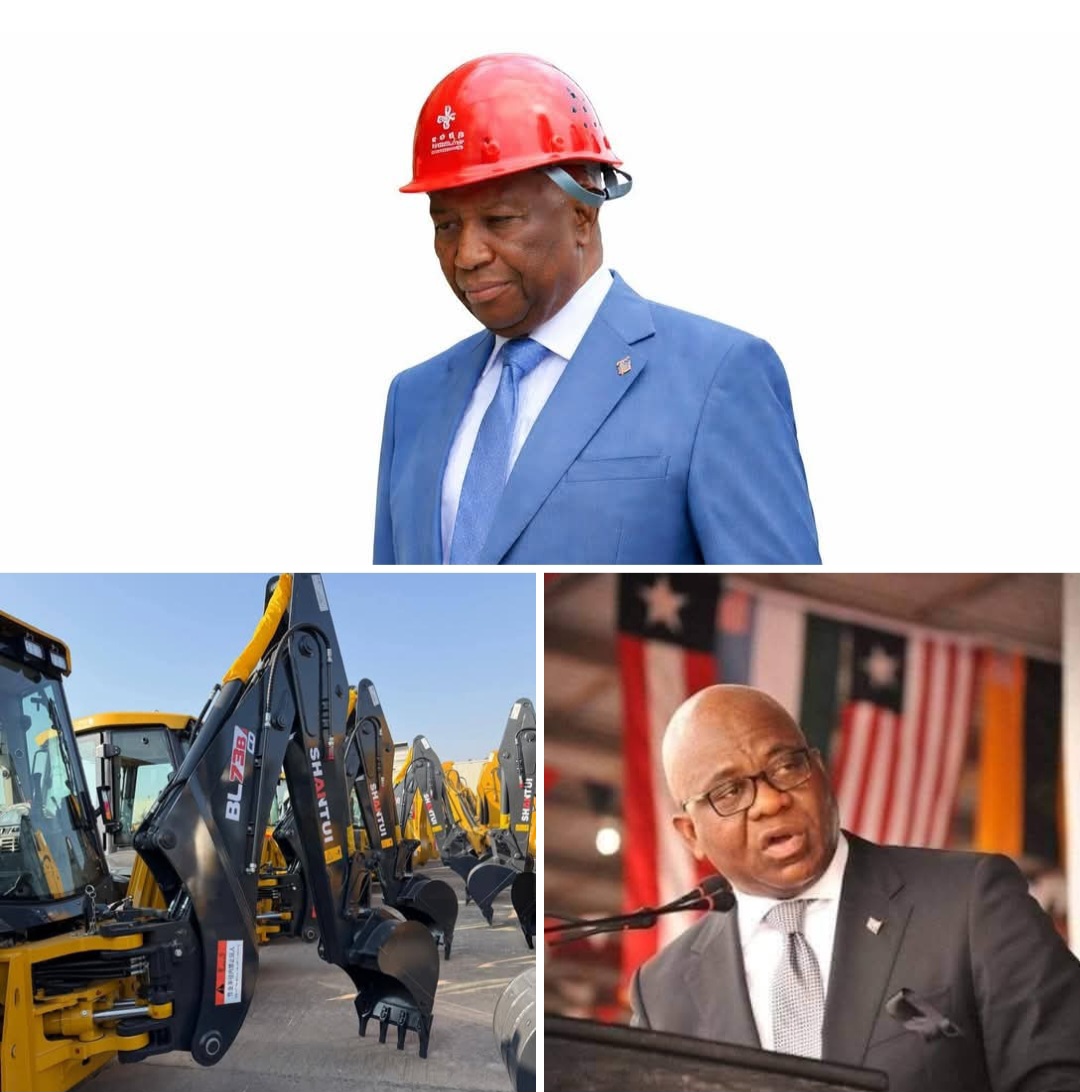
President Joseph Nyuma Boakai, Sr. has taken a decisive step toward reshaping Liberia’s long-troubled infrastructure sector with the establishment of the Yellow Machines Board of Authority (YMBOA), a new high-level body designed to oversee the deployment, management, and maintenance of 285 heavy-duty construction machines procured by the government from China.
In an Executive Mansion announcement issued , the President named former Defense Minister Brownie J. Samukai as Executive Chairperson of the Coordinating Committee, signaling the administration’s intent to place the ambitious initiative under strong political and administrative control.
The move comes just weeks ahead of the expected arrival of the first shipment of the yellow machines, which officials say are already en route to Liberia and are scheduled to dock in Monrovia by late March 2026.
A Major Infrastructure Push in a Country Starved of Roads
Liberia’s infrastructure deficit remains one of the most severe in West Africa.
According to government and development partner estimates, less than 10 percent of Liberia’s road network is paved, while many rural communities remain inaccessible for months during the rainy season.
Poor road connectivity has long constrained agriculture, trade, health access, and national cohesion.
The acquisition of 285 machines including excavators, bulldozers, graders, loaders, compactors, and support equipment represents one of the largest single investments in public works equipment since the end of Liberia’s civil war in 2003.
Previous administrations have faced criticism for procuring equipment that later fell into disrepair due to weak maintenance systems, poor accountability, and politicized deployment.
The Boakai administration says the creation of the YMBOA is meant to break that cycle.
Composition of the Yellow Machines Board of Authority
The newly constituted YMBOA brings together key arms of government responsible for policy, finance, operations, and public communication:
Ministry of State for Presidential Affairs – Chair
Ministry of Public Works – Co-Chair
Ministry of Finance and Development Planning – Member
Ministry of National Defense – Member
Ministry of Agriculture – Member
Ministry of Local Government – Member
Ministry of Information- Member
General Services Agency (GSA) – Member
The Chairperson of the Special Presidential Project Coordinating Committee (SPPCC) will serve as Secretary to the Board, ensuring direct operational reporting and oversight.
Mandate: Accountability, Maintenance, and Value for Money
According to the Executive directive, the YMBOA will function as the central authority responsible for:
Receipt and inventory control of all machines
Deployment and utilization planning
Cost efficiency and fuel management
Storage, servicing, and long-term maintenance
Accountability and reporting across all counties
Crucially, the Board is tasked with developing a rigorous policy and management framework, an area where previous public works initiatives have often faltered.
Special Presidential Project Committee
Takes Operational Control
To translate policy into action, President Boakai also constituted the Special Presidential Project Coordinating Committee (SPPCC), placing it under the strategic supervision of the YMBOA.
The Committee is led by:
Brownie J. Samukai – Executive Chairperson / National Coordinator
Roger S. W. Y. Domah – Deputy Coordinator for Administration
St. Jerome Larbelee – Deputy Coordinator for Operations
A professional support staff is expected to be assembled to manage logistics, data tracking, and field coordination nationwide.
Maintenance-First Strategy Marks a Shift from the Past
In a notable departure from previous approaches, the SPPCC has been placed under a strict “Maintenance-First” regime, making equipment preservation a central pillar of the project.
Under its mandate, the Committee must:
Prepare and submit a National Deployment Plan to the YMBOA
Coordinate with all statutory agencies represented on the Board
Submit monthly performance and status reports
Ensure machines are not deployed without maintenance capacity in place
Government officials argue this model is designed to maximize useful life, productivity, and value for money, especially in a country where heavy equipment has historically been lost to neglect.
China Shipment Signals Transition from Planning to Execution
The announcement follows confirmation by Deputy Public Works Minister for Technical Services, Prince Tambah, who disclosed during a recent visit to China that the first batch of machines has already been loaded onto a vessel bound for Liberia.
Additional shipments are expected to follow in phases.
Once fully delivered, the fleet is expected to be deployed across Liberia’s 15 counties, supporting road rehabilitation, feeder road construction, drainage works, agricultural corridors, and urban infrastructure projects.
A Political and Governance Test for the Boakai’s Administration
While the arrival of the machines has generated optimism among citizens desperate for passable roads, analysts note that the project will also serve as a critical test of governance, transparency, and political will.
Public confidence will hinge on whether deployment decisions are guided by national development priorities rather than political patronage and whether Liberia can finally demonstrate that large-scale public assets can be managed sustainably.
As the first machines approach Monrovia’s port, expectations are high.
For President Boakai, the Yellow Machines initiative may well become a defining symbol of his administration’s promise to deliver visible, measurable, and lasting development.


