


By: Julius Konton
A former Liberian international footballer and CAF-licensed coach has publicly endorsed Liberia Football Association (LFA) President Mustapha Raji, describing him as the most capable figure to sustain and deepen the country’s recent progress in football development.
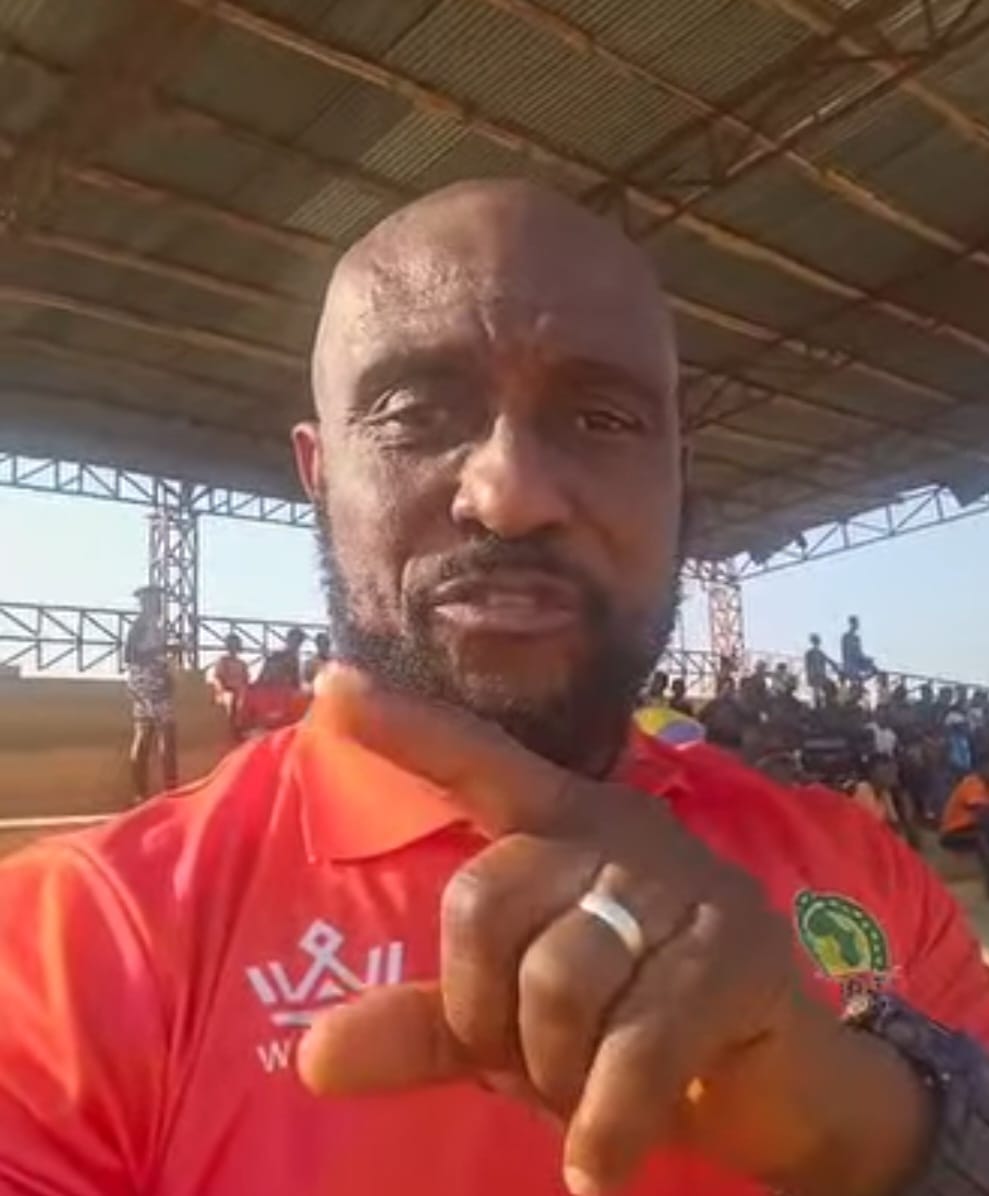
James Salinsa Debbah, a CAF-certified coach educator and one of Liberia’s most celebrated former national team players, made the remarks while on professional assignment in neighboring Sierra Leone, where he is currently engaged in technical training duties.
Drawing comparisons between the two countries’ football environments, Debbah said Liberia has made significant strides in infrastructure, talent development, governance, and policy reform under Raji’s leadership , advances he believes have positioned the country ahead of several regional peers.
Regional Comparison: Liberia and Sierra Leone
Speaking after attending a Sierra Leonean first-division match in the Maboka region, Debbah offered a blunt assessment.
“I was invited by my students to watch a top-flight match here after my class ended.
What I saw only confirmed that Liberia is doing better and is far ahead in several key areas,” he said.
According to Debbah, many football communities in Sierra Leone continue to struggle with poor playing surfaces, limited infrastructure, and weak administrative capacity, challenges Liberia has increasingly addressed in recent years.
While Sierra Leone, like Liberia, remains rich in raw talent, Debbah argued that environment and infrastructure are decisive factors in transforming potential into performance.
“Our players have the ability, but they also need proper pitches and organized systems.
Playing on rough surfaces limits development and shortens careers,” he added.
Infrastructure as a Catalyst for Growth
Liberia’s football sector has historically suffered from underinvestment, particularly in the aftermath of the country’s 14-year civil conflict, which devastated sporting facilities and disrupted youth development pathways.
However, since the mid-2010s and more intensively under Raji’s administration , Liberia has witnessed renewed investment in football infrastructure. These include:
The renovation and utilization of ministerial and county stadiums
The construction of artificial turf pitches across several counties
Increased collaboration with government ministries and international partners
Expanded grassroots and youth competitions
Football analysts estimate that Liberia now has more playable standard pitches than at any point since the 1980s, a critical factor in CAF licensing compliance and player development.
“Stakeholders should be grateful,” Debbah said. “From stadium upgrades to artificial pitches with more coming, Raji has done well”, he re-emphasized.
Governance, Policy, and Administration
Beyond physical infrastructure, Debbah highlighted improvements in football governance and administrative reform, noting that structured policies and clearer systems have accelerated growth.
CAF reports consistently emphasize that transparent administration, licensing compliance, and technical development frameworks are essential for sustainable football progress in Africa.
Liberia’s increased participation in CAF competitions and coaching programs reflects gradual alignment with these standards.
“This growth didn’t happen by accident. It came through policy, administration, and leadership,” Debbah noted.
Warning Against Politicizing Football
In a strong caution to stakeholders, Debbah urged football actors and the wider public to resist politicizing the sport, warning that internal divisions could undermine the gains already achieved.
“Leave Raji alone to do his job. Liberia has gained prominence in football because of this leadership.
Politicizing the game will only slow us down,” he said.
Liberian football has historically been vulnerable to administrative disputes and political interference, often leading to FIFA and CAF scrutiny.
Observers note that stability at the top has been a key reason Liberia has avoided such crises in recent years.
A Call for Continuity
Widely regarded as one of Liberia’s most iconic footballers, Debbah concluded by framing Raji’s leadership as part of a continuum rather than an isolated effort, stressing the importance of long-term vision over short-term battles.
“Raji represents continuity. He needs the space to continue the process of growth and development.
Football progress takes time, not distractions,” Debbah emphasized.
With youth football participation on the rise, improved facilities across counties, and growing technical capacity through CAF programs, Liberia’s football sector stands at a critical juncture.
Whether these gains translate into sustained international competitiveness will depend largely on stability, unity, and continued investment.
For Debbah, however, the direction is already clear.
“In a relatively short time, meaningful progress has been made. The task now is to protect it and build on it.”


