
New Diplomatic Momentum for Morocco as Mauritius Backs Autonomy Plan for Western Sahara
By: Julius Konton
Mauritius has revised its position on the long-running Western Sahara dispute, with Foreign Minister Dhananjay Ramful declaring in New York that autonomy under Moroccan sovereignty represents “the most credible solution” to the decades-old regional dispute.
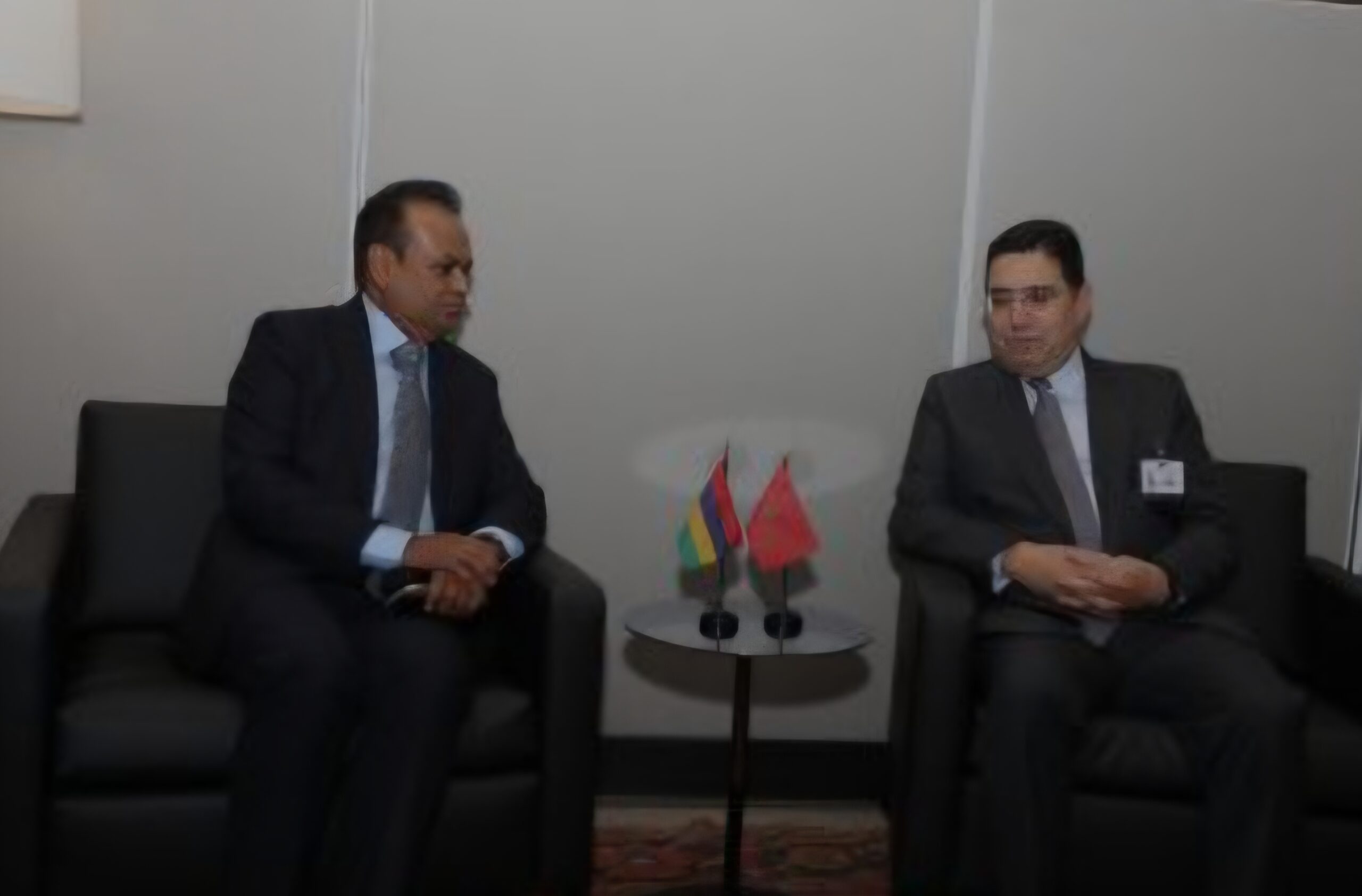
Ramful made the announcement following talks with Morocco’s Minister of Foreign Affairs, African Cooperation and Moroccan Expatriates, Nasser Bourita, on the margins of the 81st session of the United Nations General Assembly.
According to the Moroccan Foreign Ministry, the Mauritian government recently reviewed its position during a Cabinet meeting following the adoption of United Nations Security Council Resolution 2797 in October 2025.
The Mauritian minister said his government views Resolution 2797 as grounded in pragmatism and considers autonomy for Western Sahara under Moroccan sovereignty to offer “the most realistic, fairest, and most sustainable solution” to the dispute.
The announcement adds Mauritius to a growing group of governments that have expressed support for Morocco’s autonomy proposal, while also placing the issue once again at the center of diplomatic discussions during the annual UN gathering in New York.
The development is significant because Western Sahara has remained one of Africa’s longest-running territorial and decolonization disputes.
The United Nations has been involved in efforts to settle the conflict for decades.
In 1988, Morocco and the Frente POLISARIO accepted UN settlement proposals envisaging a ceasefire and a referendum on the territory’s future.
The UN Mission for the Referendum in Western Sahara, known as MINURSO, was subsequently established by Security Council Resolution 690 on April 29, 1991.
The UN-backed ceasefire took effect on September 6, 1991, but disagreements over the implementation of the political settlement prevented the proposed referendum from taking place.
The UN says MINURSO continues to monitor the situation and contribute to reducing tensions, although the ceasefire broke down in 2020 and low-intensity hostilities have continued.
Resolution 2797 and the Diplomatic Debate
Mauritius’ decision follows the adoption of Security Council Resolution 2797 on October 31, 2025.
The resolution renewed MINURSO’s mandate until October 31, 2026 and reaffirmed the Council’s commitment to a “just, lasting, and mutually acceptable political solution” based on compromise and consistent with the principles of the UN Charter, including self-determination.
It was adopted by a vote of 11 in favor, with three abstentions; Algeria did not participate in the vote.
Importantly, the UN resolution itself does not simply declare Morocco’s autonomy proposal to be the universally agreed settlement.
Rather, it continues the UN-led political process and calls for negotiations among the parties.
This distinction remains central to the international debate over the territory’s final status.
Morocco presented its Autonomy Initiative to the United Nations in 2007. Under the proposal, Western Sahara would retain significant local powers and institutions while remaining under Moroccan sovereignty.
The Frente POLISARIO, however, has continued to advocate self-determination, including independence as an option.
The UN has repeatedly described the objective as achieving a political settlement that is mutually acceptable and provides for the self-determination of the people of Western Sahara.
The Western Sahara dispute has its roots in the end of Spanish colonial rule in the territory in the 1970s.
Morocco and the Frente POLISARIO subsequently became the principal parties to the conflict, while Algeria and Mauritania have also figured prominently in the regional diplomatic equation.
The United Nations’ involvement has now extended for more than three decades.
MINURSO was established in 1991 with the original objective of supporting a settlement plan and monitoring the ceasefire.
More than 35 years after the parties accepted the 1988 UN settlement proposals, the political question remains unresolved.
The issue has also become intertwined with the wider strategic rivalry in North Africa, particularly relations between Morocco and Algeria.
The dispute has implications beyond territorial status, affecting regional integration, security cooperation, trade routes and broader diplomatic relations between North African and sub-Saharan African states.
For Mauritius, the policy shift comes at a moment when the island nation is seeking to deepen its diplomatic and economic engagement across Africa and beyond.
Ramful serves as Mauritius’ Minister of Foreign Affairs, Regional Integration and International Trade, according to the Mauritian government.
Morocco, meanwhile, has spent years expanding its diplomatic engagement across Africa.
Rabat rejoined the African Union in 2017 after a 33-year absence, and the Western Sahara question has remained a major feature of its continental diplomacy.
The Mauritian announcement therefore carries significance beyond the immediate dispute. It illustrates how the Western Sahara question continues to influence diplomatic alignments within Africa, particularly as governments assess competing proposals for a settlement through the United Nations framework.
The Mauritian position is likely to add another layer to the diplomatic discussions surrounding Western Sahara as the international community continues to search for a negotiated settlement.
For Morocco, Ramful’s declaration represents additional diplomatic support for an autonomy framework that Rabat has promoted as the basis for resolving the dispute.
For the wider UN process, however, the central challenge remains reaching an agreement acceptable to the parties and consistent with the principles set out in Security Council resolutions.
As world leaders and foreign ministers gather in New York for the 81st UN General Assembly, the Mauritius announcement places Western Sahara once again among the major diplomatic issues commanding attention.
The next phase of the process will depend on whether the growing emphasis on autonomy can be translated into substantive negotiations capable of producing the “just, lasting, and mutually acceptable political solution” repeatedly sought by the United Nations.
