
By: Julius Konton
Morocco and Liberia have highlighted growing cooperation around the United Nations’ Women, Peace and Security (WPS) Agenda, with Moroccan Foreign Minister Nasser Bourita pointing to the two countries’ shared emphasis on women’s leadership in conflict prevention, mediation, peacebuilding and international security.
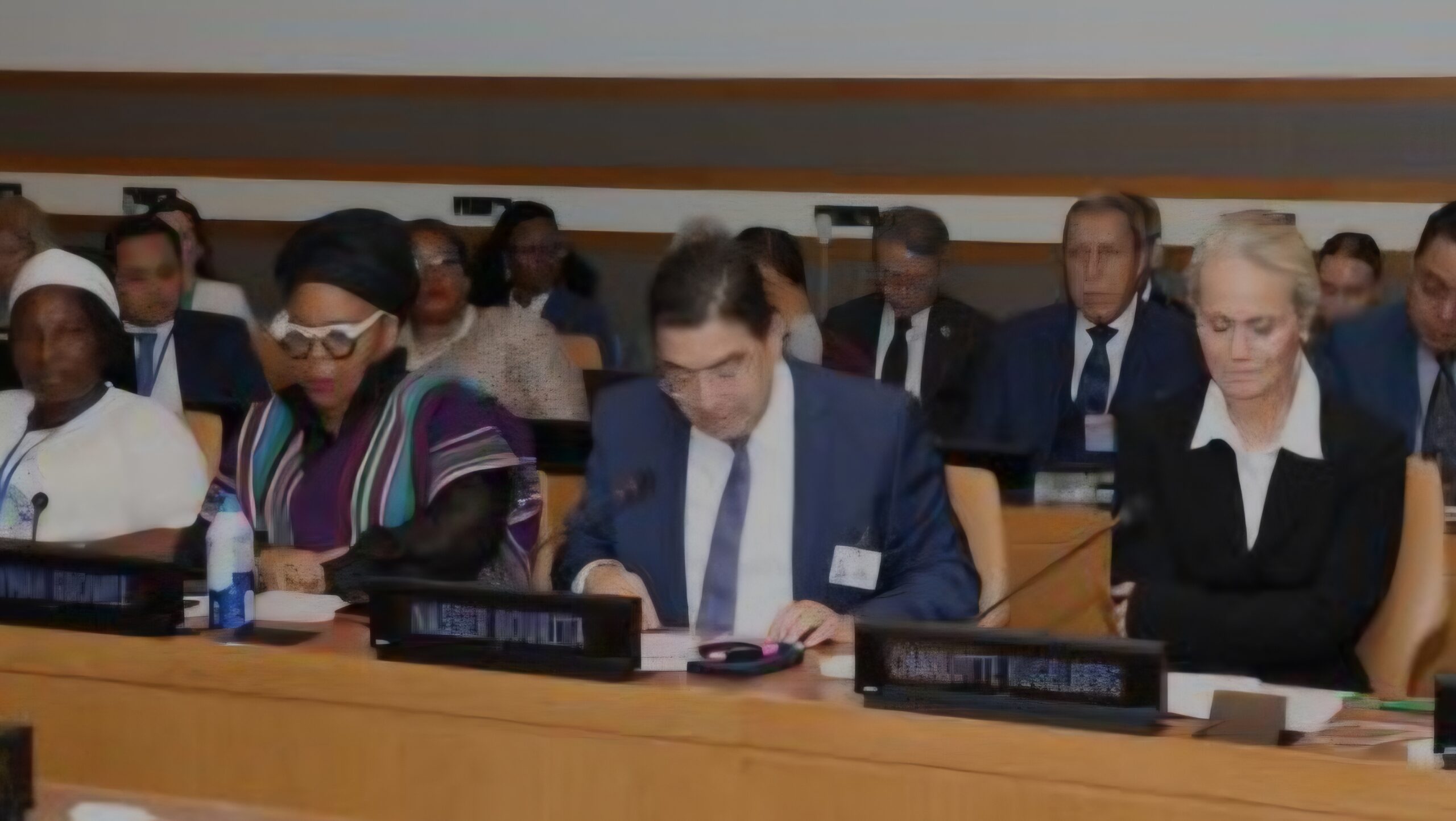
Bourita made the remarks during a high-level meeting in New York chaired by Liberian President Joseph Nyuma Boakai on the sidelines of the 81st session of the United Nations General Assembly.
The meeting focused on the theme of women’s leadership in peace and security and examined how countries can translate more than two decades of international commitments into greater participation by women in peace processes.
The Moroccan foreign minister commended Liberia’s experience, particularly the role played by Liberian women in the Women of Liberia Mass Action for Peace movement during the country’s civil war.
The movement brought together Christian and Muslim women in a nonviolent campaign demanding an end to Liberia’s conflict and became an internationally recognized example of women’s grassroots participation in peacebuilding.
UN and academic accounts document how Liberian women organized protests, pressed political and rebel leaders to negotiate and maintained pressure during the 2003 peace talks in Accra, Ghana.
That history has become closely associated with the international WPS framework.
On Oct. 31, 2000, the UN Security Council unanimously adopted Resolution 1325, calling for women’s participation in peace negotiations, peacebuilding and post-conflict reconstruction, while also urging protection of women and girls and attention to their specific needs during conflict and recovery.
The framework marked a significant shift from viewing women primarily as victims of conflict toward recognizing them as participants and decision-makers in peace and security.
Liberia’s experience remains particularly significant because women were active in efforts to end the Second Liberian Civil War, which culminated in the 2003 Comprehensive Peace Agreement.
The Women of Liberia Mass Action for Peace movement mobilized thousands of women through demonstrations, prayer gatherings and advocacy, including actions during the peace negotiations in Accra.
The movement’s legacy later became internationally recognized when Liberian peace activist Leymah Gbowee and then-President Ellen Johnson Sirleaf shared the 2011 Nobel Peace Prize with Yemeni activist Tawakkol Karman.
The experience also illustrates the continuing gap between women’s contribution to peacebuilding and their representation in formal political institutions.
According to UN Women data, women held 11 percent of seats in Liberia’s national parliament as of February 2024.
The same UN Women country profile reports that 24.9 percent of women aged 20–24 had been married or in a union before age 18, underscoring broader gender-equality challenges that remain relevant to peace, development and political participation.
Globally, the participation gap remains substantial.
UN Women reported that in 2024 women represented an average of only 7 percent of negotiators, 14 percent of mediators and 20 percent of signatories in major peace processes. Of 36 peace agreements reached that year, only 31 percent contained at least one provision referring to women, girls, gender or sexual violence.
Bourita said Morocco’s approach is based on the principle that women’s participation should extend across what he described as the entire “peace continuum” from conflict prevention and mediation to peacekeeping, reconstruction and long-term stabilization.
Morocco has been involved in UN peacekeeping since 1960 and remains a significant contributor of uniformed personnel. UN peacekeeping data from July 2025 recorded 1,650 Moroccan uniformed personnel, including 61 women, serving in UN missions.
The figures also illustrate the broader challenge facing the international peacekeeping system.
UN data for July 2025 showed women accounted for about 8.1 percent of military troops in UN peacekeeping operations. Increasing women’s participation in military, police and civilian peacekeeping roles remains part of the UN’s wider gender-parity efforts.
Bourita said Morocco intends to further strengthen the participation of Moroccan women in peacekeeping while developing women’s capacities in mediation and conflict prevention.
He also emphasized Morocco’s intention to bring greater attention to WPS within multilateral diplomacy.
A major announcement from the New York meeting was Morocco’s plan to host the Sixth Ministerial Conference on Feminist Foreign Policy in 2027.
According to Bourita, the gathering will be the first edition of the conference to be held on African and Arab soil.
The Moroccan minister said Africa has an important contribution to make to discussions on women, peace and security and to the wider development of feminist foreign-policy approaches.
The announcement comes as governments and international organizations reassess progress under the WPS framework 25 years after Resolution 1325.
UN Women reports that by 2025, 113 countries had adopted national action plans on Women, Peace and Security, compared with only 32 in 2011.
However, only 28 percent of countries increased funding for implementation, highlighting a continuing gap between policy commitments and resources.
The New York discussions also looked beyond traditional armed conflict, with Bourita calling for greater attention to emerging challenges including cybersecurity and their implications for women, peace and security.
The issue comes amid a deteriorating global security environment.
UN Women reported that in 2024 approximately 676 million women and girls lived within 50 kilometers of a deadly conflict event, the highest level recorded since the 1990s.
Meanwhile, the UN has continued to document a widening gap between the scale of global conflict and the resources available to women-led peacebuilding organizations.
UN Women has also reported that nearly 300 million people required humanitarian assistance worldwide in 2024, while women and girls faced disproportionate risks in many crisis settings.
During that year, UN Women directly reached more than 1.13 million people across 43 crisis-affected countries, 80 percent of them women and girls, while supporting 1,270 local women-led organizations.
Against that backdrop, Bourita said Morocco and Liberia could make a distinctive contribution by consolidating gains achieved during the first 25 years of the WPS framework while addressing the challenges expected during the next quarter-century.
For Liberia, the discussions provide another international platform for a peacebuilding history in which women played a visible role in ending a devastating civil conflict.
For Morocco, the initiative forms part of its broader diplomatic and peacekeeping engagement, including its stated intention to make women, peace and security a priority if elected to a non-permanent UN Security Council seat for 2028–2029.
The meeting ultimately placed a longstanding question at the center of the international debate: how to move from recognition of women’s contribution to peace toward sustained representation in the institutions where decisions about war, peace, security and recovery are made.
Twenty-six years after Resolution 1325 was adopted, UN data show that the international community has established a substantial policy framework, but women’s representation in formal peace negotiations remains considerably below parity.
The Morocco-Liberia discussion therefore comes at a moment when the next phase of the WPS agenda is increasingly focused not only on commitments, but also on implementation, financing, representation and adapting the framework to emerging forms of insecurity.
