
By: Julius Konton
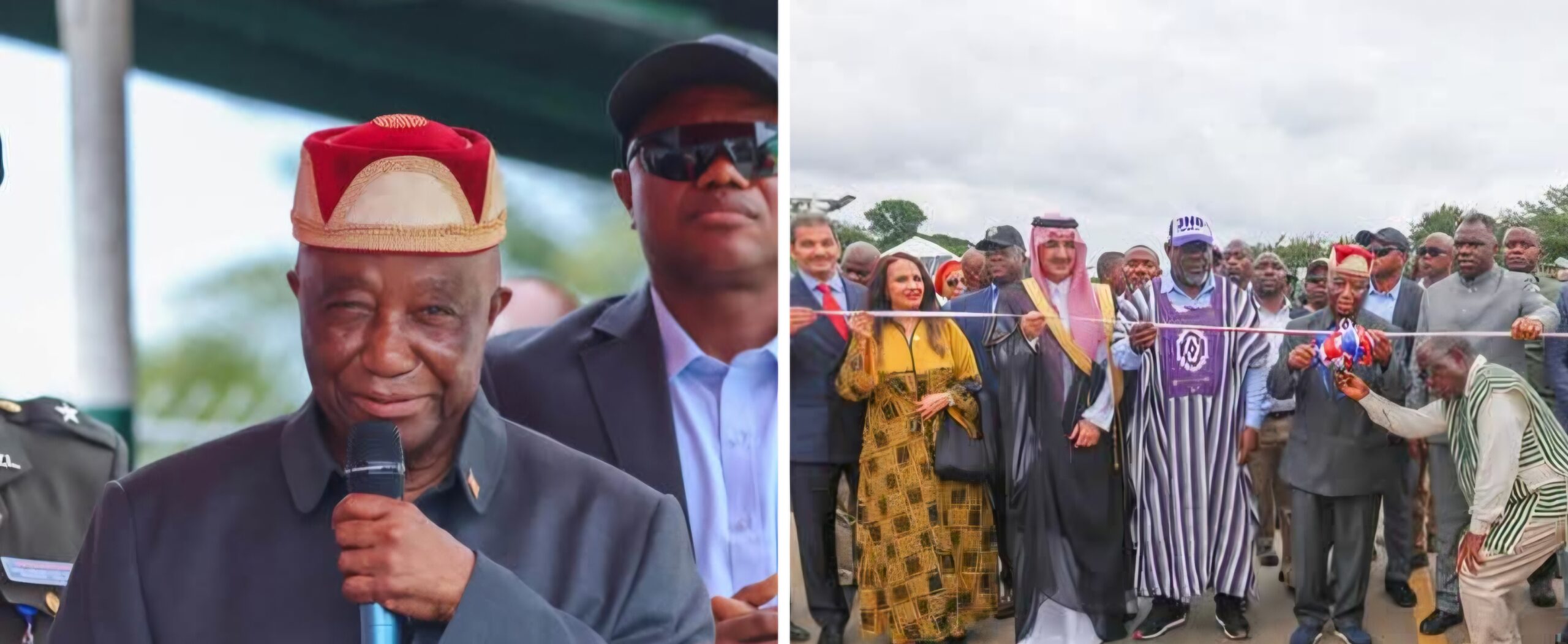
President Joseph Nyuma Boakai, Sr. has dedicated the newly completed 81-kilometer Gbarnga–Salayea Road Corridor and officially broken ground for the construction of the 50-kilometer Salayea–Konia Road and the 6-kilometer Zorzor–Yeala Road, signaling one of Liberia’s most significant infrastructure milestones in recent years.
The ceremonies, attended by senior government officials, lawmakers, development partners, traditional leaders, and residents, underscored the Boakai Administration’s commitment to modernizing Liberia’s transport network under Pillar Two of the ARREST Agenda for Inclusive Development (AAID), which prioritizes infrastructure, economic transformation, regional integration, job creation, and expanded access to essential public services.
Describing roads as the backbone of national development, President Boakai declared that Liberia’s infrastructure investments are “building more than roads, they are building opportunities, connecting communities, strengthening regional integration, and transforming lives.”
“These roads are creating opportunities for farmers, traders, students, businesses, and families.
They will connect communities, expand economic opportunities, strengthen regional integration, and improve the quality of life of our people,” the President said.
The completion of the 81-kilometer Gbarnga–Salayea Highway significantly improves travel between Bong and Lofa Counties, reducing travel time, improving year-round accessibility, and enhancing the movement of agricultural products to domestic and regional markets.
Lofa County remains one of Liberia’s leading agricultural regions, producing substantial quantities of rice, cassava, cocoa, coffee, vegetables, and other food crops.
Improved road infrastructure is expected to reduce transportation costs, minimize post-harvest losses, and stimulate private investment in agriculture, commerce, tourism, and logistics.
The President also presided over the signing of financing agreements totaling US$73.8 million, secured from the OPEC Fund for International Development, the Arab Bank for Economic Development in Africa (BADEA), and the Kuwait Fund for Arab Economic Development to finance the upgrading of the 56-kilometer corridor, comprising the 50-kilometer Salayea–Konia Road and the 6-kilometer Zorzor–Yeala Road.
Government officials announced that construction is expected to begin during the upcoming dry season, with the projects projected to generate hundreds of direct and indirect jobs while stimulating local businesses and improving access to schools, hospitals, markets, and administrative centers.
In another major breakthrough, Liberia secured financing commitments from the Saudi Fund for Development for the pavement of the remaining 64-kilometer Konia–Voinjama Road, completing another critical segment of the country’s northern transport corridor linking communities to neighboring Guinea.
The Government also announced approval of US$190 million from the Saudi Fund for Development for the Botota–Gbarnga–Zorzor Transmission Line and Substation Project.
The ambitious energy project will establish four electrical substations and extend reliable electricity to approximately 380,000 households across Bong and Lofa Counties, dramatically expanding electricity access and supporting industrial development, education, healthcare delivery, and small business growth.
Combined, the new road and power investments amount to more than US$263.8 million, representing one of the largest integrated infrastructure packages announced for northern Liberia in recent years.
President Boakai said the achievements demonstrate the growing confidence of Liberia’s international development partners in his administration’s governance and economic reform agenda.
He praised the enduring partnership of the Arab Coordination Group, including BADEA, the Kuwait Fund for Arab Economic Development, the Arab Fund for Economic and Social Development, the OPEC Fund for International Development, and the Saudi Fund for Development, noting that their support extends beyond financing infrastructure to strengthening Liberia’s long-term economic resilience.
“This partnership is not only about constructing roads; it is about building lasting relationships founded on trust, shared purpose, and a common vision for Liberia’s development,” the President emphasized.
Liberia’s road network has historically been one of West Africa’s least developed, with decades of civil conflict and limited investment leaving many communities isolated, particularly during the rainy season.
Successive governments have prioritized road rehabilitation as a cornerstone of national recovery, recognizing that improved transport infrastructure is essential for expanding trade, reducing poverty, attracting investment, and promoting national unity.
The latest projects are expected to deepen regional economic integration under the Economic Community of West African States (ECOWAS) framework by facilitating cross-border trade with Guinea and strengthening Liberia’s role in regional commerce.
As Liberia continues implementing its national development strategy, the Boakai Administration views infrastructure development as a key driver of inclusive economic growth, improved public service delivery, and long-term national transformation.
Calling on citizens to protect the country’s development gains, President Boakai concluded:
“We are laying the foundation for a more connected, more prosperous, and more inclusive Liberia. Together, we must safeguard these investments for future generations.”
With roads, electricity, and regional connectivity at the center of Liberia’s economic agenda, the projects mark another important step toward transforming the country’s infrastructure landscape and unlocking new opportunities for sustainable development across northern Liberia.
