
By: Julius Konton
Liberia’s premier referral and teaching hospital, the John F. Kennedy Medical Center (JFKMC), has firmly rejected allegations circulating in sections of the media and on social platforms that it engages in the open burning of infectious medical waste, describing the claims as inaccurate and inconsistent with its established healthcare waste management practices.
In a statement issued Tuesday, the hospital reaffirmed its unwavering commitment to protecting public health, preserving the environment, and operating in full compliance with Liberia’s environmental and public health regulations.
Established in 1971 and named in honor of former United States President John F. Kennedy, JFK Medical Center serves as Liberia’s largest referral hospital, treating thousands of patients annually while functioning as the country’s principal teaching institution for medical professionals.
As one of the nation’s most important healthcare facilities, the hospital plays a central role in specialized healthcare delivery, emergency response, and disease surveillance.
Responding to recent public concerns, JFK Medical Center clarified that it does not engage in the open burning of infectious or hazardous healthcare waste, emphasizing that its waste management system operates under nationally approved guidelines and is subject to regular oversight by the Environmental Protection Agency (EPA), the National Public Health Institute of Liberia (NPHIL), and other relevant regulatory authorities.
The Medical Center noted that healthcare waste management is a critical component of infection prevention and environmental protection, particularly following global lessons from outbreaks such as Ebola and the COVID-19 pandemic, both of which underscored the importance of safe disposal of infectious waste.
According to the World Health Organization (WHO), approximately 15 percent of waste generated by healthcare facilities is considered hazardous, requiring specialized treatment and disposal to prevent disease transmission and environmental contamination.
The remaining 85 percent is generally classified as non-hazardous waste, provided it is properly segregated and managed.
JFK Medical Center explained that its healthcare waste management program utilizes two separate and approved waste treatment systems, each serving distinct operational purposes.
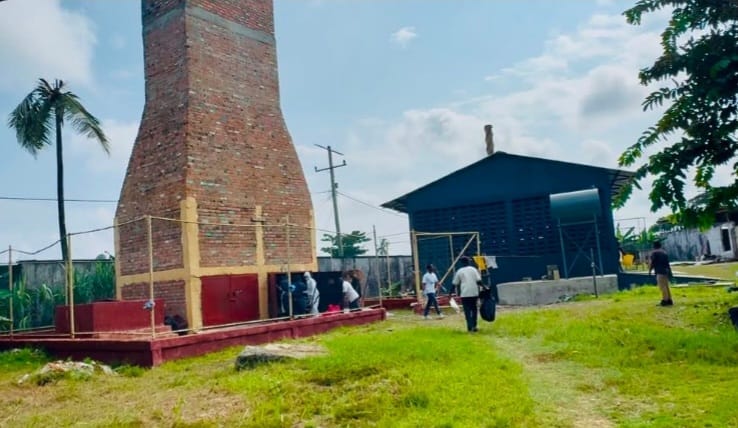
The first is a manual incinerator, which is used exclusively for approved non-infectious waste through a controlled combustion process.
During operations, limited visible emissions may occasionally occur.
Hospital authorities explained that the facility was constructed following technical guidance, inspections, and approval by both the EPA and NPHIL, including the installation of a high chimney designed to disperse emissions in accordance with applicable environmental standards.
The second system is a mechanical, electrically powered incinerator, dedicated solely to the treatment of infectious healthcare waste, including contaminated sharps and other regulated medical materials.
The hospital said the modern system operates under controlled conditions designed to minimize environmental impact while supporting internationally accepted infection prevention and control practices.
JFKMC stressed that these systems differ significantly from the practice of open burning and are operated within Liberia’s approved regulatory framework.
The Medical Center further expressed concern that recent media reports were published without providing hospital authorities an opportunity to present factual information regarding its waste management operations.
Hospital management emphasized that balanced journalism requires verification and engagement with all relevant parties before publication, noting that accurate reporting helps strengthen public confidence and promotes informed public discourse.
JFKMC reiterated its commitment to openness, accountability, and constructive dialogue with the media, regulatory institutions, and surrounding communities.
Beyond providing specialized medical services, JFK Medical Center said it remains deeply committed to improving community health through a range of public health interventions.
These include medical outreach programs, eye-care initiatives, disease prevention campaigns, health education, and other services aimed at improving healthcare access and promoting healthier communities across Liberia.
Hospital authorities encouraged residents with questions or concerns regarding its operations to engage directly with the administration, assuring the public that issues will be reviewed promptly and addressed through open and collaborative dialogue.
JFK Medical Center concluded by reaffirming its commitment to maintaining healthcare waste management systems that meet national regulatory requirements and internationally recognized public health standards.
The hospital also called on all media institutions to uphold the principles of balanced, fair, and responsible journalism by seeking verification and comments from relevant authorities before publishing reports that may affect public confidence.
“As Liberia’s national referral and teaching hospital, JFK Medical Center remains committed to protecting lives, safeguarding the environment, strengthening community partnerships, and continuously improving the quality and safety of healthcare services delivered to the Liberian people,” the statement concluded.
