




By: Julius Konton
Liberia’s Ambassador for youth and sports development, Aliou Kebe, has extended his youth empowerment initiatives to disadvantaged and at-risk young people in Monrovia, presenting dozens of mobile phones to beneficiaries as part of an intervention aimed at promoting inclusion, dignity and hope.
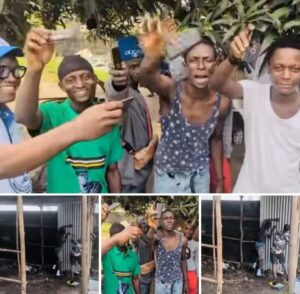
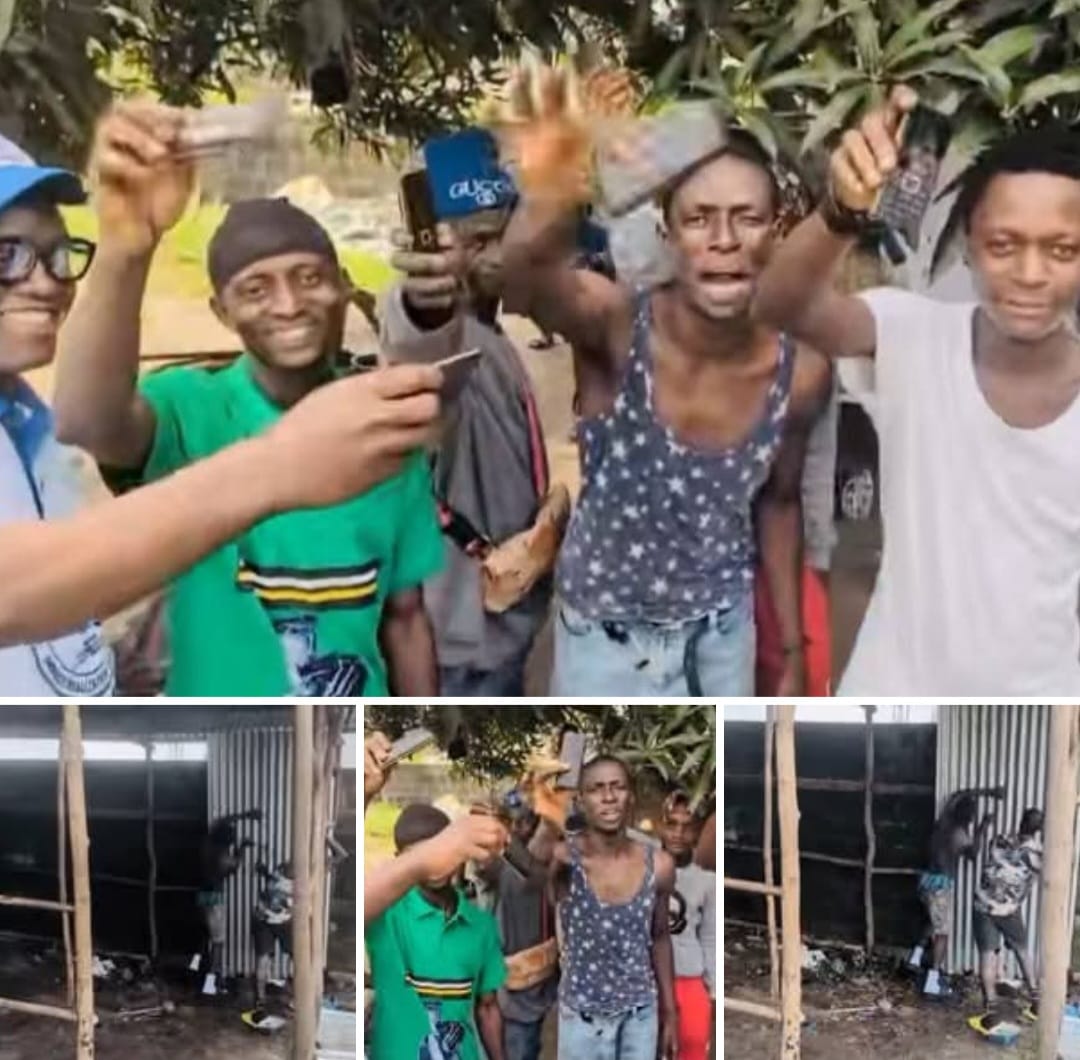
The presentation brought moments of excitement among the beneficiaries, many of whom displayed their newly received phones following the ceremony and expressed appreciation to Kebe for what they described as an act of compassion toward young people who often find themselves on the margins of society.
“Ambassador Kebe, thank you. You are such a good man who does not discriminate but sees everyone the same. May God bless you,” beneficiaries said in appreciation of the intervention.
Beyond the distribution of mobile phones, Kebe is also supporting the construction of a three-bedroom makeshift shelter for some of the beneficiaries who are experiencing housing difficulties.
The structure, which is currently under construction, is expected to be turned over to the beneficiaries upon completion.
The shelter component adds a practical dimension to the initiative, addressing a basic need that goes beyond material assistance.
For vulnerable young people, access to safe accommodation can be an important foundation for pursuing education, vocational opportunities, employment and other forms of social reintegration.
Kebe’s intervention comes against the backdrop of Liberia’s exceptionally youthful population and continuing challenges involving education, employment, poverty, social protection and substance abuse.
Liberia’s 2022 Population and Housing Census puts the country’s population at approximately 5.2 million.
UNICEF reports that 41.5 percent of the population is below the age of 18, while adolescents aged 10 to 19 account for approximately 24.3 percent of the population.
More than half of Liberia’s population lives in urban areas, with about one-third residing in Monrovia.
The country’s 2025–2029 National Youth Policy further underscores the demographic importance of young Liberians, estimating that approximately 75 percent of the population is below age 35.
The policy identifies unemployment and underemployment, limited access to quality education and vocational training, substance abuse and marginalization among the challenges requiring sustained attention.
These challenges make targeted community-level interventions particularly significant, especially for young people who face multiple forms of vulnerability.
Speaking to the beneficiaries, Kebe encouraged disadvantaged young people to reject drug use and other activities that could undermine their future.
He urged them to view life as an opportunity for a second chance, encouraging them to pursue positive ventures, develop their talents and work toward rebuilding their lives.
Kebe emphasized that a difficult present circumstance should not determine a young person’s future, stressing the importance of creating opportunities through which vulnerable youths can regain confidence, develop skills and contribute positively to society.
His message reflects a broader national conversation about the need to connect vulnerable young people with opportunities for education, skills development, entrepreneurship, sports and social inclusion.
The International Labour Organization has repeatedly identified youth employment, informality and limited access to decent work as major challenges affecting young people globally, while Liberia’s own youth policy places employment, vocational training and entrepreneurship among its key priorities.
The question of how Liberia supports vulnerable young people has deep historical roots.
Liberia emerged from two civil wars fought between 1989 and 1997 and again from 1999 to 2003.
The conflicts had a particularly profound impact on children and young people, including through displacement, disruption of education and the recruitment of children into armed groups.
The United Nations and UNICEF have documented the importance of reintegration, education, vocational training and community support in helping young people rebuild their lives after conflict.
UNICEF’s current assessment of children and adolescents in Liberia similarly highlights continuing vulnerabilities related to poverty, education, protection, health and participation, while emphasizing the importance of creating an environment in which young people can reach their full potential.
Against this historical background, initiatives that seek to reconnect vulnerable youths with their communities and provide practical support can form part of the wider effort to ensure that young Liberians are not excluded from the country’s development process.
For the beneficiaries, the mobile phones represent more than a consumer item.
The devices can provide access to communication, information, digital services, educational resources and social networks.
Combined with the planned shelter, the intervention seeks to address both social connection and basic living conditions.
The beneficiaries welcomed the shelter project, describing it as meaningful assistance because housing remains one of the serious challenges confronting some of them.
Upon completion, the three-bedroom structure is expected to provide temporary accommodation for the intended beneficiaries, according to information surrounding the project.
Kebe has also used youth and sports initiatives as a platform for engaging young people and promoting positive activities.
His latest outreach to at-risk youths expands that approach beyond sports alone, placing emphasis on social inclusion, dignity and practical assistance.
Liberia’s National Youth Policy for 2025–2029 similarly seeks to transform the country’s youthful population into a source of economic and social development through youth empowerment, entrepreneurship, technical and vocational education, health services and greater participation in national life.
The five-year policy was launched in October 2025 with an announced implementation framework valued at approximately US$81 million.
For the beneficiaries, the significance of Kebe’s intervention extends beyond the items received.
The initiative has been presented as a message that disadvantaged young people remain part of the wider Liberian society and should not be defined solely by their present circumstances.
The distribution of phones and construction of a shelter therefore form part of a broader message of inclusion: that young people experiencing hardship can still be encouraged to pursue a different path and contribute to national development.
As Liberia continues to grapple with the demands of its youthful population, interventions combining material support, mentorship, sports, skills development and social inclusion could complement broader government and development-partner efforts to ensure that vulnerable young people are not left behind.
For Kebe, the latest initiative is being positioned as another step toward giving at-risk youths a renewed sense of belonging, responsibility and hope for the future.
And for the young beneficiaries, the message is straightforward: their current circumstances do not have to define the rest of their lives.


