
By: Julius Konton
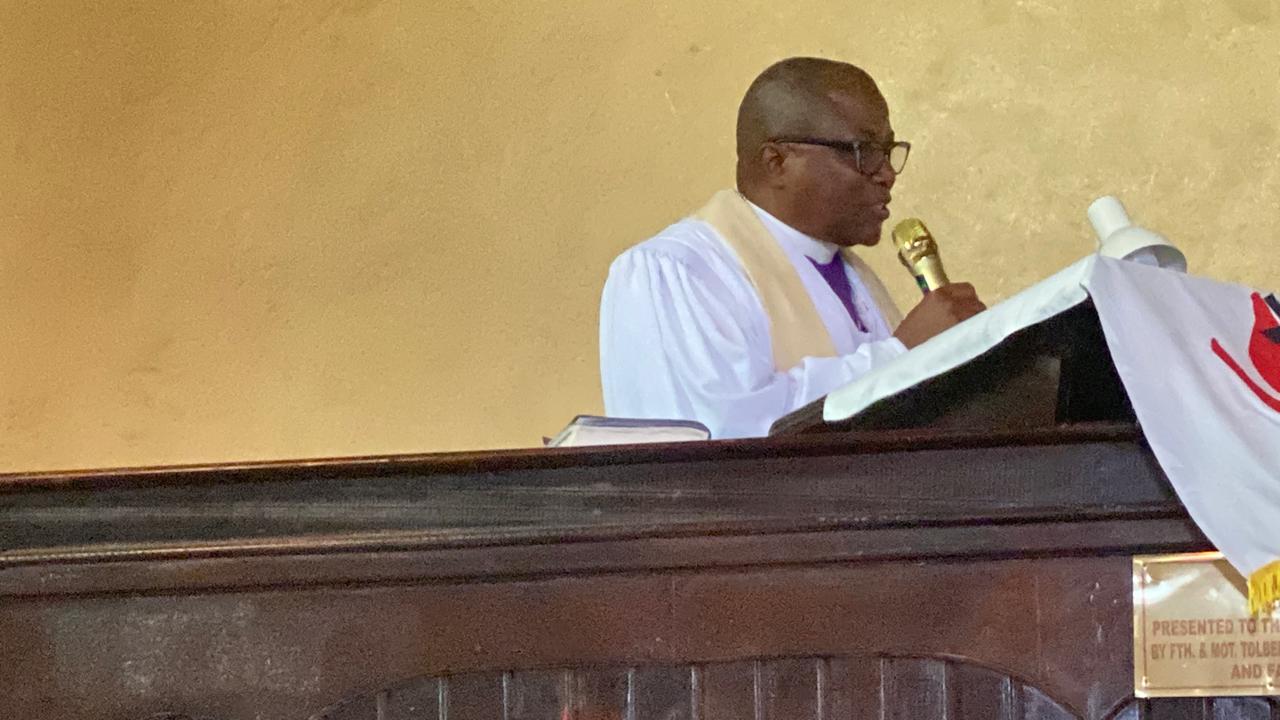
Leading Liberian churchman Bishop Samuel J. Quire Jr. has issued a strong appeal for greater unity, collaboration, and mutual support within the Church and across society, declaring that division remains one of the greatest barriers to national and spiritual progress.
Delivering a sermon on the theme “Working Together” at Trinity United Methodist Church, Bishop Quire emphasized that cooperation is not merely a social value but a divine principle designed to strengthen communities, institutions, and families.
Drawing from the biblical passages Ecclesiastes 4:9–12 and 1 Corinthians 12:12–27, the bishop reminded worshippers that humanity was never created to thrive in isolation.
“We live in a world that celebrates individual success, but God’s Word reminds us that we are stronger together.
Two are better than one, because they have a good reward for their labor,” he declared.
Unity as a Strategic Necessity
Bishop Quire described unity as more than a moral ideal, calling it a strategic necessity for growth, effectiveness, and long-term stability.
Using the example of the human body, he likened the Church to an interconnected system in which every member has a vital role to play.
“The eye cannot say to the hand, ‘I don’t need you.’ When we understand our roles, we stop competing and start cooperating and that is when God begins to move in powerful ways.”
He said churches and institutions often fail when competition replaces cooperation, warning that no organization can flourish when members work against one another.
Warning Against Division
The bishop cautioned that division continues to weaken not only religious institutions but also families, communities, and nations.
He urged Liberians to rise above personal disputes, jealousy, and self-interest in pursuit of a common purpose.
“Division weakens, but unity builds,” Bishop Quire said to loud affirmation from the congregation.
Liberia, like many nations recovering from years of political and economic challenges, continues to rely heavily on social cohesion and faith-based institutions to promote reconciliation, peacebuilding, and community development.
Biblical Lessons on Teamwork
Referencing biblical history, Bishop Quire highlighted how Moses depended on Aaron and Hur during battle, while Jesus Christ sent His disciples out in pairs.
He said these examples illustrate that God often chooses to work through unity, partnership, and shared responsibility rather than isolated effort.
Humility, Patience, and Forgiveness
Beyond cooperation, Bishop Quire challenged worshippers to cultivate the right attitudes for working with others, naming humility, patience, love, and forgiveness as essential virtues.
“Sometimes the greatest challenge is not the work itself, but learning to work with people,” he noted.
His comments resonated with many attendees who described the message as timely amid growing social tensions and institutional rivalries.
Call for National Cohesion
Closing his sermon, the bishop urged Christians to encourage one another, pray for one another, and remain committed to collective progress.
“Alone we can do little, but together with God, we can do all things.”
Observers said the message extended beyond the walls of the church, serving as a broader call for national unity and stronger relationships across Liberia as the country continues efforts toward development and reconciliation.
Bishop Quire’s sermon was widely praised as a timely reminder that collaboration, not conflict, remains the surest path to transformation.
