



By: Julius Konton
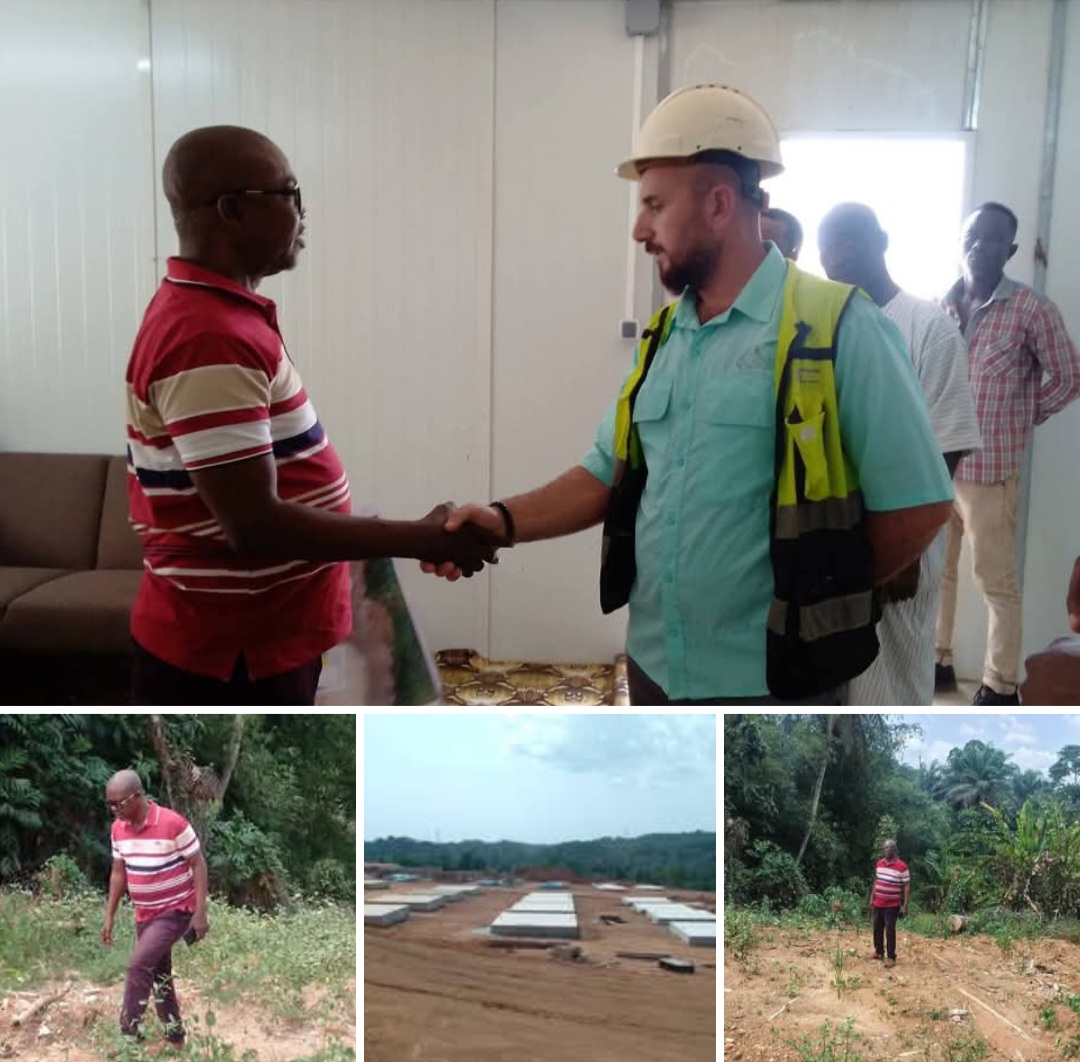
The Director General of the National Bureau of Concessions (NBC), Hanson Kiazolu, on Saturday conducted a high-level field assessment in Jekandor, a rural community in western Liberia, following alarming reports of an alleged chemical spill linked to operations of Bea Mountain Mining Corporation (BMMC).
The visit, which brought together technical experts and environmental monitors from the NBC, comes amid growing concerns from residents that industrial waste may have contaminated streams, creeks, and other waterways that serve as the primary sources of drinking water and domestic use for several villages in the area.
Jekandor is among the communities currently undergoing relocation under a resettlement program being implemented by the mining company as part of its concession agreement with the Government of Liberia.
Vital Waterways at Risk
According to community members, the alleged spill may have flowed into local waterways that support daily life in the rural region.
These water bodies are used for drinking, cooking, washing, and small-scale fishing activities that sustain local livelihoods.
Residents claim the contamination has already begun affecting aquatic life, with reports of dying fish and other marine species.
Community leaders also expressed fears that exposure to polluted water could lead to severe health complications, particularly among children and the elderly.
Liberia’s rural communities rely heavily on natural water sources due to limited access to piped water systems.
According to data from the World Bank and the United Nations Children’s Fund (UNICEF), more than 35 percent of Liberia’s rural population still depends on untreated surface water sources such as rivers, creeks, and springs.
Government Inspection and Preliminary Findings
During the inspection, Director General Kiazolu and his delegation toured the affected areas, interacted with community residents, and gathered firsthand accounts of the incident.
The NBC team also inspected water channels and construction sites connected to the relocation project currently being carried out by BMMC.
While the assessment remains preliminary, the NBC confirmed that the situation raises potential environmental and public health concerns that warrant further investigation.
“The well-being of our citizens and the integrity of our natural resources must remain paramount,” Kiazolu emphasized during discussions with residents.
He noted that the NBC will work in coordination with relevant government institutions, including the Environmental Protection Agency of Liberia, to conduct scientific testing and determine the extent of the alleged contamination.
Growing Scrutiny of Liberia’s Mining Sector
Liberia’s mining industry has expanded significantly over the past two decades, driven by the country’s rich deposits of gold, iron ore, and other minerals.
The sector remains a major pillar of the national economy, contributing roughly 15–20 percent of Liberia’s gross domestic product and a significant share of export earnings, according to government and international economic reports.
Companies operating in Liberia’s mining sector are required under concession agreements to adhere to environmental standards, community development obligations, and social safeguards.
Bea Mountain Mining Corporation, which operates one of Liberia’s largest gold mines in Grand Cape Mount County, has been active in the country since the early 2000s.
The company employs thousands of Liberians and plays a notable role in local economic development.
However, mining operations in resource-rich regions often generate tension between economic development goals and environmental protection concerns.
Precautionary Measures for Residents
As investigations continue, Director General Kiazolu urged residents to remain cautious and vigilant.
He advised communities to avoid drinking or using water from any source that appears discolored, contaminated, or unsafe until laboratory testing confirms its safety.
The NBC has also called on the mining company to implement immediate mitigation measures, including:
Comprehensive water quality testing
Emergency cleanup operations if contamination is confirmed
Provision of safe alternative drinking water to affected communities
Transparent reporting on environmental safety protocols and preventive measures
Commitment to Environmental Accountability
Through its ongoing investigation, the National Bureau of Concessions reaffirmed its statutory responsibility to monitor concession agreements and ensure that companies operating in Liberia comply with environmental and social standards.
Established in 2010, the NBC serves as the government’s central oversight body responsible for monitoring concession contracts in sectors such as mining, agriculture, forestry, and infrastructure.
“The protection of communities, preservation of our natural ecosystems, and enforcement of concession obligations remain central to our mandate,” Kiazolu stated.
The bureau indicated that further updates will be released as scientific assessments and inter-agency investigations progress.
For now, residents of Jekandor and neighboring communities remain hopeful that the government’s intervention will ensure both environmental safety and accountability in Liberia’s rapidly growing extractive sector.


