




By: Julius Konton
Panama and Morocco have reaffirmed their commitment to deepening bilateral cooperation and expanding diplomatic engagement, marking what officials described as a historic turning point in relations between the two nations as they seek to strengthen collaboration in trade, security, diplomacy, and sustainable development.
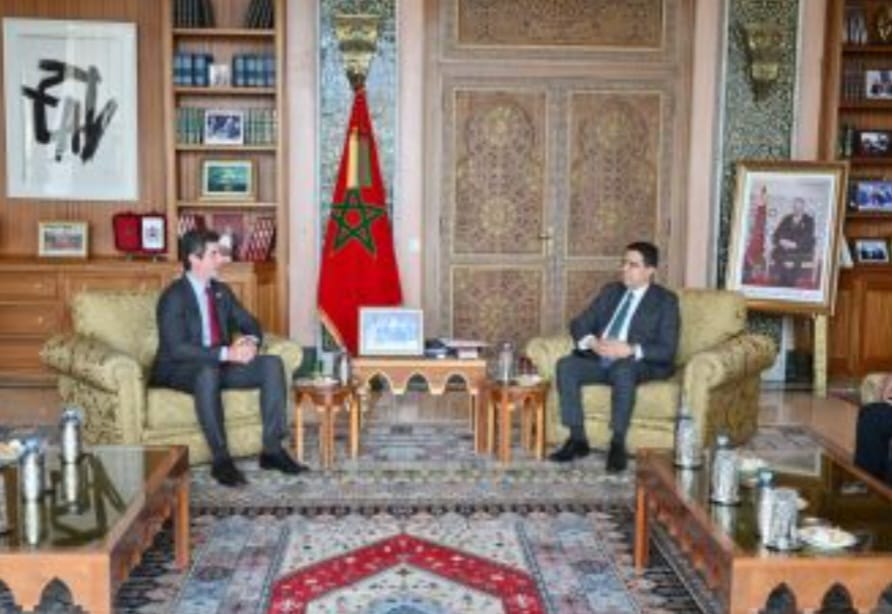
The renewed commitment was underscored on Friday during high-level diplomatic talks in Rabat between Morocco’s Foreign Minister, Nasser Bourita, and Panama’s Deputy Minister of Foreign Affairs, Carlos Arturo Hoyos Boyd, who is on a working visit to the North African kingdom.
Speaking following the meeting, Hoyos Boyd expressed deep satisfaction over what he described as the “excellent evolution” of bilateral relations, emphasizing that diplomatic ties between the two countries have undergone notable expansion in recent years.
At the center of discussions was the successful convening of the first-ever formal political consultation mechanism between the Republic of Panama and the Kingdom of Morocco, a diplomatic milestone viewed as a sign of growing institutional trust and political maturity.
According to Panamanian officials, the inaugural consultations unfolded in a spirit of friendship, mutual respect, and shared strategic vision, laying the groundwork for a more structured, regular, and ambitious diplomatic dialogue between both countries.
Hoyos Boyd described the consultations as a historic breakthrough and the beginning of a long-term institutional framework aimed at strengthening cooperation and advancing mutual priorities.
“This marks the starting point of a structured, regular, and ambitious dialogue,” the Panamanian Deputy Foreign Minister indicated, stressing the importance of transforming diplomatic goodwill into practical partnerships.
Historic Diplomatic Engagement
For the first time since the establishment of diplomatic relations between the two nations, Panama and Morocco institutionalized a formal mechanism for political consultations, a move analysts say reflects the increasing maturity of relations and a shared determination to elevate cooperation to higher levels.
The discussions highlighted a growing convergence of views on pressing global and regional issues, with Panama identifying Morocco as a strategic partner not only in Africa but also in the Arab world and across Atlantic and Mediterranean geopolitical spaces.
Officials noted that both countries share similar perspectives on major international priorities, including peaceful conflict resolution through dialogue, regional stability, South-South cooperation, maritime security, sustainable development, countering violent extremism, and respect for national sovereignty and territorial integrity.
Morocco, strategically positioned at the crossroads of Europe and Africa, has increasingly strengthened diplomatic and trade partnerships across Latin America as part of its broader foreign policy outreach, while Panama remains one of the Western Hemisphere’s most important maritime and logistics hubs due to the global significance of the Panama Canal.
Together, the two nations are exploring ways to leverage their strategic geographic positions to expand economic opportunities and international connectivity.
Trade, Maritime Connectivity, and Investment Opportunities
Officials said talks between Bourita and Hoyos Boyd identified vast opportunities for bilateral cooperation across several key sectors, particularly trade, logistics, investment, and maritime infrastructure.
Among the priority areas discussed were:
Trade and commercial exchange
Logistics and port infrastructure development
Maritime connectivity and shipping cooperation
Foreign direct investment
Security and diplomatic coordination
Diplomatic training and institutional exchanges
Tourism and cultural cooperation
Academic partnerships and educational exchanges
The emphasis on logistics and maritime connectivity is especially significant given Panama’s global influence in shipping and Morocco’s expanding port infrastructure, including its growing role as a trade gateway linking Africa, Europe, and the Atlantic economy.
Observers say stronger cooperation could unlock opportunities in transport, maritime commerce, investment facilitation, and regional economic integration.
Enhanced Multilateral Coordination
The two sides also pledged to strengthen coordination within international organizations and multilateral institutions, signaling greater diplomatic alignment on regional and global challenges.
Officials highlighted the importance of collaborative engagement in addressing issues such as peacebuilding, security cooperation, sustainable development, and international governance frameworks.
Hoyos Boyd further praised the growing dynamism of institutional exchanges between the two governments and acknowledged the role played by diplomatic missions in fostering stronger human, cultural, and economic ties.
A Forward-Looking Partnership
Concluding his remarks, the Panamanian Deputy Foreign Minister described Panama and Morocco as two nations united by a common commitment to peace, cooperation, openness, and global engagement.
As diplomatic momentum grows, analysts suggest the evolving Panama–Morocco relationship could emerge as a model for interregional cooperation between Latin America and Africa, particularly in maritime trade, diplomacy, and South-South development partnerships.
With global geopolitical and economic shifts encouraging new alliances across continents, the Rabat consultations may represent the beginning of a broader strategic partnership anchored in shared interests, stability, and long-term cooperation.


