
By: Julius Konton
The United States has reaffirmed its recognition of Morocco’s sovereignty over Western Sahara, signaling continued support for Rabat’s position in one of Africa’s longest-running territorial disputes.
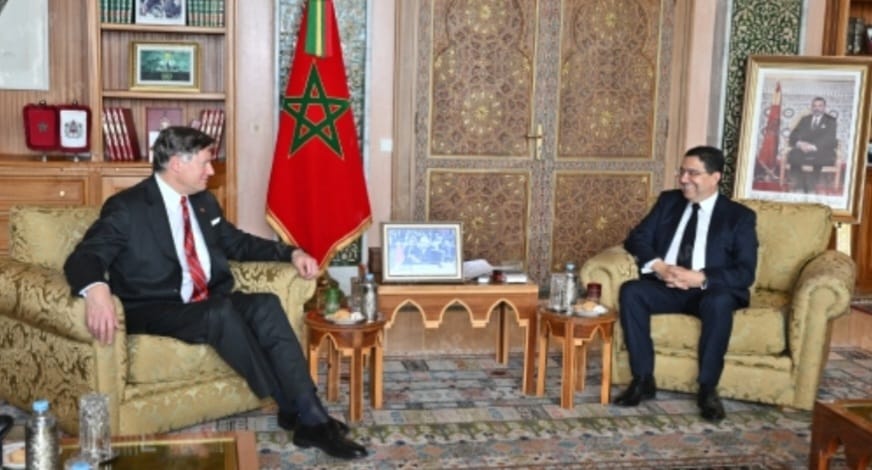
Speaking at a joint press conference in Rabat following high-level talks with Moroccan Foreign Minister Nasser Bourita, U.S. Deputy Secretary of State Christopher Landau declared, “The United States recognizes Morocco’s sovereignty over the Sahara,” underscoring Washington’s sustained diplomatic alignment with the North African kingdom.
A Conflict Rooted in Decolonization
The Western Sahara dispute dates back to 1975, following Spain’s withdrawal from the territory.
Morocco swiftly annexed much of the region, triggering a prolonged conflict with the Polisario Front, which seeks independence for the Sahrawi people and is backed by Algeria.
A ceasefire brokered in 1991 under the auspices of the United Nations halted active hostilities, alongside a promise of a referendum on self-determination.
However, disagreements over voter eligibility and political conditions have stalled the process for over three decades.
Today, Western Sahara remains a disputed territory of approximately 266,000 square kilometers, with an estimated population of around 600,000 people.
Roughly 80% of the territory is administered by Morocco, while the remainder lies under Polisario control.
U.S. Position: Continuity and Strategic Alignment
Washington’s recognition of Moroccan sovereignty over Western Sahara was first formalized in December 2020 under the Trump Administration, in conjunction with Morocco’s normalization of diplomatic relations with Israel under the Abraham Accords.
Despite changes in leadership, the policy has remained intact through subsequent administrations, signaling a rare continuity in U.S. foreign policy in the region.
Landau emphasized that the U.S. continues to support Morocco’s autonomy initiative first proposed in 2007 as “serious, credible, and realistic,” describing it as “the only basis for a just and lasting solution” to the conflict.
The autonomy plan would grant Western Sahara limited self-governance under Moroccan sovereignty, a framework that has gained backing from several Western and Arab nations in recent years.
Pressure Mounts for Resolution
Referencing the latest United Nations Security Council resolution, Landau stressed the urgency of resolving the conflict.
“This situation cannot wait another 50 years, 150 years, or 200 years,” he said, alluding to UN Security Council Resolution 2797, which calls for a pragmatic, realistic, and lasting political solution based on compromise.
The envoy’s remarks reflect growing international impatience with the diplomatic stalemate, which has persisted for nearly half a century and continues to hinder regional integration in North Africa.
Economic Dimension: Investment in the Sahara
In addition to political backing, the United States signaled strong support for expanding economic engagement in the region.
Landau highlighted Washington’s encouragement of American companies to invest in Western Sahara, particularly in sectors such as renewable energy, fisheries, and infrastructure.
Morocco has already invested billions of dollars into the region, developing key infrastructure projects, including the port of Dakhla and solar energy initiatives, positioning the territory as a reliable gateway to West Africa.
Regional and Global Implications
The U.S. stance places it at odds with countries that continue to support a referendum-based solution, including Algeria, while aligning it with a growing bloc of nations endorsing Morocco’s autonomy plan.
Analysts suggest that Washington’s position reflects broader geopolitical priorities, including stability in the Sahel region, counterterrorism cooperation, and economic partnerships across Africa.
While the U.S. reaffirmation strengthens Morocco’s diplomatic position, the path to a final settlement remains uncertain.
The Polisario Front has rejected the autonomy proposal, insisting on full independence, and sporadic tensions have resurfaced in recent years.
As international pressure builds, the question remains whether renewed diplomatic momentum backed by major global powers can finally bring closure to one of the world’s most enduring territorial disputes.
