


By: Julius Konton
President Joseph Nyuma Boakai, Sr. has formally endorsed three strategic Concept Notes designed to guide Liberia’s pursuit of a proposed second compact with the United States-funded Millennium Challenge Corporation (MCC), marking a significant step in the country’s efforts to overcome longstanding infrastructure and economic development challenges.
The endorsement, announced by the Executive Mansion on June 8, 2026, comes as Liberia intensifies preparations for a potential second MCC Compact, a development partnership that could unlock hundreds of millions of dollars in grant financing for critical national projects.
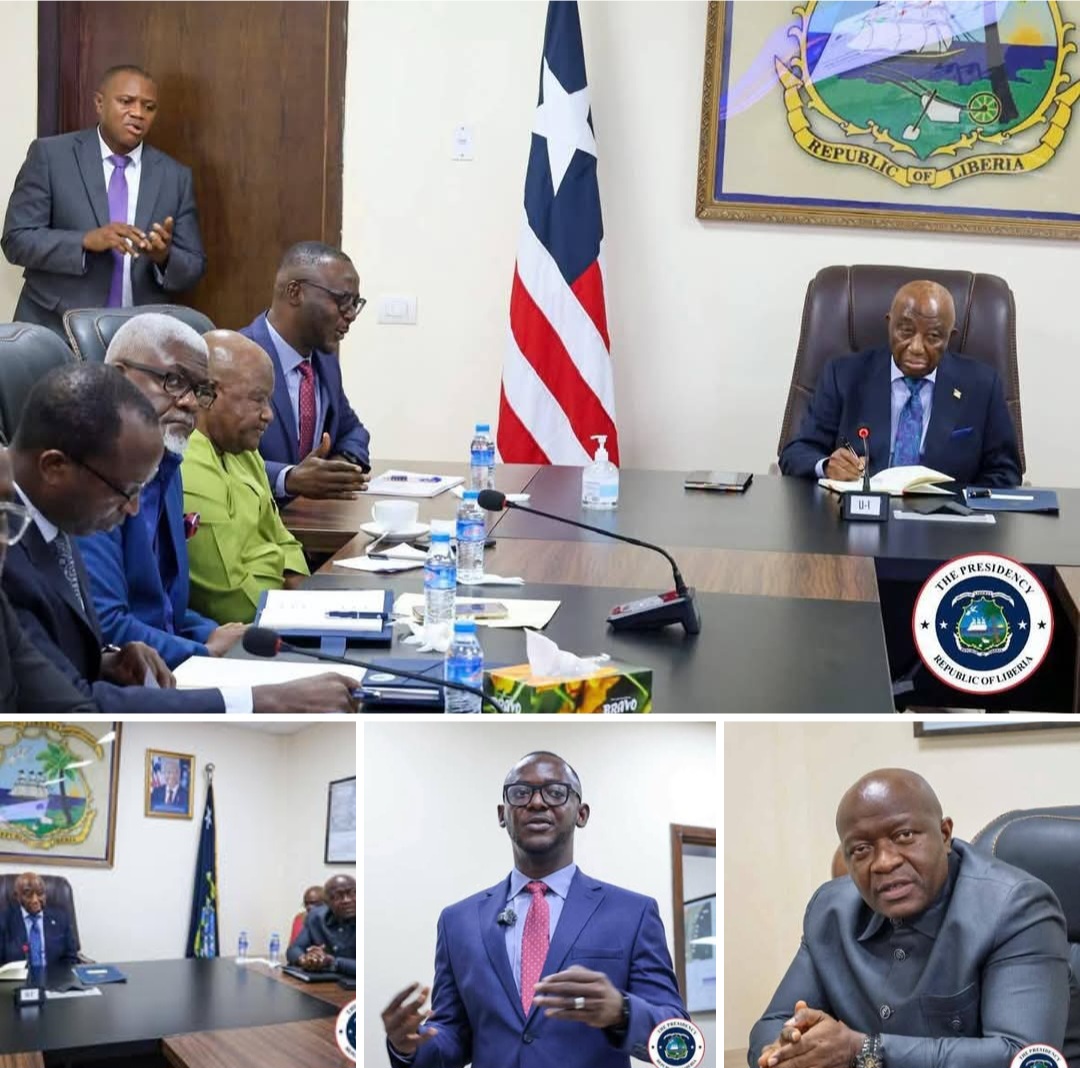
The Concept Notes were presented to President Boakai on June 3 by the Compact Development Team (CDT), headed by National Coordinator Alieu Fuad Nyei.
The proposals focus on three priority areas identified as major barriers to economic growth: electricity access and sector reform, workforce development for the energy industry, and governance reforms within Liberia’s mining sector.
Addressing Liberia’s Electricity Challenge
At the heart of the proposed compact is a comprehensive strategy to tackle Liberia’s chronic electricity deficit, widely regarded as one of the country’s most significant constraints to economic growth.
Despite years of investment since the end of Liberia’s civil conflict in 2003, access to reliable electricity remains among the lowest in Sub-Saharan Africa.
According to World Bank and sector estimates, national electricity access has improved significantly over the past decade but remains limited, particularly in rural communities where many households continue to rely on costly generators, solar panels, or traditional energy sources.
Liberia’s electricity tariffs have historically ranked among the highest in Africa, creating obstacles for industrial development, job creation, and private-sector investment.
Businesses frequently cite unreliable power supply as a major operational challenge, increasing production costs and reducing competitiveness.
The first Concept Note proposes targeted interventions in electricity generation, transmission infrastructure, distribution networks, and sector governance.
The initiative seeks to expand access to affordable and reliable power while strengthening institutional reforms aimed at improving efficiency, transparency, and financial sustainability within the energy sector.
Officials believe these investments could significantly enhance productivity in key economic sectors, including manufacturing, mining, agriculture, and services.
Building Human Capital for Energy Development
Recognizing that infrastructure alone cannot drive sustainable growth, the second Concept Note focuses on workforce development and technical capacity building.
The proposal emphasizes the creation of specialized training programs to equip Liberians with the technical and vocational skills needed to operate, maintain, and manage modern energy systems.
Experts have long argued that Liberia faces a shortage of skilled technicians, engineers, and energy-sector professionals, limiting the country’s ability to maximize returns from major infrastructure investments.
The proposed interventions aim to create employment opportunities for young people while strengthening the country’s capacity to sustain future energy projects without excessive reliance on foreign expertise.
Strengthening Mining Governance
The third Concept Note centers on improving governance and investment facilitation in Liberia’s mining sector, one of the country’s most important sources of export revenue and foreign direct investment.
Liberia possesses substantial deposits of iron ore, gold, diamonds, and other minerals.
Mining has historically served as a key pillar of the national economy, accounting for a significant share of exports and government revenue.
However, policymakers and development partners have frequently highlighted governance challenges, regulatory bottlenecks, and institutional weaknesses that can limit the sector’s contribution to sustainable development.
The proposal seeks to modernize regulatory frameworks, improve transparency, strengthen oversight mechanisms, and create a more attractive environment for responsible investment.
Officials believe these reforms could help Liberia better manage its natural resources while ensuring greater economic benefits for citizens.
Aligning with MCC Investment Criteria
According to CDT National Coordinator Alieu Fuad Nyei, the proposed projects were carefully developed in line with the Millennium Challenge Corporation’s rigorous investment criteria.
The proposals are designed to address root causes of economic constraints, generate measurable economic returns, and demonstrate strong national ownership of both development challenges and proposed solutions.
The MCC is known globally for its evidence-based approach to development financing. Countries seeking compact funding must meet strict standards related to good governance, economic freedom, and investments in people.
Liberia has made notable progress on the MCC Scorecard in recent years, improving performance across several governance and policy indicators that determine eligibility for MCC support.
Presidential Support and Government Coordination
President Boakai praised members of the Compact Development Team for their work and reiterated his administration’s commitment to maintaining Liberia’s eligibility and competitiveness within the MCC selection process.
The President instructed government ministries and agencies to collaborate closely with the CDT and provide regular updates on reform implementation and compact development activities.
He further directed that the Concept Notes be presented before Cabinet for broader government endorsement, underscoring the administration’s intention to pursue the proposed compact as a national priority.
Senior officials from key government institutions responsible for electricity, workforce development, and mining participated in the presentation, reflecting what authorities described as a “whole-of-government” approach to the process.
Following President Boakai’s endorsement, the finalized Concept Notes were officially submitted to the Millennium Challenge Corporation on June 5, 2026.
The MCC is expected to convene an Investment Management Committee meeting in late July to review Liberia’s proposed investment portfolio and determine whether the projects advance to the next stage of compact development.
A formal decision is expected to be communicated to the Government of Liberia in early August 2026.
If approved, the proposed second compact could represent one of the largest development partnerships undertaken by Liberia in recent years, potentially accelerating economic growth, improving infrastructure, strengthening governance, and expanding opportunities for millions of Liberians.
Liberia previously benefited from a Millennium Challenge Corporation compact signed in 2015, valued at approximately US$257 million.
That program focused heavily on electricity infrastructure and road maintenance, including investments in the Mount Coffee Hydropower Plant and reforms within the power sector.
Development analysts note that the success of a second compact could build upon those earlier achievements while addressing remaining structural barriers that continue to constrain economic growth.
As Liberia seeks to attract greater investment and expand economic opportunities, the outcome of the upcoming MCC review is expected to be closely watched by government officials, development partners, investors, and citizens alike.


