



By: Julius Konton
Liberia’s National Port Authority (NPA) has been recognized among the country’s best-performing public institutions for 2025 under the Executive Performance Management and Compliance System introduced by President Joseph Nyuma Boakai, marking a significant endorsement of reforms underway at one of West Africa’s most strategic maritime gateways.
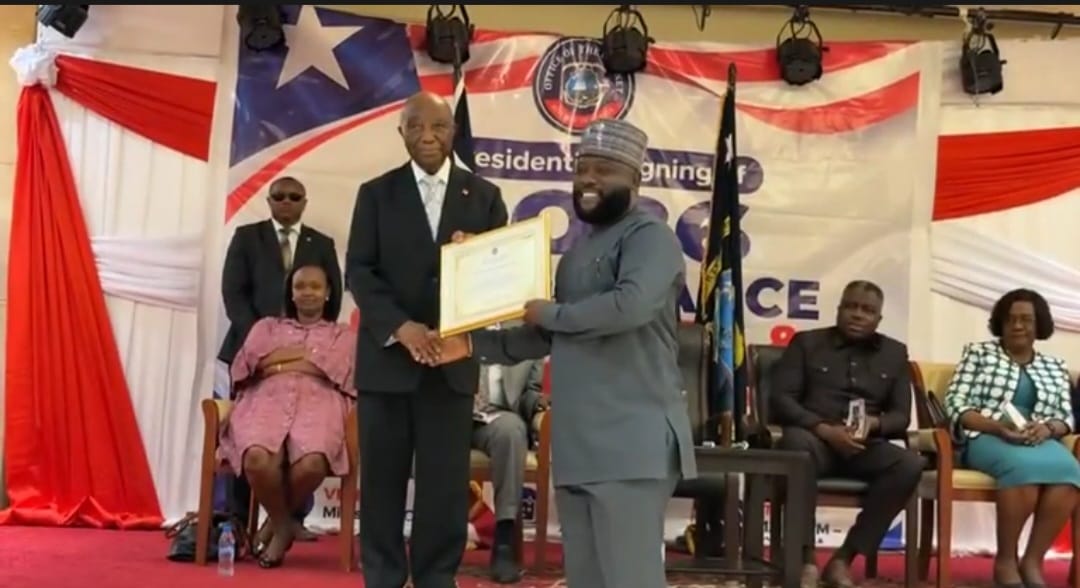
The recognition was announced during a national ceremony involving cabinet ministers, heads of state-owned enterprises, and senior officials who signed renewed performance contracts for the 2026 fiscal year.
The initiative forms part of the Boakai administration’s broader governance strategy aimed at increasing transparency, accountability, and measurable service delivery across government institutions.
Officials said the annual contracts are designed to track progress through quarterly assessments, key performance indicators, and public reporting mechanisms intended to improve confidence in state institutions.
Strategic Institution at the Heart of Liberia’s Economy
The National Port Authority oversees the Freeport of Monrovia and other critical maritime facilities that serve as gateways for Liberia’s imports and exports.
Maritime trade remains central to Liberia’s economy, with ports handling the majority of imported fuel, machinery, food supplies, and commercial goods.
Analysts note that efficient port operations can significantly reduce cargo delays, lower shipping costs, and improve national competitiveness.
Across Africa, the World Bank has estimated that logistics bottlenecks and port inefficiencies cost economies billions of dollars annually through congestion, demurrage fees, and trade delays.
For Liberia, reforms at the NPA are especially important because the port sector directly supports construction, agriculture, mining, petroleum distribution, and consumer markets.
Dukuly Leadership Credited for Visible Improvements
Under the leadership of Managing Director Sekou Hussein Dukuly, the NPA has reportedly undertaken reforms focused on:
Infrastructure upgrades at port facilities
Workforce development and improved staff productivity
Technology integration for operations and administration
Modernization initiatives to improve cargo handling systems
Institutional reforms aimed at efficiency and transparency
Government observers say these measures have helped reposition the authority after years of operational challenges common to many developing-country port systems, including aging equipment, limited automation, and administrative delays.
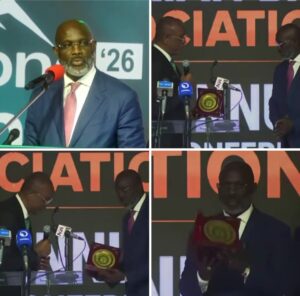
The Office of the Cabinet formally recognized the NPA’s progress during the performance contracts ceremony, awarding certificates to institutions that met or exceeded targets during the 2025 review period.
Recognition Seen as Motivation for Greater Results
Speaking after the ceremony, Managing Director Sekou Hussein Dukuly described the award as encouragement for management and staff to intensify reforms.
According to him, the acknowledgment demonstrates that measurable public-sector progress is possible when institutions commit to discipline, planning, and service delivery.
He said the NPA intends to build on current gains and continue transforming Liberia’s maritime sector into a modern and competitive regional trade hub.
Independent Media Also Rated NPA Positively
The authority’s latest recognition follows an earlier independent assessment by FrontPage Africa, one of Liberia’s leading media organizations, which reportedly graded the NPA “B” in its 2025 public institutional performance scorecard.
Such independent evaluations are increasingly viewed as complementary accountability tools, helping citizens compare government performance beyond official reports.
Road Map for Nationwide Port Development
As part of its long-term strategy, the NPA has also launched a national road map plan aimed at improving maritime infrastructure and port services across Liberia, not only in Monrovia but in other coastal trade corridors.
Liberia possesses more than 560 kilometers (348 miles) of Atlantic coastline, giving the country strategic potential for fisheries, shipping, and regional trade if maritime infrastructure is fully developed.
Experts say sustained investment in ports could:
Increase customs revenue
Expand export capacity
Create jobs in logistics and transport
Attract foreign direct investment
Strengthen Liberia’s role in regional trade under the African Continental Free Trade Area (AfCFTA)
Governance Reform Under Spotlight
President Joseph Nyuma Boakai has repeatedly emphasized performance-based governance since taking office, arguing that public officials must be judged by results rather than titles.
The recognition of institutions such as the NPA signals an effort by the administration to reward measurable progress while placing underperforming agencies under closer scrutiny.
For many Liberians, the key test will be whether such reforms translate into lower costs, faster services, more jobs, and visible national development.
With fresh recognition, rising expectations, and a renewed mandate under the 2026 performance contracts, Liberia’s National Port Authority now faces the challenge of converting momentum into lasting transformation.
If reforms continue, analysts say the NPA could become one of the strongest examples of public-sector turnaround in Liberia’s post-war governance era.


