


By: Julius Konton
The opposition Movement for Economic Empowerment (MOVEE) is set to convene its First National Executive Committee (NEC) Meeting of 2026, marking a pivotal moment in the party’s political calendar while simultaneously advancing its grassroots empowerment agenda with the graduation of 49 women from its flagship vocational training initiative.
The high-level gathering will take place on Saturday, February 28, 2026, at 9:00 a.m. at MOVEE’s National Headquarters in Paynesville City, drawing together the party’s senior leadership at a time of growing political realignment within Liberia’s opposition landscape.
Strengthening Party Governance and Structure
The NEC meeting is being held in strict compliance with Article 19, Section 2(a) of MOVEE’s 2024 Revised Constitution, which mandates the convening of the party’s National Executive Committee every six months.
Political analysts note that adherence to constitutional procedures has increasingly become a benchmark for credibility and internal democracy among Liberia’s political parties.
Expected in attendance are chairpersons from all 15 counties and 27 members of the Central National Executive Committee, representing nationwide party structures.
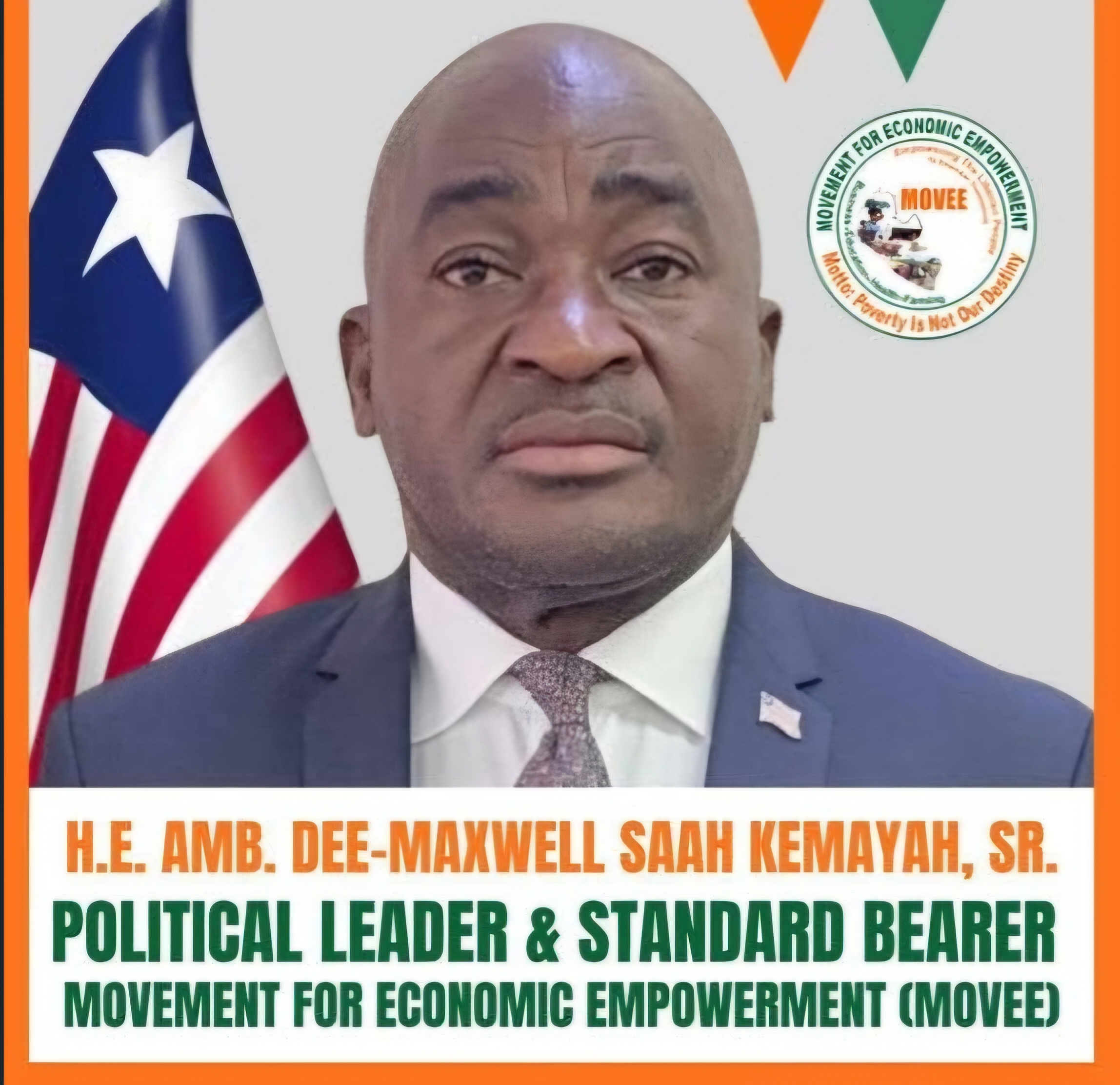
The meeting will be presided over by MOVEE’s Political Leader and Standard Bearer, Dee-Maxwell Saah Kemayah, Sr.
According to party officials, deliberations will focus on:
The overall status and growth of the party
Operational efficiency and internal reforms
Restructuring of county-level leadership
Membership dues compliance and mobilization
Strategic positioning ahead of future electoral cycles
MOVEE insiders say the meeting aims to reposition the party as a disciplined, policy-driven opposition force capable of influencing national economic discourse.
Women Empowerment Takes Center Stage
In a parallel event underscoring MOVEE’s social development ideology, the Dee-Maxwell Saah Kemayah, Sr. Women Empowerment and Vocational Skills Training Program will host its Second Graduation Ceremony at 2:00 p.m. on the same day.
The ceremony will celebrate 49 women who have successfully completed a six-month intensive training program in tailoring and cosmetology, two skills sectors with strong income-generating potential in Liberia’s informal and small-business economy.
Liberia continues to face high youth and female unemployment.
According to national labor estimates, more than 70% of working women operate in the informal sector, often without technical training or stable income.
MOVEE officials say the program is designed to address this gap by equipping women with practical, market-ready skills.
High-Profile Attendance Signals Political Weight
The graduation ceremony will feature prominent national figures, including George Manneh Weah, Liberia’s 25th President and Political Leader of the Coalition for Democratic Change (CDC), who will serve as Special Guest of Honor.
Former President Weah is expected to deliver special remarks and personally present certificates of achievement to the graduates.
The keynote address will be delivered by A. Patrick Sowah, former President of the University of Liberia Student Union (ULSU), currently based in Minnesota, United States.
His participation highlights the growing engagement of the Liberian diaspora in national development initiatives.
An Inclusive, Free Skills Training Model
MOVEE officials emphasize that the women empowerment program is completely free, removing financial barriers that often exclude vulnerable women from vocational education.
The initiative is open to Liberian women and girls regardless of political affiliation, religion, ethnicity, or geographic origin, a model observers say strengthens its national appeal.
Since its inception, the program has trained dozens of women, with many graduates reportedly establishing micro-enterprises or securing employment within months of completion.
Positioning MOVEE in Liberia’s Opposition Politics
Founded on the principle that economic empowerment is the foundation of national prosperity, MOVEE has increasingly blended political advocacy with social intervention.
Analysts note that this dual strategy party reform coupled with community empowerment has helped the movement maintain relevance within Liberia’s crowded opposition space.
As Liberia approaches future electoral milestones amid economic recovery challenges, MOVEE’s leadership insists the party will continue to project itself as one of the most formidable opposition forces, advocating policies that prioritize skills development, inclusive growth, and grassroots economic participation.
“Only an economically empowered people can build a prosperous nation,” party officials reiterated, an ideology that MOVEE says will remain central to its political and social mission.


