
By: Julius Konton
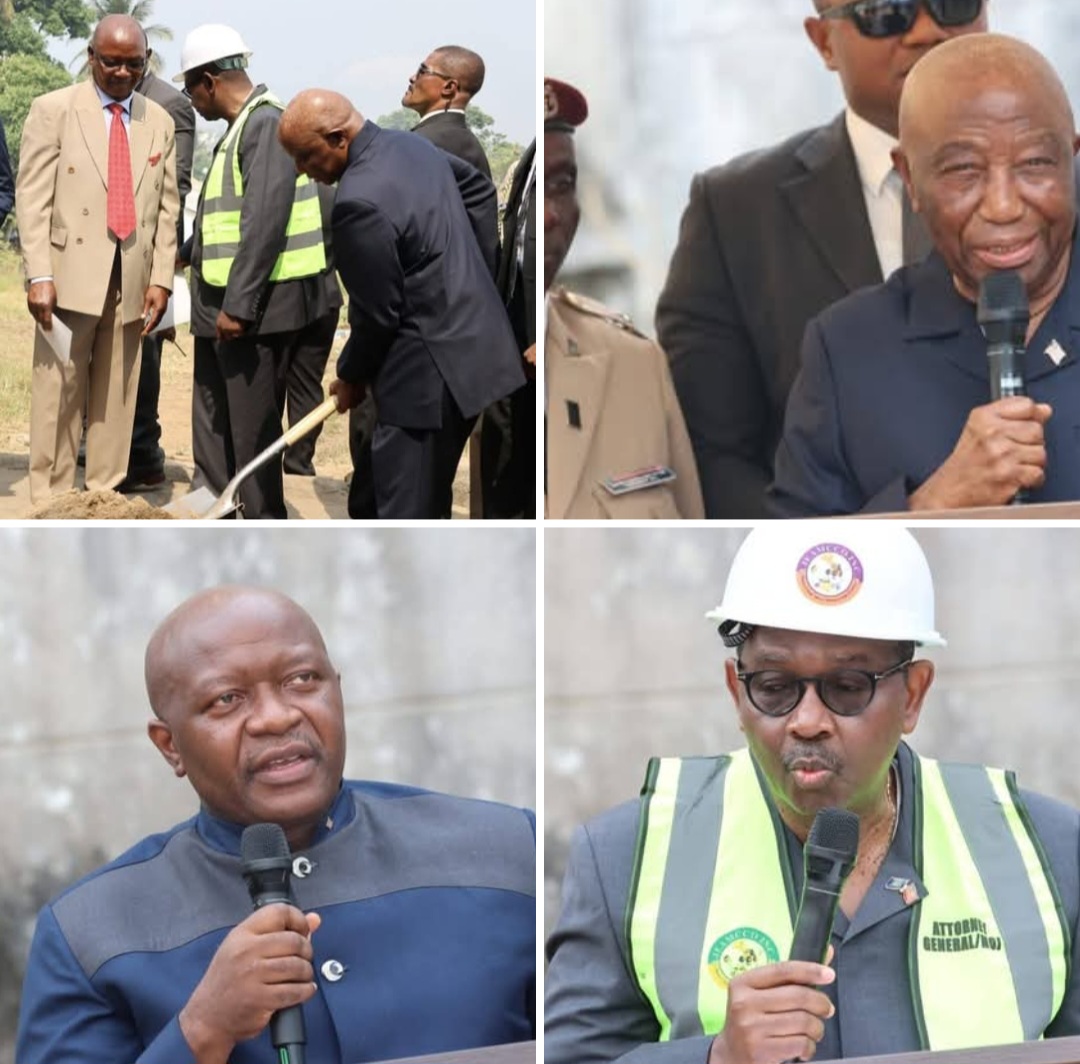
In a move the government describes as a turning point for Liberia’s justice and security architecture, the administration of President Joseph Nyuma Boakai has officially broken ground for the construction of a long-awaited Justice Complex to house the Ministry of Justice and several key law enforcement institutions.
The groundbreaking ceremony, held near Capitol Hill in Monrovia, signals a shift from years of fragmented and rented government facilities toward permanent institutional infrastructure an issue that has plagued Liberia’s justice sector for decades.
Speaking at the ceremony, Minister of Finance and Development Planning Augustine Kpehe Ngafuan said the project represents the practical implementation of President Boakai’s ARREST Agenda for Inclusive Development, which prioritizes accountability, rule of law, security, and institutional reform.
“This groundbreaking is not symbolic, it is evidence that the President’s vision for transformation is being actualized.
We are moving from plans to execution,” Ngafuan said.
A Justice System Long on Paper, Short on Infrastructure
For more than three decades, Liberia’s Ministry of Justice has operated without a permanent headquarters, frequently relocating due to space constraints and rental challenges.
The Ministry has moved from Ashmun Street to 15th Street in Sinkor, later to Mamba Point, with several agencies scattered across Monrovia.
The lack of a centralized justice complex has not only strained coordination among institutions but has also cost the government millions of dollars in rental fees over the years, resources critics argue could have been redirected toward public services.
The new Justice Complex is expected to accommodate multiple security and justice agencies, including:
The Ministry of Justice
The Liberia National Police (LNP)
The Liberia Immigration Service (LIS)
The Liberia National Fire Service
The Liberia Drug Enforcement Agency (LDEA)
According to government officials, the consolidation will enhance inter-agency coordination, improve service delivery, and strengthen national security operations.
Economic Rationale: Cutting Rent, Redirecting Resources
Minister Ngafuan emphasized that beyond governance reform, the project makes strong economic sense.
Liberia currently spends significant portions of its annual budget on office rentals for ministries and agencies.
Though exact figures were not disclosed, public expenditure reports over the years indicate that government rental costs run into millions of U.S. dollars annually.
“Once this complex is completed, the money previously spent on rent will be saved and redirected to priorities such as education, health, roads, and other bread-and-butter issues affecting ordinary Liberians,” Ngafuan explained.
The Finance Minister stressed that addressing economic hardship requires a multi-sectoral approach, with each government institution contributing to national recovery.
Linking Justice Reform to Human Capital Investment
Ngafuan also placed the Justice Complex within the broader development framework of the Boakai administration, citing recent investments in education and human capital.
In 2025, the government launched the EXCEL Education Project, mobilizing approximately US$88 million from the World Bank, the Global Partnership for Education, and other international partners.
The initiative targets foundational learning nationwide, particularly in early-grade literacy and numeracy.
“The President is not only addressing today’s bread-and-butter issues but laying the foundation for the future,” Ngafuan said.
He added that strengthening the justice sector is critical to sustaining economic growth, attracting investment, and maintaining social stability, key pillars of Liberia’s long-term development.
Funding and Commitment: ‘We Will Finish What We Start’
According to the Ministry of Finance, funding for the Justice Complex will come from a combination of national budgetary allocations and mobilized external resources.
Ngafuan assured Justice Ministry officials that the project enjoys full financial backing from the government.
“Some of the resources are coming directly from the government’s own budget, and we are mobilizing additional funding.
Once we start, we will not stop until this project is completed,” he declared.
A Broader Message Ahead of Reform Expectations
The Justice Complex project comes amid rising public expectations for reform, accountability, and improved service delivery under the Boakai’s administration, which took office promising a break from business-as-usual governance.
Analysts note that while the groundbreaking marks progress, the true test will lie in timely completion, cost transparency, and effective utilization of the facility once completed.
For now, the project stands as one of the most visible infrastructure initiatives under the ARREST Agenda symbolizing an attempt to rebuild not just physical structures, but public confidence in Liberia’s justice system.
