


By : Julius Konton
Liberia is witnessing a moment where personal grief has intersected with national introspection, following the death of Ma-Watta Kumba Soliyah Larmie, mother of former Foreign Affairs Minister, Ambassador Dee-Maxwell Saah Kemayah, Sr.
The respected matriarch passed away on March 11, 2026, at St. Joseph Catholic Hospital in Monrovia.
While her death has drawn an outpouring of sympathy from across Liberia’s political spectrum, it has also triggered subtle but growing concerns about governance, due process, and the broader human rights environment in the country.
An Outpouring of National Sympathy Across Political Divides
In a rare display of unity in Liberia’s often polarized political landscape, prominent figures from across party lines have extended condolences to Ambassador Kemayah and his family.
Among them, Alexander B. Cummings, Political Leader of the Alternative National Congress (ANC), conveyed a deeply personal message rooted in shared experience:
“Losing a mother is tough, You are in my thoughts and prayers.”
Cummings’ remarks resonated widely, reflecting a universal human experience that transcends political rivalry.
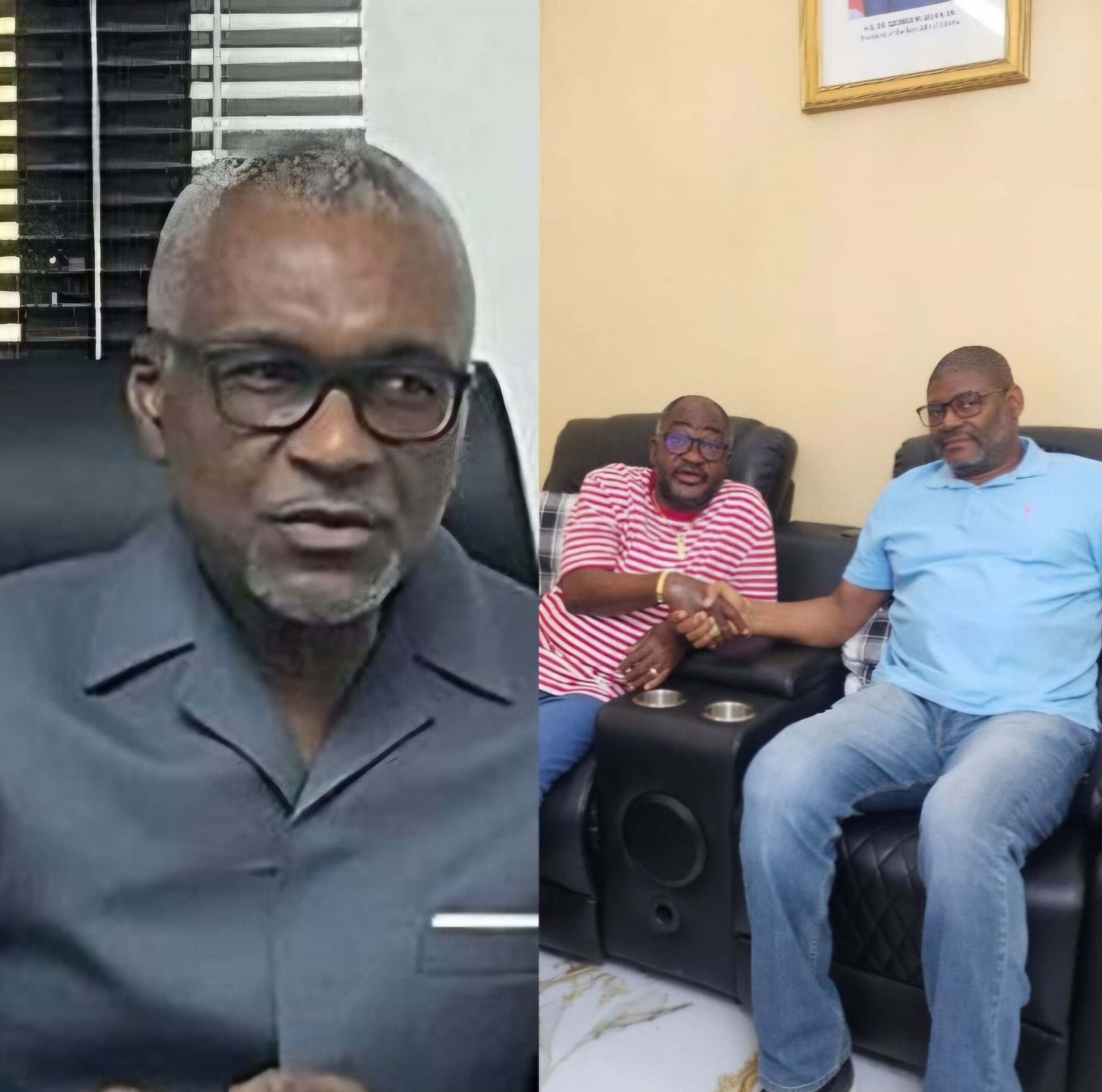
Ambassador Kemayah, in response, acknowledged both the empathy and the emotional weight of his loss, describing the bond with his mother as one forged over more than six decades.
Similarly, Grand Bassa County Senator Gbehzohngar Milton Findley himself a former Foreign Minister paid tribute during a personal visit, recalling the late matriarch’s warmth and vibrant personality.
He emphasized that her passing represents not only a family tragedy but the loss of a woman whose presence impacted many beyond her immediate circle.
Additional condolences came from current Senate Pro Tempore Nyonblee Karnga-Lawrence and former Pro Tempore Albert T. Chie, underscoring the breadth of national solidarity.
A Symbolic Visit: Unity Beyond Politics
In a gesture widely interpreted as symbolically significant, George Weah Jr., popularly known as “Champ Weah” and son of former President George Manneh Weah, led a quiet delegation to the Kemayah residence in Paynesville.
Observers noted that the visit conducted without fanfare highlighted enduring personal bonds that transcend Liberia’s political divides. Such moments are rare in a country where political competition has historically shaped public discourse.
Liberia’s post-war democratic era, particularly since the end of the civil conflict in 2003, has often been marked by sharp political polarization.
Yet, episodes like this suggest an underlying social cohesion that surfaces in moments of collective grief.
From Mourning to Questions: Circumstances of Death Under Scrutiny
While condolences continue to pour in, attention is increasingly shifting toward the circumstances surrounding Ma-Watta Larmie’s final days.
Family sources and close associates have referenced “painful circumstances,” prompting public speculation and quiet concern among civil society actors.
According to individuals familiar with the situation, the late matriarch’s health reportedly deteriorated following a traumatic incident involving the search of Ambassador Kemayah’s residence and his subsequent arrest in 2025.
Though these claims remain unverified by independent authorities, they have sparked broader discussions about the psychological and physical impact of law enforcement operations on families particularly elderly individuals.
Legal and Human Rights Context:
Presumption of Innocence Under Spotlight
Liberia’s 1986 Constitution guarantees the presumption of innocence and protection from inhumane treatment.
However, rights advocates have long raised concerns about gaps between legal provisions and enforcement.
According to reports from organizations such as Amnesty International and the U.S. State Department in recent years, Liberia continues to face challenges related to:
Due process in arrests and detentions
Conditions of law enforcement operations
Protection of vulnerable individuals during state actions
While no official link has been established between these systemic concerns and the death of Ma-Watta Larmie, the situation has reignited debate about accountability and institutional safeguards.
Health System Pressures: A Broader National Issue
Liberia’s healthcare system, still recovering from the devastating 2014–2016 Ebola epidemic, remains under strain.
The country has approximately 0.1 physicians per 1,000 people, far below the World Health Organization’s recommended threshold.
St. Joseph Catholic Hospital, where Ma-Watta Larmie passed away, is one of Monrovia’s key referral facilities.
However, like many hospitals in Liberia, it faces challenges including:
Limited medical personnel
Inadequate equipment
High patient-to-doctor ratios
These systemic constraints often complicate emergency responses, particularly for elderly patients with pre-existing conditions such as hypotension.
A Family’s Grief, A Nation’s Reflection
As funeral preparations continue reportedly involving weekly family coordination meetings the mourning process has drawn participation commitments from political leaders, friends, and well-wishers.
What began as a private bereavement has evolved into a moment of national reflection one that blends empathy with scrutiny.
For many Liberians, the passing of Ma-Watta Kumba Soliyah Larmie represents more than the loss of a matriarch.
It has become a lens through which broader questions are being quietly examined:
Could more have been done to protect vulnerable individuals during state operations?
Are existing legal safeguards sufficient and properly enforced?
How can public institutions better balance security with human dignity?
A Nation Watches Closely
In a country where politics often divides, this moment has briefly united citizens in shared mourning.
Yet beneath that unity lies a deeper, unresolved conversation about governance, accountability, and the human cost of state actions.
For now, Liberia grieves with the Kemayah family.
But as the funeral approaches, the nation continues to watch seeking not only closure, but answers.


