
By: Julius Konton
The Government of Liberia has intensified efforts to secure stronger international backing for its national development priorities after high-level talks with the World Bank during the ongoing IMF/World Bank Spring Meetings in Washington, D.C.
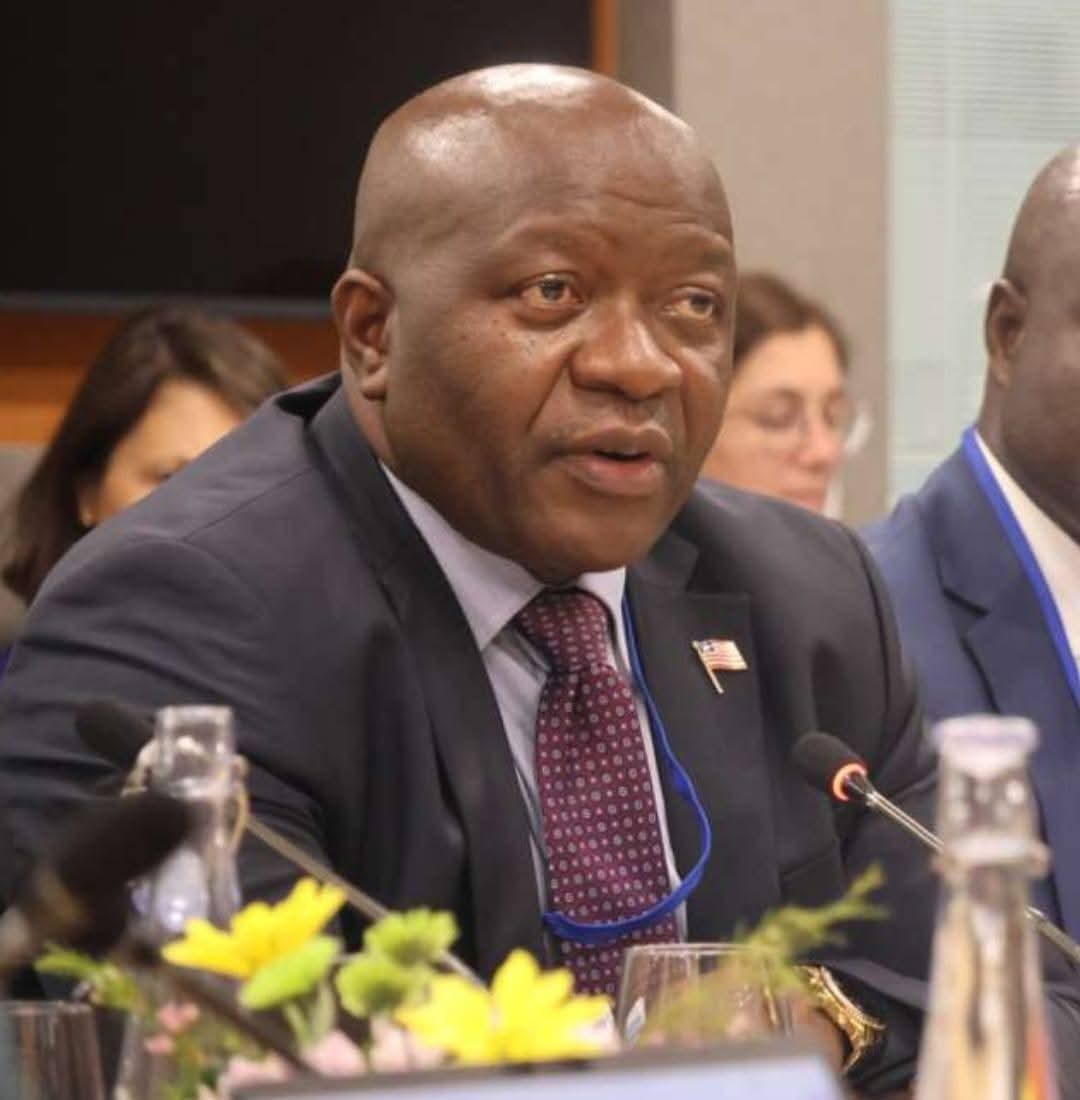
Liberia’s Minister of Finance and Development Planning, Augustine Kpehe Ngafuan, led a senior government delegation in a strategic meeting with Ousmane Diagana, alongside senior World Bank managers and directors, to discuss support for Liberia’s development agenda, review key sector portfolios, and address growing economic risks linked to the ongoing Middle East crisis.
The discussions centered on Liberia’s national ARREST Agenda for Inclusive Development, the administration’s flagship strategy aimed at accelerating economic transformation, improving infrastructure, creating jobs, and expanding access to basic services.
Liberia Warns of Rising External Pressures
Minister Ngafuan told World Bank officials that Liberia is already feeling the direct and indirect effects of the international crisis, particularly through rising global petroleum prices.
According to the minister, the Liberian government has adjusted domestic petroleum pump prices twice in recent weeks in response to international market volatility, raising concerns over transport fares, food inflation, and the cost of doing business.
As a net importer of fuel and many food commodities, Liberia remains highly vulnerable to external price shocks. Analysts note that energy imports consume a significant share of Liberia’s foreign exchange earnings, making global oil disruptions especially painful for households and businesses.
Liberia’s inflation rate, which has fluctuated in recent years due to currency pressures and imported costs, could face renewed upward pressure if global tensions persist.
Government Rolls Out Cushioning Measures
To protect citizens from worsening economic hardship, Minister Ngafuan outlined a package of stabilization measures now under consideration or implementation by the government.
These include:
Public transport support programs to reduce fare increases
Targeted subsidies for vulnerable communities
Measures to contain inflationary pressures
Enhanced macroeconomic management to preserve stability
Social protection interventions for low-income households
The minister stressed that international solidarity and timely financial assistance will be crucial for low-income economies like Liberia navigating multiple global shocks.
Sector Leaders Present Progress Reports
The Liberian delegation also used the meeting to conduct a broad review of World Bank-supported sector programs tied to roads, electricity, agriculture, fisheries, water, and education.
Senior officials participating included:
Roland Giddings, Ministry of Public Works
Mohammed Sheriff
J. Alexander Nuetah
Mohammed Ali
Cyrus Saygbe
Nyekeh Yarkpao Forkpa
The officials provided updates on project implementation, operational bottlenecks, and financing needs across strategic sectors.
World Bank Reaffirms Strong Support
In response, Mr. Diagana reaffirmed the World Bank’s commitment to Liberia’s development ambitions and praised the country’s engagement on reforms and portfolio delivery.
He disclosed that the Bank is exploring additional financing windows and policy support measures for Liberia and other countries facing severe spillover effects from the global crisis.
According to World Bank data, Liberia has benefited from hundreds of millions of dollars in concessional financing over the past decade in roads, electricity expansion, health systems, governance, and agriculture modernization.
Recent support has included investments in rural roads, renewable energy access, urban water supply, and institutional reform programs.
Liberia’s Economy at a Critical Juncture
Liberia’s economy, valued at roughly US$4.5 billion, has shown gradual recovery since the pandemic era, supported by mining, agriculture, services, and infrastructure spending.
However, experts warn that global instability, commodity price surges, and climate-related disruptions remain major threats to sustained growth.
With more than half of Liberia’s population estimated to live below the poverty line, protecting vulnerable communities remains central to government policy.
Commitment to Close Coordination
At the close of the meeting, both sides emphasized the need for stronger coordination between the Government of Liberia and the World Bank to ensure rapid, targeted, and effective responses to evolving global economic risks.
For Liberia, the Washington talks signal a broader diplomatic push to mobilize international capital, preserve economic gains, and accelerate national transformation under the ARREST Agenda.
