
By: Staff Writer
A promised landmark investment poised to reshape Liberia’s football landscape is now emerging as one of the most controversial sports infrastructure promises in recent memory.
Nearly two years after its grand unveiling, the much-publicized US$4.5 million stadium project announced by FC Fassell has yet to break ground, leaving behind unanswered questions, eroding public confidence, and intensifying scrutiny over governance and accountability in Liberian football.
A Vision Unveiled, a Reality Deferred
In July 2024, FC Fassell’s Chief Executive Officer, Cassell Kuoh, unveiled ambitious plans for a modern football stadium in Marshall, branding the project a “beacon of hope” for the domestic game.
The facility was projected as a transformative hub designed to professionalize club football, decentralize match venues from Monrovia, and provide a permanent home for the club famously nicknamed the Soccer Missionaries.
At the time, Kuoh himself a former vice president of the Liberia Football Association assured stakeholders that construction would commence within eight months.
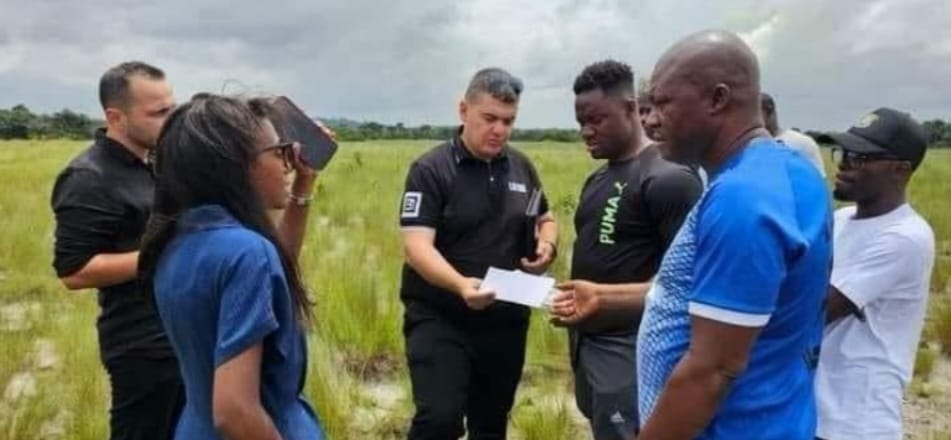
As of February 2026, however, the proposed site remains untouched: no fencing, no foundation work, no heavy machinery only an open tract of land where expectations once ran high.
The Money Question: 75% Paid, Zero Progress
The controversy deepened following Kuoh’s January 24, 2026 radio interview, where he disclosed that 75% of the total project cost approximately US$3.375 million had already been paid to AS Grass, the Turkish firm contracted to execute the project.
According to Kuoh, the original agreement required AS Grass to complete construction before receiving the remaining 25%.
He claims the firm later demanded full payment upfront, allegedly citing financial losses suffered after completing a similar stadium project in Guinea without timely compensation.
The contractor, Kuoh said, offered two options: proceed only after full payment or refund the US$3.375 million already paid.
He further asserted that construction materials had been packed and prepared for shipment from Turkey before negotiations stalled.
To date, no independent documentation has been made public to substantiate the payment, the alleged refund option, or the shipment of materials.
Competing Priorities or Convenient Pauses?
Kuoh has also attributed delays to FC Fassell’s congested competitive calendar, noting the club’s involvement alongside Determine Girls in continental competitions organized by CAF.
Yet critics argue this explanation rings hollow.
While the stadium project remains frozen, the club has reportedly financed an expensive pre-season training camp in Cairo, raising questions about financial prioritization.
“For a club claiming cash-flow constraints on a national infrastructure project, the optics are troubling,” remarked one football analyst.
“You cannot pause bricks and mortar but accelerate luxury logistics.”
From Digital Updates to Physical Silence
Supporters have been fed a steady stream of online assurances.
On August 19, 2025, a pro-Kuoh platform claimed geotechnical engineers had completed soil testing at the site.
On December 30, 2025, another update announced that 12 containers of construction materials were ‘en route to Liberia’, with construction slated for early 2026.
As of mid-February, no confirmation exists that the containers arrived, nor has any groundbreaking ceremony been announced.
A Stadium That Promised More Than Football
Beyond sport, the Marshall stadium was marketed as an economic engine for Margibi County projected to generate jobs, stimulate local commerce, and provide structured opportunities for youth development.
The proposed 8,000-seat facility expandable to 10,000 was designed to meet both FIFA and CAF standards, featuring modern medical units, commercial spaces, and training grounds.
In a country where fewer than 20% of football matches are played in purpose-built venues, the project symbolized progress.
Its prolonged stagnation now symbolizes something else entirely.
A Familiar Pattern in Liberian Sports History
Liberia’s sports sector has a long history of stalled infrastructure promises projects launched with fanfare but buried by weak contracts, opaque financing, and shifting narratives.
Analysts warn that without transparency, the FC Fassell stadium risks joining that list.
“What makes this case different,” said one governance advocate, “is the sheer scale of money allegedly already paid and the total absence of physical evidence.”
Vision Delayed or Promise Unfulfilled?
For residents of Marshall, anticipation has turned into quiet frustration.
For supporters, optimism has given way to skepticism.
And for Liberian football, the episode raises deeper questions about institutional trust and accountability.
Until bulldozers arrive and foundations are laid, the US$4.5 million stadium remains exactly what it has been for nearly two years: a promise suspended between vision and reality.
