

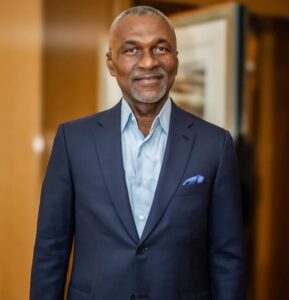



By: Julius Konton
In a rare and carefully worded intervention, Alexander B. Cummings, Political Leader of the Alternative National Congress (ANC), has broken his silence on the rapidly evolving Liberia–Guinea border tensions, urging restraint, transparency, and an independent investigation into allegations of illegal mining and territorial incursion.
His statement comes amid rising concern over reports that Guinean troops may have crossed into Liberian territory in the Sorlumba area, triggering displacement among local communities and igniting political and public anxiety in a region historically vulnerable to instability.
A BORDER DISPUTE OR A RESOURCE CONFLICT?
According to Cummings, the unfolding crisis is “not merely a boundary disagreement,” but a deeper issue tied to sovereignty, governance failures, and the management of natural resources.
Preliminary reports suggest that tensions may be linked to unauthorized mining activities along the Makona River, a resource-rich but poorly regulated zone that has long attracted informal and illicit extraction networks.
West Africa’s artisanal and small-scale mining sector employs an estimated 10 million people, according to the World Bank, but weak oversight has often turned mineral-rich border regions into flashpoints for conflict.
Liberia itself has struggled with illegal mining for decades, losing millions annually in unregulated gold and diamond exports.
“These allegations, especially those involving individuals of influence, must be treated with seriousness,” Cummings emphasized.
“Liberia’s natural resources should never become a source of conflict or instability.”
DISPLACEMENT AND SECURITY RISKS
Though official figures remain unclear, local reports indicate that dozens of families may have been displaced following the alleged incursion raising humanitarian concerns in a country still recovering from the long-term effects of the Second Liberian Civil War, which displaced nearly half the population at its peak.
Security analysts warn that even minor border incidents in the Mano River basin can escalate rapidly if not managed diplomatically.
The region, encompassing Liberia, Guinea, and Sierra Leone has a history of cross-border insurgencies, arms trafficking, and refugee flows.
Cummings cautioned that inflammatory rhetoric, including suggestions that civilians should arm themselves, could dangerously escalate tensions.
“The responsibility for national security lies solely with the government,” he stated firmly.
CALLS FOR TRANSPARENCY AND DIPLOMACY
In a pointed but measured critique, Cummings urged the Liberian government to act swiftly on three fronts:
Immediate diplomatic engagement with Guinea to establish verified facts and prevent escalation
An independent investigation into alleged illegal mining activities, with findings made public
Urgent humanitarian support for displaced communities in affected border regions
His remarks underscore growing public demand for transparency in a country where trust in state institutions remains fragile.
Liberia ranked 137 out of 180 countries in Transparency International’s latest Corruption Perceptions Index, highlighting persistent governance challenges.
A TEST FOR REGIONAL STABILITY
Cummings also framed the crisis within a broader regional context, warning that instability along the Liberia–Guinea border could reverberate across the Mano River Union, a bloc established to promote economic cooperation and peace among Liberia, Sierra Leone, Guinea, and Côte d’Ivoire.
“Liberia and Guinea share more than a border, we share history, culture, and a common interest in peace,” he noted.
“Actions taken today must strengthen, not weaken, that relationship.”
The Mano River region has made significant progress since the early 2000s, with cross-border trade increasing and armed conflict largely subsiding.
However, experts warn that unresolved land disputes and resource competition remain latent threats.
POLITICAL IMPLICATIONS
Cummings’ intervention marks his first public statement since the crisis began and signals a strategic shift toward positioning himself as a voice of restraint and institutional accountability.
While avoiding direct confrontation, his remarks implicitly question the government’s handling of the situation particularly on issues of communication, security, and resource governance.
Analysts say this could reshape the political narrative ahead of future electoral cycles, as opposition leaders increasingly frame governance failures as national security risks.
A MOMENT OF DECISION
As tensions simmer, the Liberia–Guinea border dispute presents a critical test of leadership not only for the government but for the region as a whole.
Cummings’ message is clear: this is not a moment for political division or speculation, but for truth, justice, and unity.
“We must insist on the truth, pursue justice responsibly, and safeguard the peace that our nation and region depend on,” he concluded.


