




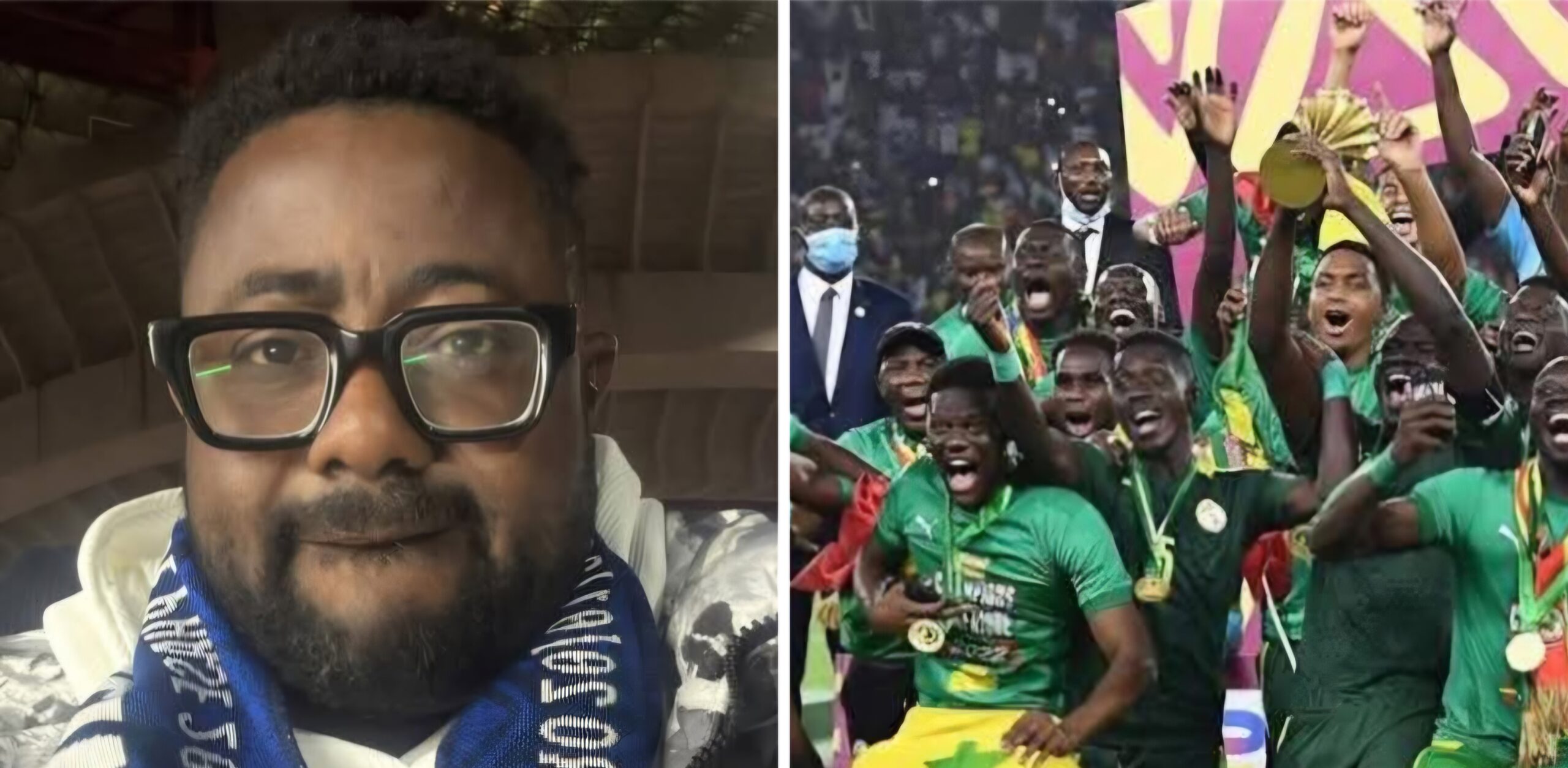
By: Julius Konton
A growing legal controversy is unfolding in African football following a disciplinary decision involving Senegal by the Confederation of African Football (CAF), with experts warning that the case could redefine how match results and sanctions are interpreted across the continent.
A Liberian football administrator and sports lawyer, Cllr. Jlayteh Sayor, has urged stakeholders to move away from emotional reactions and instead interrogate the decision through the lens of international sports law and established football regulations.
“This matter must be assessed strictly within the framework of football governance rules not national sentiment,” Sayor emphasized.
The Legal Backbone: CAF’s Disciplinary Code
At the center of the controversy lies CAF’s interpretation of its own disciplinary provisions particularly Articles 82 and 83.
Under Article 82, any team that refuses to continue a match or leaves the field without the referee’s authorization risks forfeiture, with the game automatically recorded as a 3–0 loss unless a higher scoreline had already been achieved.
Article 83 further strengthens this stance, declaring that any team responsible for match abandonment shall be deemed to have lost, alongside potential additional sanctions.
From a regulatory standpoint, Sayor acknowledges that these provisions provide CAF with clear legal authority to punish teams deemed responsible for abandoning matches.
Yet, the issue is far from straightforward.
Referee Authority vs Administrative Power
A critical counterpoint emerges from the Laws of the Game issued by the International Football Association Board (IFAB).
Under Law 5, the referee holds exclusive authority over match proceedings, including the power to suspend or abandon games due to external interference or rule violations.
This raises a fundamental legal tension:
If a referee allows a match to continue and it is completed,
Can a governing body later override that outcome administratively?
According to Sayor, this is where CAF’s decision may face its most serious legal scrutiny.
“The referee is the ultimate authority on the field.
If the match was completed under his supervision, the result should ordinarily stand as the sporting outcome,” he argued.
The Principle of Proportionality: A Global Standard
Beyond procedural authority, the case also touches on one of the most important doctrines in international sport law proportionality.
The Court of Arbitration for Sport (CAS), widely regarded as the supreme judicial body in global sport, has consistently ruled that sanctions must align with the severity of the offense.
In the landmark case involving Francelino Matuzalém, CAS emphasized that disciplinary measures must not exceed what is reasonably necessary to achieve their intended objective.
Similarly, subsequent jurisprudence has reinforced the principle of sporting stability protecting results achieved on the field unless there is compelling legal justification to overturn them.
These precedents could prove decisive if Senegal opts to escalate the matter.
A Likely Showdown in Lausanne
Under Article 58 of the FIFA Statutes, decisions taken by confederations like CAF are subject to appeal before CAS in Lausanne, Switzerland.
Should Senegal exhaust CAF’s internal processes, the dispute could transition into a full-scale international arbitration case.
Legal analysts suggest CAS would focus on three key questions:
Did Senegal’s actions legally constitute match abandonment?
Did the referee’s authority legitimize the completion of the match?
Was CAF’s sanction proportionate to the alleged offense?
The answers could have far-reaching implications not only for Senegal but for the governance of football across Africa.
A Broader Pattern in African Football Governance
The controversy also highlights a broader tension within African football, where administrative decisions have increasingly come under scrutiny for perceived inconsistencies.
Historically, CAF has faced criticism over disciplinary transparency, with several high-profile rulings in the past decade being challenged or overturned at CAS.
Data from sports arbitration records indicate that a notable percentage of appealed football cases globally result in modified or reduced sanctions raising questions about initial disciplinary decisions.
Integrity vs Authority: A Delicate Balance
For Sayor, the case ultimately transcends Senegal or CAF, it strikes at the heart of football’s credibility.
“Football justice must protect both discipline and the integrity of results on the field,” he warned.
The unfolding dispute underscores a delicate balancing act: enforcing rules to maintain order while preserving the sanctity of competition outcomes.
As tensions simmer, all eyes are now on whether Senegal will challenge CAF’s ruling and trigger a legal battle at CAS.
If it does, the case could become a landmark in African football jurisprudence setting a precedent for how far governing bodies can go in overturning results and redefining the limits of their authority.
For now, one thing is clear: this is no longer just a football dispute, it is a test case for the rule of law in global sport.


