



By: Julius Konton
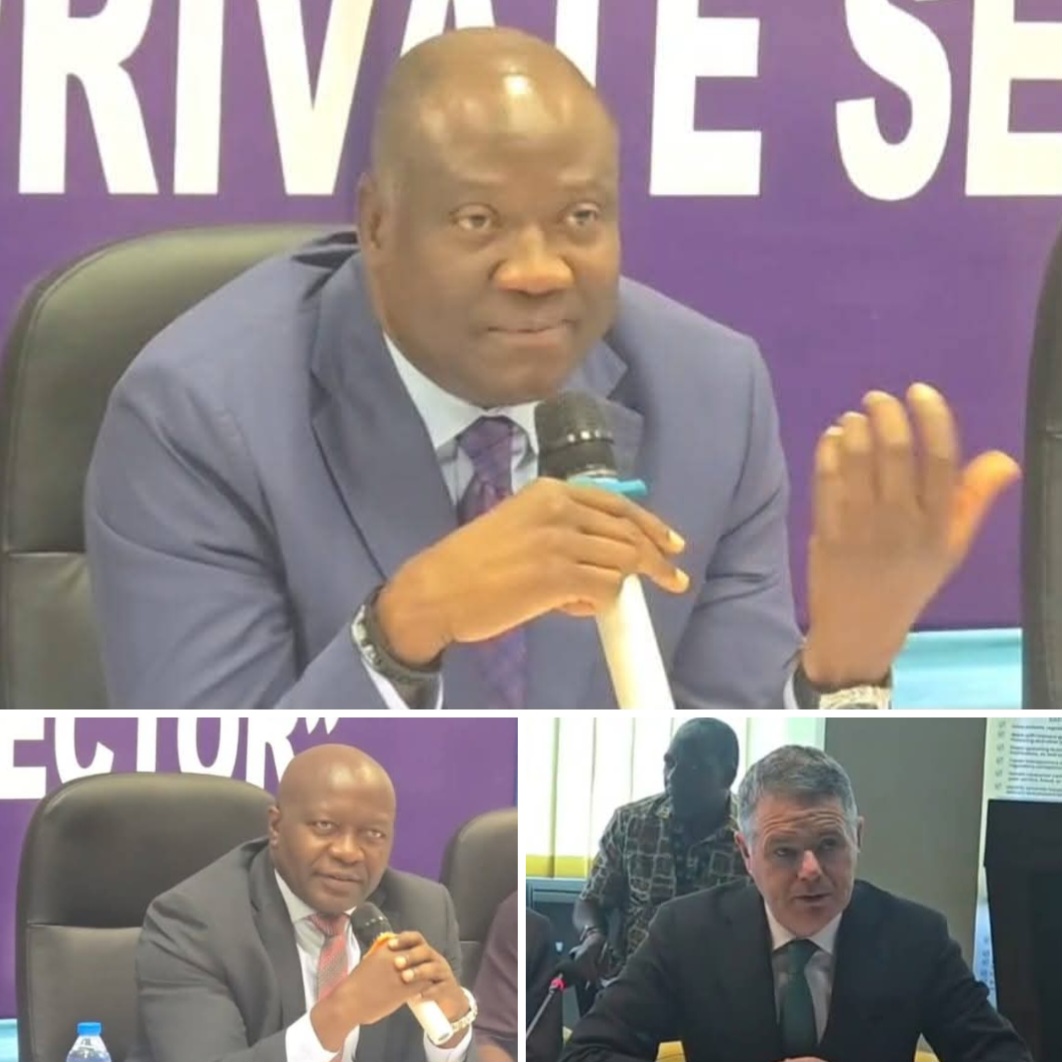
Liberia’s economic reform agenda gained renewed international attention this week as the Central Bank of Liberia hosted a high-level engagement with World Bank Group Managing Director and Chief Knowledge Officer Paschal Donohoe, signaling deepening cooperation aimed at strengthening the country’s private sector and financial system.
The one-day engagement centered on expanding support for small and medium enterprises (SMEs), which policymakers describe as the backbone of Liberia’s economy.
SMEs AT THE CENTER OF LIBERIA’S GROWTH STRATEGY
Executive Governor Henry F. Saamoi emphasized that improving access to finance and strengthening the business environment remain top national priorities.
“SMEs form the backbone of our economy, and expanding their contribution is vital to sustainable and inclusive growth,” Samao said, highlighting the need for stronger institutional frameworks and broader financial inclusion.
Liberia’s SME sector accounts for an estimated 70–80% of employment and contributes significantly to GDP, yet continues to face structural barriers such as limited credit access, weak infrastructure, and high operating costs.
HISTORIC DECLINE IN INFLATION SIGNALS MACROECONOMIC STABILITY
In a major milestone, the Central Bank reported that inflation fell to 4% in December 2025, marking the first time in over two decades the country has achieved such low inflation.
The downward trend continued into 2026:
3.2% in January 2026
3.1% in February 2026
Economists say this reflects tighter monetary policy, improved fiscal coordination, and easing supply-side pressures.
“This creates a more predictable economic environment for investors and businesses,” Saamoi noted.
Historically, Liberia has struggled with double-digit inflation, often exceeding 20% during periods of economic instability, particularly in the aftermath of the civil war (1989–2003) and the Ebola Virus Disease crisis.
BANKING SECTOR REFORMS CUT NON-PERFORMING LOANS
The Central Bank also reported significant improvements in financial sector stability. Non-performing loans (NPLs), a key indicator of banking health, dropped sharply:
From 21.6% in January 2025
To 12.79% by February 2026
This improvement is attributed to stronger regulatory oversight, enhanced risk management practices, and stricter compliance measures.
“These reforms are restoring confidence in the banking system and encouraging lending,” Saamoi added.
DIGITAL PAYMENTS SURGE AFTER NEW SYSTEM LAUNCH
Liberia is also witnessing rapid growth in digital financial services following the launch of its first instant and inclusive payment system in December 2025.
Within just three months:
1.53 million transactions recorded
1.43 billion Liberian dollars processed
US$9.03 million in transaction value
The system currently supports person-to-person (P2P) and government-to-person (G2P) payments, with expansion expected.
The CBL’s boss said the upcoming National Electronic Payment Switch, initiated in 2022, will unify financial service providers into a single interoperable ecosystem potentially transforming Liberia into a more cash-lite economy.
NEW CURRENCY AND GOVERNANCE REFORMS BOOST CONFIDENCE
The introduction of a new family of Liberian banknotes has improved liquidity management and strengthened public confidence in the financial system.
At the same time, governance reforms within the Central Bank including enhanced transparency and internal controls have yielded operational surpluses in both 2024 and 2025, another first in over 20 years.
“These achievements reflect our commitment to long-term economic transformation,” Samao said.
WORLD BANK: PRIVATE SECTOR KEY TO JOB CREATION
Speaking during the visit, Paschal Donohoe praised Liberia’s progress and emphasized the central role of the private sector in driving employment and growth.
“The private sector is at the heart of job creation and inclusive development,” he said, adding that Liberia presents “significant opportunity” for investment and expansion.
According to World Bank-backed programs:
L$6 million in financing has been deployed
Funds distributed across seven financial institutions
Over 200 businesses supported
Approximately 40% of financing directed to commercial banks
Donohoe noted that access to credit, improved collateral systems, and insolvency reforms remain critical to unlocking further growth.
GOVERNMENT TARGETS STRUCTURAL BOTTLENECKS
Liberia’s Finance and Development Planning Minister, Augustine Kpehe Ngafuan, underscored the government’s focus on addressing structural constraints affecting the private sector.
Key priorities include:
Energy expansion, supported by international partners such as the World Bank and the Millennium Challenge Corporation
Road infrastructure improvements, reducing transportation costs
Agricultural development, aimed at boosting productivity and rural incomes
“These interventions are already lowering costs and contributing to declining inflation,” Ngafuan said.
He also stressed that government policy plays a decisive role in shaping the private sector’s success.
“The government can either empower or suffocate the private sector depending on its actions,” he warned.
A PIVOTAL MOMENT FOR LIBERIA’S ECONOMY
The engagement comes at a critical time as Liberia advances its ARREST Agenda for Inclusive Development and implements its Country Partnership Framework with the World Bank.
Analysts say sustained reforms, coupled with international support, could position Liberia for stronger economic growth after years of volatility.
With improving macroeconomic indicators, expanding digital finance, and renewed investor confidence, Liberia appears to be entering a new phase of economic stabilization, one in which SMEs and private enterprise are expected to play a leading role.
OPPORTUNITY WITH CAUTION
While progress is evident, experts caution that challenges remain, including:
Limited access to long-term financing
Weak industrial base
Vulnerability to external shocks
Still, the convergence of policy reform, international partnership, and digital innovation offers what officials describe as a “rare window of opportunity.”
As Donohoe concluded:
“This is a moment built on years of hard work and a chance to shape Liberia’s economic future for generations to come.”


