



By: Julius Konton
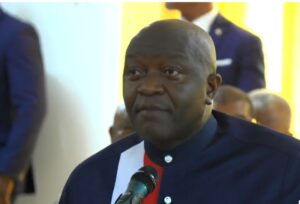
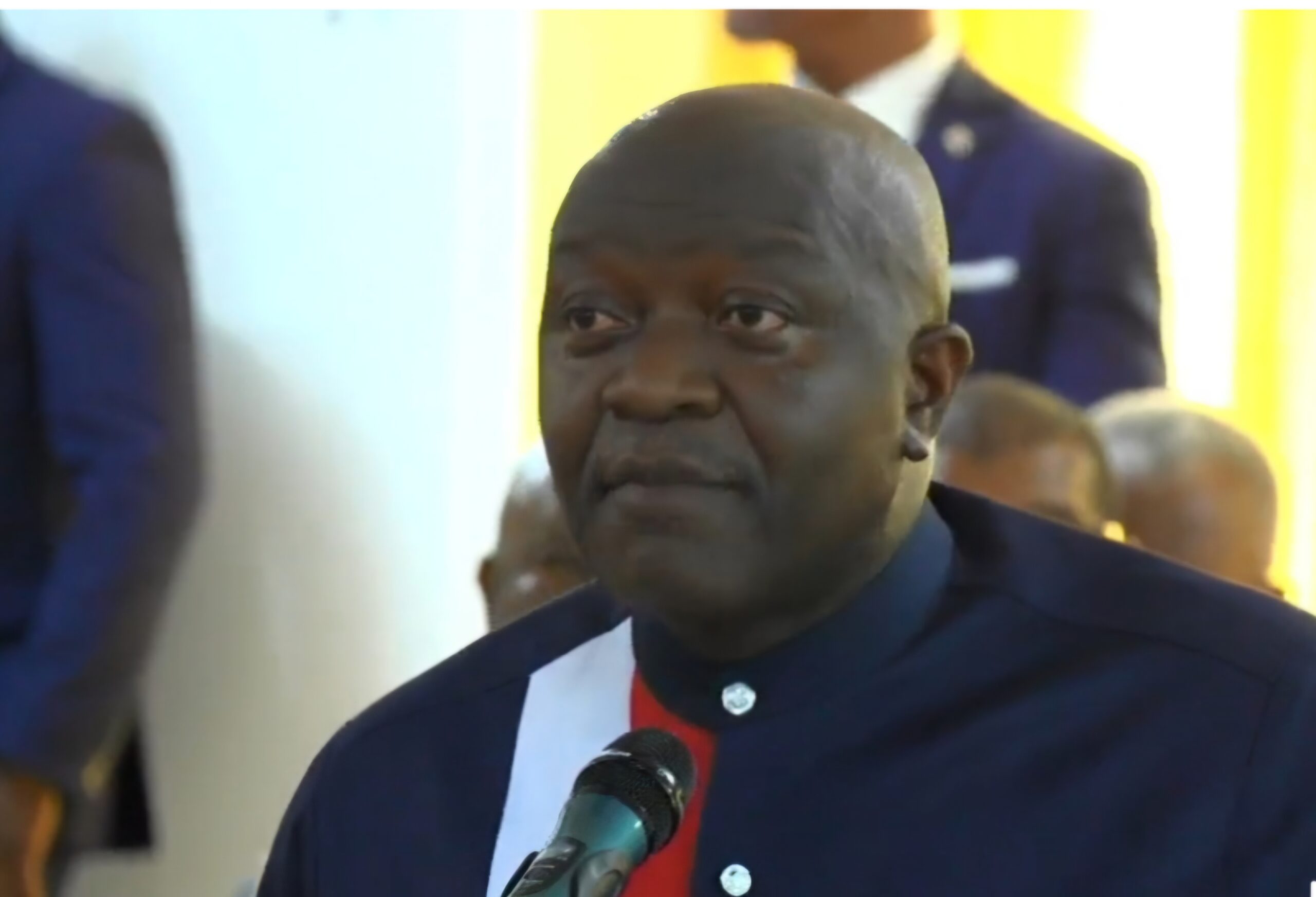
Liberia on Monday commemorated the 179th anniversary of National Flag Day, with Finance and Development Planning Minister Augustine Kpehe Ngafuan calling on citizens to transform patriotism from ceremonial displays into everyday acts of integrity, public service, national unity and economic development.
Delivering the National Flag Day oration under the theme “From Heritage to Hope: The Flag That Unites Us,” Ngafuan used Liberia’s national emblem as a metaphor for the country’s difficult history, present challenges and aspirations for a more unified and prosperous future.
The anniversary marks the day Liberia’s flag was first hoisted on August 24, 1847, less than a month after the country declared independence on July 26, 1847.
The flag was subsequently institutionalized as the focus of an annual national observance after the Legislature approved an Act on October 25, 1915, declaring August 24 a national holiday.
The Liberian flag features 11 alternating red and white stripes and a single white star on a blue field.
According to Liberian government records, the 11 stripes represent the 11 signatories of the Declaration of Independence, while the lone star represented Liberia as the then-independent republic on the African continent. The flag was designed by a committee of Liberian women led by Susannah Lewis.
Ngafuan said the Lone Star has remained a constant national symbol through Liberia’s political transitions, civil conflict, public-health emergencies and reconstruction efforts.
“It is history, but it must also be hope,” he said, arguing that the flag should serve not merely as a reminder of Liberia’s past but as a symbol of the country Liberians intend to build for future generations.
The minister offered a deeply personal reflection, recalling his experience as a first-grade student at Bolahun Public School in Wawoma Clan, Kolahun District, Lofa County, during National Flag Day celebrations in 1978.
He described hundreds of students converging on Bolahun for the traditional parade, with parents, relatives and community members lining the paths to watch schoolchildren march and salute the national flag.
Nearly five decades later, Ngafuan said the memory remains a powerful reminder of the aspirations that national symbols can inspire in children.
He challenged Liberia to build a society in which every child can look at the Lone Star and believe that his or her circumstances of birth do not determine the boundaries of possibility.
“That is the Liberia we must build,” he said.
“UNITY DOES NOT MEAN UNIFORMITY”
A central message of the oration was that Liberian unity should not require citizens to abandon their political, ethnic, religious, county or professional identities.
Instead, Ngafuan argued that those identities must exist beneath a broader national identity.
He compared Liberia’s diverse society to schoolchildren wearing different uniforms but marching under the same flag.
“We can disagree and still be Liberians,” he declared.
The minister also renewed an argument he made in 2010 during the induction of officers of the Federation of Lofa Associations in the Americas, warning that county loyalty should never supersede national loyalty.
He extended that argument to contemporary politics, saying:
“Our party-centricity must never undermine our country-centricity.”
Ngafuan urged Liberians to resist stereotyping people based solely on political affiliation, county, tribe, religion or institutional association.
Instead, he called for citizens to “individuate” judging people according to their character, conduct, values and contribution to the national interest.
For Ngafuan, the most important message of Flag Day is that patriotism cannot end with wearing national colors, singing the national anthem or waving the Liberian flag.
“Patriotism is not only what we say about Liberia. Patriotism is what we do for Liberia,” he said.
He cited examples across Liberian society.
A public official who protects government resources, a teacher who prepares for class, a health worker who cares for patients, a security officer who enforces the law without discrimination, a businessperson who pays legitimate taxes, a journalist who responsibly pursues truth and a citizen who rejects corruption are all, in his formulation, “raising the flag.”
The minister also called on young Liberians to choose education, entrepreneurship, creativity, hard work and public service over despair.
His message was particularly directed at public officials, whom he said should view the national flag displayed in their offices not as decoration but as a daily reminder of their obligations to the Liberian people.
“Think Liberia. Love Liberia. Build Liberia,” he urged.
Ngafuan described Liberia as a common national enterprise in which every citizen is a shareholder.
Holding public office, he argued, does not give anyone a greater ownership stake in the Republic.
Instead, it increases an individual’s responsibility to the country.
He expanded the definition of national leadership beyond government.
Pastors, imams, teachers, political leaders, journalists, talk-show hosts, business executives, community leaders, health professionals, sports officials, trade leaders and social-media influencers all wield influence, he said.
“And influence creates responsibility,” Ngafuan declared.
His argument comes as Liberia continues to grapple with the challenge of building stronger institutions and ensuring that economic growth translates into broader social benefits.
The International Monetary Fund said in June that Liberia had made “solid progress” toward macroeconomic stability, with real GDP growth projected at 5.5% in 2026, supported largely by mining, manufacturing and construction.
The IMF had earlier reported that the economy grew 5.1% in 2025, up from 4.0% in 2024.
The IMF also approved a US$266 million Resilience and Sustainability Facility for Liberia in April 2026, alongside continued support under the Extended Credit Facility.
Ngafuan warned that Liberia’s shared ownership of national resources can produce a paradox: citizens may demand national progress while individually undermining the very systems on which that progress depends.
Drawing on the economic concept known as the “tragedy of the commons,” he pointed to behaviors such as illegal dumping, tax evasion, selective demands for accountability and defending wrongdoing when committed by political allies, relatives or members of one’s community.
He challenged Liberians to apply the same standards to friends and opponents.
The national interest, he said, must supersede political, ethnic, religious and personal loyalties.
One of the strongest themes of the speech was the relationship between economic development and national cohesion.
Ngafuan argued that roads, electricity, schools, health facilities and economic opportunities can serve as practical instruments of unity because they benefit citizens regardless of political affiliation or county of origin.
The government’s development program, he said, including the ARREST Agenda for Inclusive Development, is intended to convert national aspirations into concrete projects and measurable improvements.
The government has also expanded infrastructure financing. In January 2026, Liberia signed a US$30 million BADEA financing agreement for the 50-kilometer Salayea–Konia road in Lofa County, together with a US$700,000 grant supporting health-service improvements along the Gbarnga–Voinjama corridor.
The wider Gbarnga–Mendikorma corridor has attracted financing and engagement from several Arab development lenders, reflecting its importance for connectivity between central and northwestern Liberia.
Government budget documents have also recorded road-maintenance and construction activity across multiple regions, including the Voinjama–Foya–Mendikorma, Gbarnga–Salayea, Sanniquellie–Logatuo, Saclepea–Tappita and southeastern road corridors.
Ngafuan also highlighted Liberia’s expanding fiscal ambitions.
The Ministry of Finance and Development Planning currently lists the approved FY2026 national budget at approximately US$1.249 billion, while a supplementary budget process has sought to increase overall spending to approximately US$1.29 billion.
In his oration, Ngafuan said Liberia was on course to reach a historic US$1 billion budget milestone, describing the expansion of fiscal capacity as a means of financing roads, electricity, schools, healthcare, jobs and institutional development.
But he cautioned that a larger budget should not be treated as an achievement in itself.
Its real value, he said, must be measured by whether it produces tangible improvements in the lives of ordinary Liberians.
With Liberia preparing for another period of political competition, Ngafuan appealed for restraint and tolerance.
He argued that political rivals should not automatically be treated as enemies and warned against a political culture in which one side’s success is defined by the destruction of the other.
“We can compete politically without hating one another.
We can disagree without becoming enemies.”
He called for a national political culture in which citizens can pursue competing ideas and political objectives without violence, hatred or the deliberate destruction of national institutions.
Ngafuan proposed what he described as a minimum “Patriotic Covenant” a set of fundamental national principles that should transcend political parties and social divisions.
Among the values he outlined were:
Liberia must come first.
Political power must be pursued peacefully.
Public resources belong to the people.
Corruption is wrong regardless of who commits it.
Truth and responsible public discourse matter.
Differences must never become justification for hatred.
Constitutional government and the rule of law must prevail over personalities.
No political victory is worth destroying Liberia.
Each generation has a responsibility to leave the country stronger for those who follow.
“These should not be government values or opposition values,” he said. “They should be Liberian values.”
The minister also warned Liberians against taking peace for granted.
Liberia emerged from years of civil conflict that caused enormous loss of life, displacement and destruction, making the preservation of peace a central national responsibility.
Ngafuan urged political leaders, journalists, religious figures and citizens using social media to recognize the power of their words.
“A microphone can educate or inflame,” he said. “A radio program can inform or divide.
A political platform can inspire or incite. A social-media post can build bridges or deepen fractures.”
The message comes as Liberia continues efforts to consolidate democratic institutions and preserve the peace achieved after years of conflict.
In one of the speech’s most striking rhetorical turns, Ngafuan asked Liberians to reverse the traditional question of what citizens see when they look at the national flag.
Instead, he asked:
What would the flag see if it could look back at Liberia?
Would it see leaders putting national interest above personal interest?
Would it see young people receiving education, skills and opportunities?
Would it see political opponents disagreeing without hatred?
Would it see public resources converted into roads, schools, hospitals, electricity and jobs?
Would it see integrity growing stronger than corruption?
And, most importantly, would it see hope becoming stronger than despair?
Ngafuan said those questions cannot be answered by an oration.
They must be answered by the actions of Liberians.
As Liberia marked 179 years since the first hoisting of the Lone Star, Ngafuan closed with a call for citizens to move beyond symbolic patriotism toward practical national service.
“The flag cannot raise itself,” he said.
“We raise the flag when we raise our standards.
We raise the flag when we raise our integrity. We raise the flag when we raise our children with knowledge, discipline and hope. We raise the flag when we raise one another.”
His final appeal was for Liberians to “live the flag” by placing country above self-interest and transforming national pride into daily responsibility.
The 179th National Flag Day, therefore, was presented not simply as a commemoration of a historic emblem, but as a national conversation about Liberia’s next chapter one in which the memory of the past becomes the foundation for a more peaceful, inclusive and prosperous future.
“Not merely to wave the flag, but to live the flag. Not merely to salute Liberia, but to serve Liberia.
Not merely to hope for a better Liberia, but to build one,” Ngafuan said.
As the Lone Star continues to fly above Liberia, the central challenge remains whether the ideals represented by the flag can be translated into institutions, policies and everyday conduct capable of delivering the hope its colors symbolize.


