




By: Julius Konton
Liberia is positioning itself for a new era of domestic revenue mobilization, with Finance and Development Planning Minister Augustine Kpehe Ngafuan declaring that the country must not only cross the billion-dollar threshold in domestic resources but remain firmly above it.
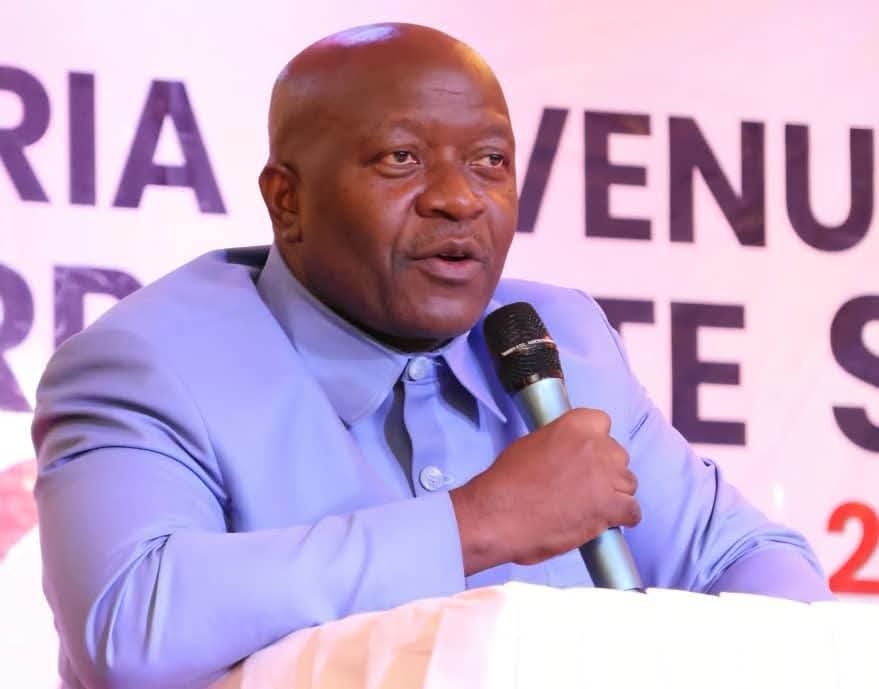
Minister Ngafuan made the declaration in Monrovia while officially launching the Liberia Revenue Authority’s (LRA) Five-Year Corporate Strategic Plan for 2025–2029, a framework designed to strengthen tax administration, expand the domestic revenue base and improve Liberia’s long-term fiscal sustainability.
The Minister described the launch as a significant milestone in Liberia’s public-finance transformation, arguing that the country’s progress in revenue mobilization represents a collective national achievement rather than the accomplishment of any single institution.
“We are about to cross a major threshold, and when we cross, we have to commit, there shall be no turning back,” Ngafuan told the gathering.
He challenged the LRA to move beyond simply reaching the billion-dollar mark.
“We have to sprint in the billions,” he said, proposing the phrase as a stronger complement to the LRA’s strategic theme of “Moving to Billions: Mobilizing Domestic Resources for Fiscal Sustainability, 2025–2029.”
Liberia’s push toward a billion-dollar domestic-revenue economy reflects more than a decade of reforms in tax administration.
The LRA was established by an Act of the National Legislature in September 2013 and became operational on July 1, 2014, replacing the former revenue functions housed within the Ministry of Finance.
Its creation was part of broader post-war public-finance reforms aimed at separating revenue administration from fiscal policy and expenditure management.
Since its establishment, the Authority has recorded substantial growth in revenue collection.
LRA data shows that domestic revenue collection increased from approximately US$463.7 million in its first full fiscal year, 2014/15, to about US$700 million by 2024, representing roughly 51 percent growth over the period.
The momentum continued in 2025, when the LRA reported collecting US$818 million, exceeding its annual revenue target.
For fiscal year 2026, the government has set a domestic revenue target of approximately US$1.176 billion, placing the Authority at the center of Liberia’s effort to finance an increasingly ambitious national development program.
The IMF has also documented the strengthening of Liberia’s revenue performance. Preliminary estimates showed tax revenue rising to 15.9 percent of GDP in 2025, compared with 13.4 percent in 2023 and 14.5 percent in 2024.
Ngafuan recalled the skepticism that accompanied the government’s presentation of the FY2026 budget, which was initially presented at approximately US$1.2 billion.
He acknowledged that while supporters viewed the ambitious budget as evidence of the Boakai administration’s determination to expand national development financing, critics questioned whether the government could realistically mobilize the resources required.
The Minister said subsequent revenue performance had demonstrated that Liberia was moving toward a significantly stronger fiscal position.
But he cautioned that reaching a billion-dollar revenue level should not be mistaken for the arrival of economic prosperity.
“We celebrate hitting the millions, but that does not mean milk and honey are flowing on Broad Street,” he said, emphasizing that greater public revenue also brings greater expectations from citizens.
According to Ngafuan, the expectations of Liberians are already rising, particularly for roads, electricity, health, education, infrastructure and other development priorities.
The Finance Minister emphasized that the anticipated billion-dollar milestone should be viewed as a national achievement.
He credited taxpayers, businesses, revenue-generating state-owned enterprises, government ministries and agencies, the Legislature, Judiciary and the LRA for contributing to the country’s improved fiscal performance.
“This is an achievement not from the President of Liberia, the Ministry of Finance, the Commissioner General of the Liberia Revenue Authority, the Legislature, the Judiciary or the agencies of government, but rather the Liberian people,” he said.
Ngafuan also praised LRA Commissioner General James Dorbor Jallah and the Authority’s staff for what he described as strong leadership, professionalism and integrity.
The LRA’s own historical records show that its first fiscal-year performance exceeded the domestic revenue forecast by US$19.9 million, despite the operational challenges associated with the Ebola crisis and institutional transition.
Ngafuan assured the LRA that the Ministry of Finance and Development Planning would continue providing the policy, legislative and institutional support necessary to strengthen revenue collection.
Using a military analogy, he described the Ministry as the institution responsible for supplying the “weapons” while characterizing the LRA as the “ground troops” responsible for revenue collection.
He said the government’s support would include strategic policymaking, legislative reforms, administrative improvements and collaboration with the Legislature and Judiciary.
The Minister specifically commended lawmakers for revenue reforms and praised the Judiciary for enforcing laws protecting government revenue.
He also called for continued cooperation among state-owned enterprises, ministries, agencies and commissions that generate public revenue.
Ngafuan disclosed that the government is considering broader performance-based incentive mechanisms for revenue-generating institutions.
He said proposals from the LRA regarding incentives had received serious consideration and that the Ministry was examining a more comprehensive framework that could cover revenue collectors across government.
“We want to put everyone, the contingent of revenue racers in the package so that we leave no one behind,” he said.
The objective, according to the Minister, is to create a system in which institutions and officials who contribute meaningfully to national revenue mobilization are appropriately recognized while maintaining accountability and fiscal discipline.
The Minister also revealed the growing pressure on the expenditure side of government.
As Liberia prepares its FY2027 national budget, Ngafuan said a preliminary expenditure framework under discussion had reached approximately US$1.91 billion as of August 15, with additional requests continuing to arrive from government institutions.
The widening gap between revenue ambitions and expenditure demands, he said, underscores the need for careful prioritization.
Ngafuan pledged that the administration would continue focusing available resources on the government’s ARREST Agenda for Inclusive Development, particularly roads, electricity and other priority sectors.
He stressed, however, that the government would avoid presenting an unrealistic or inflated budget merely because revenue performance was improving.
“We will be realistic. We will not present a budget that is bloated and unrealistic.
We will present a budget that is realistic and achievable,” he emphasized.
IMF Data Underscores the Fiscal Challenge
International financial data highlights both the progress and the scale of Liberia’s challenge.
The IMF estimates that Liberia’s government revenue has been increasing steadily, while projections point toward continued growth in domestic resource mobilization over the medium term. Under one recent IMF projection, government revenue excluding grants was expected to rise from roughly US$871 million in 2025 to US$994 million in 2026 and more than US$1 billion thereafter.
These figures underscore why strengthening domestic taxation remains central to Liberia’s economic strategy: greater domestic revenue reduces dependence on grants and external financing while giving the government greater control over development priorities.
Ngafuan said the launch of the LRA’s five-year plan must not become another ceremonial government event.
He urged the Authority and its partners to translate the strategic document into measurable results through coordination, discipline, investment and continuous implementation.
“Let’s move from strategy to implementation, and from implementation to results,” he said.
The Minister said successful execution of the strategic plan would significantly contribute to the national development objectives of President Joseph Nyuma Boakai’s ARREST Agenda.
For Liberia, the challenge now extends beyond crossing a historic revenue threshold.
It is about ensuring that increased public resources translate into visible improvements in the lives of citizens.
As the government approaches the billion-dollar mark, Ngafuan’s message was unmistakable: Liberia must not treat one billion dollars as the destination, but as the beginning of a new fiscal era.
“We will soon be in the billions, and we must remain in the billions. We must sprint in the billions. That is our task,” he declared.


