


By: Julius Konton
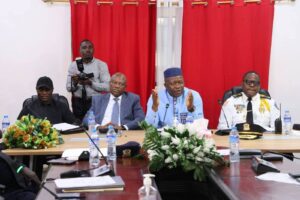
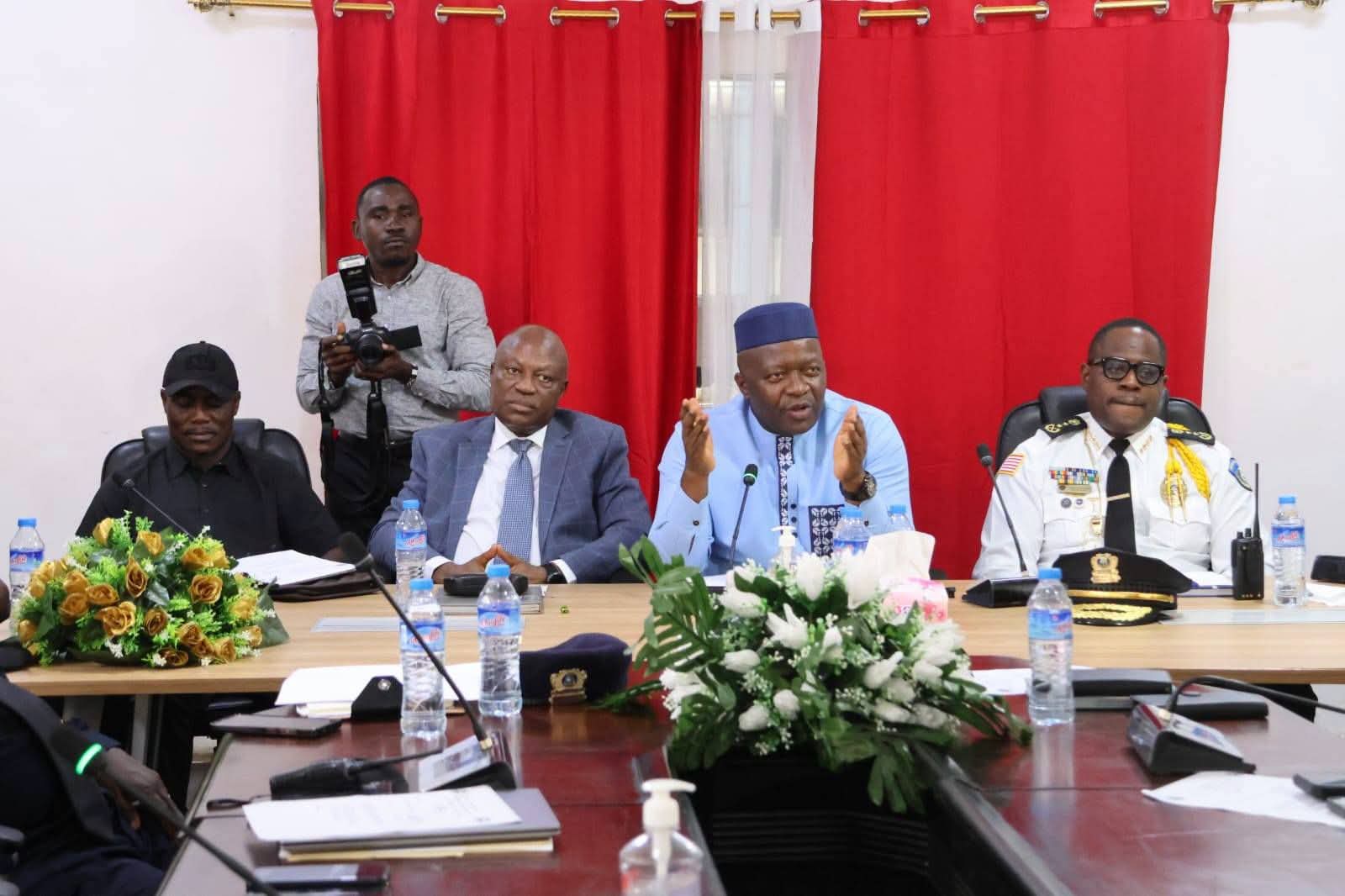
Liberia’s Ministry of Finance and Development Planning (MFDP) has intensified its review of government spending and development performance, convening senior officials from the justice and security sector for a high-level “Deep Dive” session focused on budget execution, resource flows and preparations for the country’s 2027 national budget.
The session brought together officials from the Ministry of Justice and key security institutions, including the Liberia National Police (LNP), Liberia Drug Enforcement Agency (LDEA), Liberia Immigration Service (LIS), Liberia National Fire and Rescue Service and other agencies responsible for law enforcement, border management, public safety and national security.
The discussions centered on three major areas: execution of the FY2026 budget and financial performance; implementation of Public Sector Investment Projects (PSIP); and outstanding commitments, implementation bottlenecks and corrective actions required to improve service delivery.
Finance and Development Planning Minister Augustine Kpehe Ngafuan used the occasion to commend Liberia’s security institutions for what he described as their continuing contribution to maintaining peace and stability.
“I say thanks to all of you on behalf of the Ministry of Finance and Development Planning,” Ngafuan told participants, emphasizing the importance of security to Liberia’s broader development ambitions.
He said the government’s economic and development objectives cannot be achieved without a stable and secure environment in which citizens, businesses and investors can operate.
Minister Ngafuan explained that the meeting was not simply an accounting exercise, but an opportunity for the government to establish a clearer picture of how resources are reaching security institutions, how those resources are being used and what gaps remain.
“Where are we in terms of budget, in terms of resources currently, and where do we intend to be for next year?” he asked, outlining the central questions guiding the exercise.
He described the session as the first stage of a broader pre-budget consultation process for the FY2027 national budget, warning that the ministry intends to return to the sector for a more detailed examination of the issues raised.
“This is a pre-budget hearing conversation. We call it a deep dive. We will call you for another dive, a deeper dive,” Ngafuan explained.
According to the minister, MFDP will first collect and synthesize the concerns presented by the security institutions before convening another session in the coming weeks or months to examine the sector’s requirements for the 2027 budget in greater detail.
“We will get the issues, synthesize them, then one week from now or a month [later], we will call for a deeper dive with the security sector on the budget issue for 2027,” he said.
The exercise comes as Liberia operates one of the largest national budgets in its recent history.
The Legislature approved an FY2026 budget of approximately US$1.25 billion, with the MFDP reporting the approved figure at about US$1.249 billion. The International Monetary Fund has described the 2026 budget envelope as historically high.
The government subsequently moved to increase the budget through a supplementary appropriation.
MFDP said the proposed adjustment would raise the national budget from approximately US$1.249 billion to US$1.295 billion, an increase of roughly US$45 million, or 3.6 percent.
Against this backdrop, the security-sector review is expected to help MFDP determine whether approved allocations are translating into actual operational capacity, completed projects and improved public services.
The ministry has already established the “Deep Dive” approach as part of its effort to improve budget execution and accelerate development delivery.
MFDP launched sectoral deep-dive sessions in 2025 to assess implementation performance, identify bottlenecks and establish concrete actions for resolving delays.
Ngafuan said the conversation would examine not only the size of budgetary allocations but also the actual flow of resources to security institutions.
“How are we faring? What are the challenges now that we need to address?” he asked, stressing that the government needed direct feedback from the agencies responsible for implementing security policies.
The minister said MFDP’s technical teams and decision-makers were assembled specifically to listen to the agencies, assess their challenges and determine where government intervention may be required.
“You will advise us and we will advise you, and [we will] get some common ground on the issues,” he said.
The process is also expected to help MFDP prepare technical notes and policy recommendations for the 2027 budget, ensuring that allocations are increasingly tied to measurable institutional needs and development outcomes.
Liberia’s current security-sector financing debate carries significant historical weight.
The country emerged from two devastating civil wars that lasted from 1989 to 2003 and resulted in the deaths of nearly 250,000 people, according to the United Nations.
The conflicts severely damaged Liberia’s institutions and contributed to the collapse of state security and law-enforcement structures.
Following the signing of the Accra Comprehensive Peace Agreement in August 2003, Liberia embarked on a major security-sector reform process.
The United Nations Security Council subsequently established the United Nations Mission in Liberia (UNMIL) with authorization for up to 15,000 military personnel and 1,115 police officers, with a mandate that included supporting police restructuring, training and the creation of a new Liberian military.
Over its mission, UNMIL helped disarm more than 100,000 former combatants and collected more than 20,000 weapons and 5 million rounds of ammunition.
The mission eventually transferred full security responsibility to Liberian authorities in 2016 and formally completed its mandate in 2018.
The transition placed a much greater responsibility on Liberia’s own institutions and, by extension, on the national budget to finance the personnel, infrastructure, equipment, training and operational systems required to maintain peace.
The latest Deep Dive therefore represents more than a routine fiscal meeting. It comes at a critical point in Liberia’s effort to strengthen domestic institutions while maintaining macroeconomic stability and directing greater public resources toward development.
The IMF has said Liberia’s 2026 budget is designed to gradually shift resources from recurrent spending toward productive investment while maintaining the government’s financial obligations.
For the security sector, however, the challenge is balancing long-term investment with immediate operational demands from policing and border management to drug enforcement, emergency response, immigration control and public safety.
The MFDP’s approach places the agencies at the center of that conversation.
Rather than simply determining how much money should be allocated, the process seeks to establish what security institutions need, what they have received, what they have delivered, what remains outstanding and what corrective measures are necessary.
As Liberia begins laying the groundwork for the FY2027 national budget, the security-sector Deep Dive could become an important mechanism for linking fiscal decisions with national security priorities.
Ngafuan’s message was clear: MFDP wants government agencies to provide evidence of their financial and operational realities, while the ministry provides feedback on available resources and fiscal constraints.
The next phase of consultations is expected to go deeper into agency-specific requirements, investment projects, outstanding commitments and the resources needed to strengthen Liberia’s security architecture.
For a country whose modern history has demonstrated the enormous economic and human cost of instability, the exercise underscores a fundamental policy lesson: peace must not only be preserved, it must be adequately financed, professionally managed and institutionally sustained.


