


By: Julius Konton
Liberia’s Finance and Development Planning Minister Augustine Kpehe Ngafuan has called for an accelerated push to complete the long-delayed New Redemption Hospital in Upper Caldwell, Montserrado County, warning that Liberians have waited too long to benefit from a project conceived in the aftermath of the country’s devastating Ebola crisis.
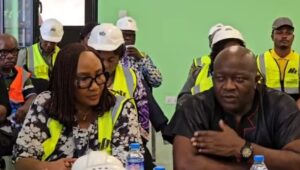
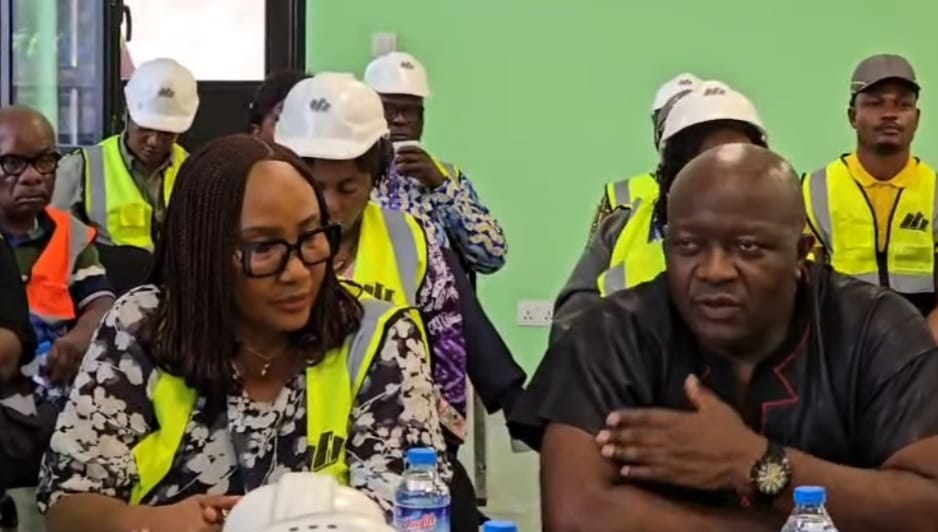
Ngafuan made the appeal following a joint inspection tour of the facility with Health Minister Dr. Louise M. Kpoto and health-sector officials, project managers and contractors.
The visit was aimed at assessing progress, identifying outstanding challenges and building momentum toward the completion and operationalization of the hospital, which has become one of Liberia’s most closely watched health infrastructure projects.
“We have not come to shift blame. We have come to listen honestly and to do what we call the 100-metre dash to the finish line,” Ngafuan told the project team.
His remarks underscored the urgency surrounding a project that has evolved through multiple administrations, financing arrangements and construction phases since it emerged as a post-Ebola health-system priority.
‘The People Have Seen the Food, Now Let Them Eat’
Using a vivid analogy, Minister Ngafuan said the Government has effectively spent years showing Liberians the “food” without allowing them to eat it.
He said the impressive physical structure has raised public expectations, but continued delays risk turning that expectation into frustration.
“The people have seen it, they can smell it now, so let’s dish it now and let them begin to eat it,” he said.
Ngafuan said the Government, development partners and the Liberian public have heard about the hospital for years and are now expecting tangible results.
He urged contractors, engineers, project managers and other stakeholders to move with the urgency required to bring the facility across the finish line.
“The reward for doing well is the burden to do well, and to do well quickly,” he said.
A Hospital Born From Liberia’s Ebola Trauma
The New Redemption Hospital is rooted in one of the most difficult chapters of Liberia’s recent history.
Following the 2014–2016 Ebola outbreak, which exposed severe weaknesses in Liberia’s health infrastructure, the Government identified the construction of a new Redemption Hospital as a priority investment for strengthening the country’s resilience against future health emergencies.
World Bank project documents from 2016 described the existing Redemption Hospital as having evolved from a market building transformed into a hospital in the 1980s to serve communities that lacked access to public hospital services.
At the time, its catchment population had grown dramatically, with project documents estimating that more than 400,000 people depended on the facility.
The Government subsequently acquired land in Upper Caldwell for a new facility.
The first phase was initially estimated at approximately US$14 million under the World Bank-supported Ebola Emergency Response Project.
Construction at the new site began in mid-2018, according to the World Bank, with the initial focus on maternal health, obstetrics and gynecology, and pediatrics.
From US$14 Million to a Major Health Investment
The project subsequently expanded significantly.
In May 2020, the World Bank approved an additional US$54 million International Development Association credit under its Institutional Foundations to Improve Services for Health (IFISH) project.
The financing was intended not only to expand the facility but also to support its equipment and operationalization and broaden services to include surgery and internal medicine.
The hospital has been designed as a 155-bed facility, with a major focus on maternal and pediatric healthcare.
Current project documentation indicates that Phase One is planned to include 90 pediatric beds, including pediatric intensive care and other specialized services, as well as 66 women’s and maternal-care beds, two maternal surgical theatres and four delivery bays.
The facility is also intended to function as a teaching and referral institution, helping Liberia strengthen its capacity to train and deploy health professionals.
A Decade of Waiting
The project’s journey has been anything but straightforward.
While the initial post-Ebola planning dates back to 2016, construction began at the Caldwell site in 2018.
A World Bank implementation report later identified construction of the New Redemption Hospital as the only outstanding activity under the Ebola Emergency Response Project after the project’s other components had largely progressed.
A subsequent Ministry of Health
procurement notice estimated construction completion at about 54 percent at one stage and allocated another US$6 million from the Ebola Emergency Response Project toward remaining Phase One works.
The project’s original development timetable has consequently been overtaken by years of delays.
That history explains Ngafuan’s insistence that the Government is no longer interested in explanations that merely extend the completion date.
“We do not want a postponement to the delivery,” he warned, arguing that prolonged waiting could further test public confidence.
‘Don’t Tell Us What We Want to Hear’
Ngafuan urged the project team to provide government with candid assessments rather than optimistic projections that later prove unrealistic.
“This is not a feel-good session,” he said. “Talk honestly, because when we set a timeline now, it will be a timeline that we must meet.”
He said the Government would rather hear difficult truths immediately than receive assurances that eventually give way to another delay.
The Finance Minister challenged project managers and contractors to regain momentum and approach the final phase of construction with the intensity of athletes approaching the final stretch of a race.
“It has been a marathon and this is not the time to get tired,” he said. “Energize yourself, especially being in the fence of completion, and get that Usain Bolt-type of speed, speed to the finish line.”
World Bank Leadership Watching Closely
Ngafuan also highlighted the personal interest of World Bank Vice President Ousmane Diagana, who has followed the project for years.
According to the Minister, Diagana has repeatedly asked about the status of the New Redemption Hospital whenever Liberian officials engage with the World Bank.
Ngafuan said Diagana is expected to visit Liberia in September and that the New Redemption Hospital is likely to feature prominently on his agenda.
The Minister therefore urged the project team to ensure that the Government can provide the World Bank with concrete progress rather than another explanation for delay.
“We want to be able to give him good news this time around,” Ngafuan said.
Health Crisis Gives the Project Greater Urgency
The push to complete the hospital comes against a backdrop of persistent health challenges.
Liberia’s 2023 maternal mortality ratio was estimated at 628 deaths per 100,000 live births, according to World Bank data based on the UN inter-agency estimates.
The Government’s ARREST Agenda for Inclusive Development 2025–2029 has set an ambitious target of reducing maternal mortality from a baseline of 742 to 440 deaths per 100,000 live births by 2029.
The plan also targets improvements in life expectancy, child survival, access to basic health services and universal health coverage.
Against this backdrop, the New Redemption Hospital is more than a construction project, it represents a critical component of Liberia’s effort to expand access to specialized maternal, pediatric and referral healthcare.
From Post-Ebola Promise to ARREST Agenda Test
The hospital now sits at the intersection of Liberia’s post-Ebola recovery strategy and President Joseph Nyuma Boakai’s ARREST Agenda.
The national development plan identifies health-system strengthening as a strategic priority, emphasizing quality healthcare, sustainable health financing, affordability and health security.
President Boakai’s administration has also emphasized measurable performance and accountability across government institutions under its Performance Management and Compliance System, aligning ministries and agencies with specific targets under the ARREST Agenda.
For the New Redemption Hospital, that philosophy translates into one central question:
When will Liberians finally be able to use the facility?
Ngafuan Commends Health Ministry
Despite his criticism of the delays, Ngafuan praised Health Minister Dr. Louise Kpoto and her team for their work in advancing the health agenda.
He said President Boakai had also recognized the progress being made in the health sector during a recent Cabinet meeting, particularly efforts toward achieving health-related targets under the ARREST Agenda.
Ngafuan used a football analogy to explain the relationship between financing and service delivery.
“We at the Ministry of Finance and Development Planning are like the midfielders, and those of you in the ARREST Agenda are like the strikers.
When we pass the ball, you score and the country wins.”
He also commended the contractors and project team after personally inspecting sections of the facility.
“What we see is very impressive, especially the physical facility,” he said.
A 155-Bed Symbol of Liberia’s Health Ambition
The New Redemption Hospital is expected to provide comprehensive pediatric and maternal services while expanding Liberia’s capacity in surgery and internal medicine.
Design documentation describes a modern facility incorporating infection-control and climate-responsive features, including natural ventilation and solar-chimney technology designed to improve airflow and reduce dependence on mechanical cooling.
A separate World Bank-supported project is also addressing access to the hospital through plans for a 2.4-kilometre paved access road, intended to improve connectivity to the 155-bed facility.
Together, the hospital and supporting infrastructure represent a major investment in the healthcare system of the greater Monrovia area.
Three Administrations, One Unfinished Promise
The New Redemption Hospital has outlived political administrations and development plans.
Its story began as a post-Ebola response, continued through the administrations that followed, and now sits before the Boakai Government as both an opportunity and a test of execution.
For Ngafuan, the time for another extension is over.
The Government wants the remaining obstacles identified, timelines established and commitments honored.
The message from the Finance Minister was therefore less about assigning responsibility for the past and more about demanding performance in the present.
The marathon, he said, has lasted long enough. Now comes the sprint.
And after nearly a decade of planning, construction, financing and waiting, Liberia’s newest Redemption Hospital is being asked to finally deliver on the promise that gave birth to it: a stronger, more resilient health system capable of saving lives and serving future generations.


