


By: Julius Konton
Liberia’s Minister of Finance and Development Planning, Augustine Kpehe Ngafuan, has called for a sharper focus on accountability, coordination and measurable results in the implementation of government-funded infrastructure projects, warning that budget allocations must translate into visible improvements for citizens.
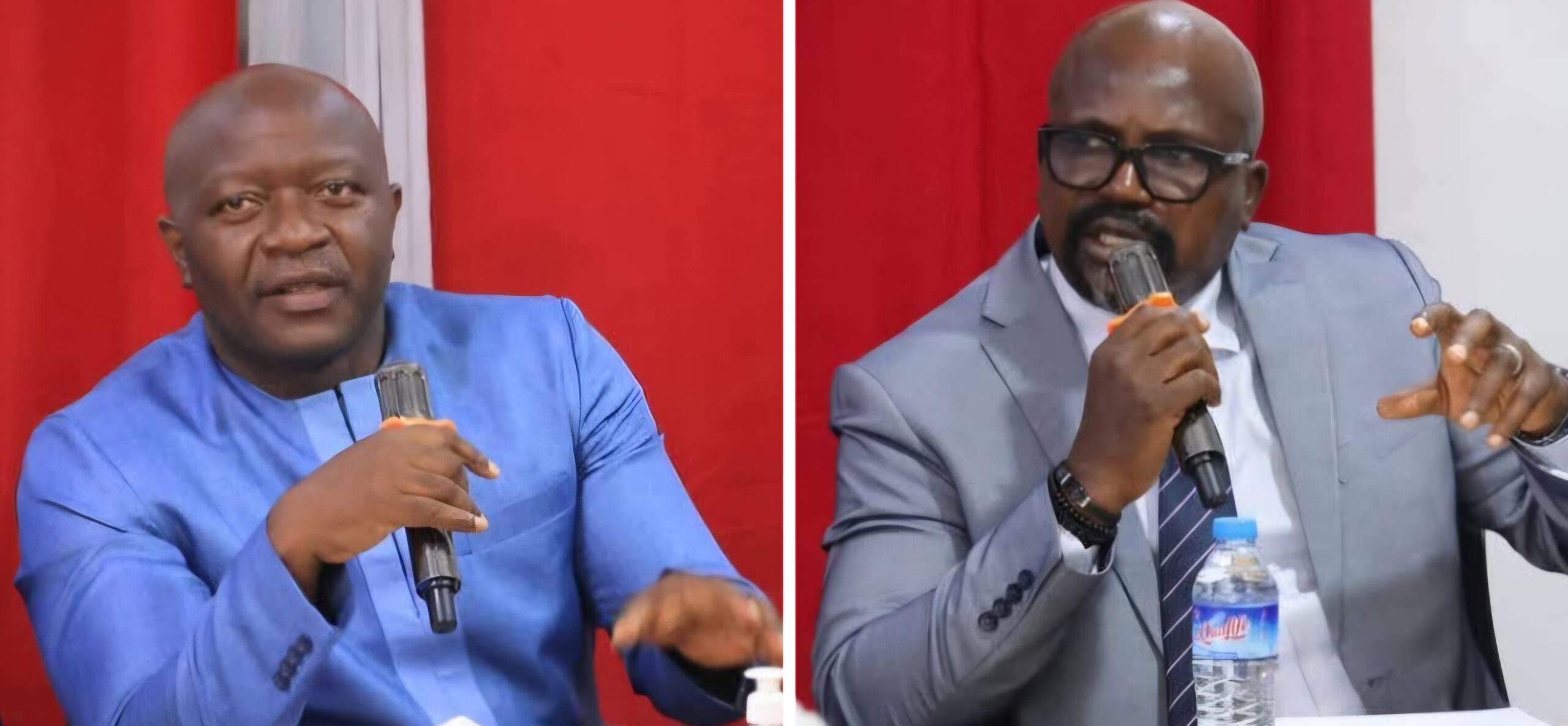
Ngafuan made the call Monday during a high-level “Deep Dive” engagement with the Ministry of Public Works, a session designed to examine how public resources are being converted into roads, bridges and other infrastructure assets across the country.
The meeting comes as President Joseph Nyuma Boakai’s administration faces mounting pressure to demonstrate that its ambitious ARREST Agenda for Inclusive Development (AAID) can move from policy commitments and budgetary allocations to completed projects and tangible economic benefits.
“The Deep Dive” was framed not simply as a presentation of figures, but as an opportunity to identify bottlenecks affecting budget execution, financing, procurement, implementation and project completion.
Ngafuan stressed that the central question should be whether government expenditures are producing concrete development outcomes.
Liberia entered 2026 with one of the largest budgets in its history.
The Legislature approved a national budget of approximately US$1.25 billion, with the government pledging to gradually shift resources toward productive and capital spending while maintaining fiscal discipline.
The original FY2026 budget submitted by President Boakai was valued at about US$1.211 billion, including approximately US$280 million for projects under the Public Sector Investment Plan (PSIP).
The fiscal picture changed further in 2026 after the government received a US$200 million one-off concession payment, one of the largest individual revenue injections in Liberia’s recent fiscal history.
According to the International Monetary Fund, the payment was expected to trigger an equivalent amount of contingent expenditure, principally for infrastructure and facilities-related public investment.
But the IMF has simultaneously cautioned that Liberia’s challenge is not simply raising money for infrastructure, it is ensuring that investment is selected, financed, implemented and monitored effectively.
The Fund’s 2026 Public Investment Management Assessment found modest improvements in public-investment institutions since 2016, but identified continuing weaknesses in project implementation.
It recommended stronger project appraisal, better public-private partnership oversight and greater integration of climate resilience into investment planning.
That backdrop gives Monday’s Finance-Public Works engagement broader significance.
Liberia’s Infrastructure Gap Remains Severe
The urgency is rooted in the scale of Liberia’s infrastructure deficit.
An African Development Bank project appraisal estimates Liberia’s road network at approximately 11,500 kilometers, with only about 7 percent, or 805 kilometers, paved.
The same assessment estimates that the country’s Rural Access Index stands at roughly 41 percent, meaning about 2.2 million people remain without reliable access to an all-weather road.
More recent World Bank analysis puts the classified road network at approximately 13,000 kilometers, with more than 94 percent unpaved and fewer than one-quarter of roads considered reliable year-round.
The World Bank also estimates that the Monrovia-Ganta corridor alone serves about 43 percent of Liberia’s population, underscoring the country’s heavy dependence on a limited number of major transport arteries.
The figures explain why roads remain at the center of Liberia’s development strategy.
Poor connectivity raises transport costs, restricts access to markets, complicates delivery of public services and limits the ability of rural producers to participate in national and regional economies.
For a country whose economic activity is heavily concentrated around Monrovia and major mining, agricultural and commercial corridors, improving transport connectivity is therefore more than an infrastructure issue, it is an economic-growth strategy.
The Ministry of Public Works has entered 2026 with an expanding portfolio of major road projects.
In May, the government broke ground on an US$85 million Voinjama-Mendikorma road project, involving an 86-kilometer section of the wider 255-kilometer western and northern road development program.
The project is intended to strengthen connectivity and cross-border trade between Liberia and Sierra Leone.
The ministry has also signed a contract for an 85-kilometer road from the Ivorian border through Toe Town to Zwedru, under the Rural Economic Transformation Project II.
The project is expected to be implemented over 36 months and is designed to improve connectivity between southeastern Liberia and Côte d’Ivoire.
Another major investment is the approximately US$60 million Mano River Union Road Development and Transport Facilitation Programme Phase IV, which includes paving the 48.5-kilometer John Davies Town-Zwedru corridor with support from the African Development Bank, OPEC Fund and the Government of Liberia.
The World Bank is also considering financing for the Legacy Economic Corridor, linking parts of Grand Bassa, Bong and Nimba counties. The proposed corridor is expected to support agriculture, mining and transportation while improving access to markets.
Taken together, these projects represent hundreds of kilometers of strategic road development and hundreds of millions of dollars in public and development-partner financing.
But they also create a significant management challenge.
For Ngafuan, the issue is no longer simply whether Liberia has ambitious infrastructure plans. The question is whether those plans are being executed efficiently and whether taxpayers and development partners can clearly see what is being achieved with the money committed.
Public Works Minister Roland Lafayette Giddings welcomed the Finance Ministry’s engagement, emphasizing stronger cooperation between the two institutions in budget execution, project financing, procurement, monitoring and performance assessment.
The meeting brought together senior officials and technical teams from both ministries, including MFDP Deputy Minister for Fiscal Affairs Anthony G. Myers, Deputy Minister for Economic Management Dehpue Y. Zuo and Assistant Minister for Budget Sarah Mulbah.
Representing Public Works were Deputy Minister for Administration Samukai Dunor and Assistant Minister for Planning, Program and Research Abraham Rahim Bility, among other officials.
The composition of the meeting suggests an attempt to move infrastructure oversight beyond political statements and toward technical coordination between the institutions responsible for financing and implementing government priorities.
The challenge is particularly important for the Boakai administration’s ARREST Agenda for Inclusive Development, the government’s principal development framework for 2025–2029.
Infrastructure sits at the heart of the agenda because roads, electricity, water, sanitation and public facilities are expected to provide the physical foundation for growth in agriculture, trade, mining, tourism and private investment.
Liberia’s economic performance provides some fiscal space for that ambition. The IMF reported that the economy grew by 5.1 percent in 2025 and projected continued strong growth in 2026, while emphasizing the need to upgrade public infrastructure and strengthen governance.
Yet economic growth alone will not resolve Liberia’s infrastructure deficit.
The IMF has warned that Liberia’s public investment remains low and heavily dependent on external financing, while weaknesses in project selection, fragmented budgeting and implementation constraints can contribute to delays and inefficiencies.
That makes the Finance Ministry’s intervention particularly timely.
From Reconstruction to Transformation
Liberia’s infrastructure crisis has deep historical roots. Years of civil conflict severely damaged roads, public buildings, utilities and other state infrastructure.
Although post-war reconstruction accelerated after the end of the civil war and Liberia’s debt-relief milestone in 2010, the country has continued to face a substantial capital-stock deficit.
The IMF has described Liberia as being at a pivotal stage in its post-conflict recovery, noting that infrastructure investment remains essential to economic growth and stability.
The government’s challenge now is to move from reconstruction toward a more systematic model of infrastructure development one based on long-term planning, credible financing, competitive procurement, strong supervision, timely execution and measurable outcomes.
That will require close coordination between the Ministry of Finance, Public Works, development partners, contractors and implementing agencies.
Monday’s Deep Dive therefore carries implications beyond the two ministries sitting around the table.
Liberia has secured significant financial resources, attracted major development-partner commitments and announced an ambitious pipeline of road and infrastructure projects. But the country’s history demonstrates that announcing projects and financing them is not the same as delivering them.
The government’s credibility will increasingly be measured by kilometers of roads completed, bridges delivered, communities connected, construction deadlines respected and public funds accounted for not simply by the size of annual budgets.
For Ngafuan and Giddings, the emerging message is clear: Liberia’s infrastructure agenda must move faster from appropriation to implementation, from expenditure to results, and from promises to completed assets.
As the government attempts to turn the AAID into a visible development legacy, the performance of the public infrastructure program may become one of its most important tests of fiscal discipline, institutional coordination and political credibility.


