





By: Julius Konton
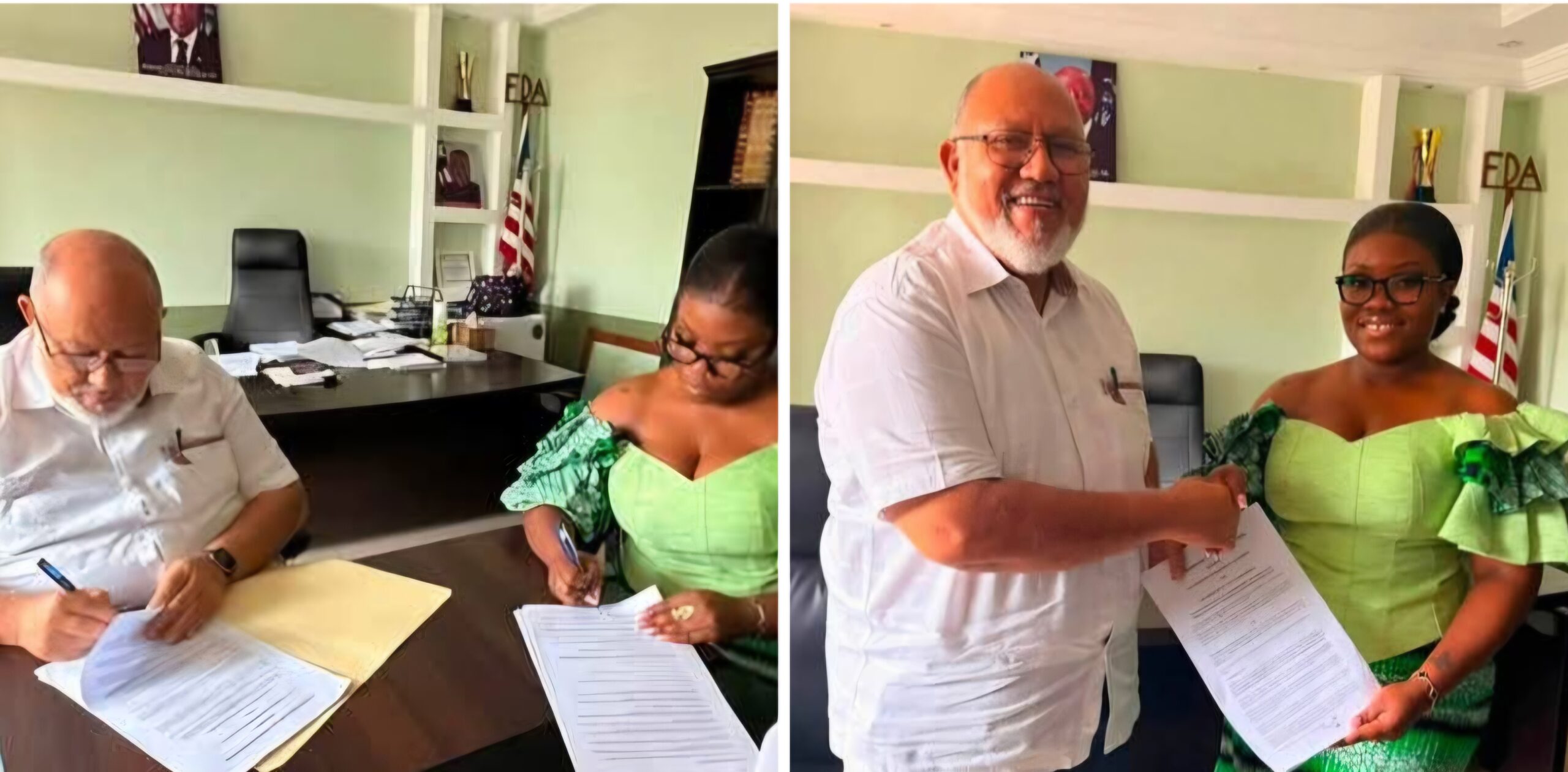
The Ministry of Youth and Sports (MYS), through the Monrovia Vocational Training Center (MVTC), is partnering with the Forestry Development Authority (FDA) to establish a modern shared wood-processing facility at the MVTC, in a move designed to strengthen technical and vocational education while expanding opportunities for young people and artisans.
The partnership, being formalized through a Memorandum of Understanding, falls under the African Development Bank Group-supported Transition Support Facility (TSF) Pillar III, Phase II Project “Scaling Up the Participation of Small and Medium Forest Enterprises in the Secondary Wood Processing Industry in Liberia.”
The initiative represents a significant convergence of three national priorities: skills development, youth employment and greater domestic value addition to Liberia’s forest resources.
Rather than limiting economic activity to the extraction and sale of raw timber, the project is intended to strengthen the segment of the industry that converts wood into higher-value products such as furniture and other finished or semi-finished goods.
The proposed facility comes as the Government of Liberia is undertaking a broader modernization of the MVTC, the country’s flagship technical and vocational training institution.
In March 2026, the Ministry of Youth and Sports announced that MVTC had the physical capacity to accommodate up to 3,000 students annually, but enrollment at the time was fewer than 800 students.
The Government subsequently approved a 12-month reform pilot aimed at expanding access, strengthening staffing, modernizing training and connecting vocational education more closely with labor-market demand.
The Ministry has also shortened the MVTC training cycle from 18 months to 12 months, introduced measures to remove training-material and uniform costs, and authorized the institution to undertake production and service activities connected to its workshops.
The proposed wood-processing facility therefore comes at a critical moment in the institution’s transformation.
It is expected to give trainees access to a practical industrial environment where classroom instruction can be translated into real production, machine operation and business experience.
Under the agreement, the Ministry of Youth and Sports will provide suitable land within the MVTC premises for construction of the facility.
The FDA, through the TSF Pillar III Phase II project, will finance and oversee construction within the approved project framework and will engage a qualified construction company in accordance with applicable procurement requirements.
The planned facility is expected to contain dedicated workshop and production areas, spaces for wood-processing machinery and equipment, training and demonstration areas, storage facilities and other supporting infrastructure.
Its core functions will include wood processing, carpentry, furniture production, machine operation, product finishing, technical training and entrepreneurship development.
The facility is also expected to create a platform for innovation, enabling trainees and artisans to move beyond basic woodworking toward more efficient and commercially oriented production.
The project is expected to serve two major groups: students enrolled at MVTC and members of the 11 Carpenters and Furniture Makers Associations operating in Montserrado County.
The associations will participate in coordinating access to the facility, ensuring that members comply with safety and operational rules, identifying qualified machine operators and participating in technical, entrepreneurial and business-development training.
This arrangement could help bridge an important gap between vocational institutions and Liberia’s informal and small-business economy, where many artisans acquire skills outside formal education systems.
The facility is consequently envisioned not merely as another training workshop, but as a shared platform connecting students, artisans, instructors, machinery, production and markets.
Under the partnership, the FDA will be responsible for financing construction through the approved project budget, engaging the selected contractor and supervising implementation.
It will also oversee compliance with applicable quality and safety standards and facilitate the installation, testing and handover of machinery and equipment provided under the project.
Training will also be provided on the proper operation, care and maintenance of the equipment.
For its part, the Ministry of Youth and Sports, through MVTC, will secure and protect the designated site, facilitate access and required clearances, provide reasonable security for the facility and project assets, and ensure structured access for students.
The Ministry will also designate qualified instructors, technicians or focal persons to coordinate training and production activities.
To guard against the operational and maintenance challenges that have historically affected public infrastructure projects, the parties plan to establish a Facility Management Committee.
The committee will include representatives from the Ministry of Youth and Sports, FDA, MVTC and the leadership of the 11 carpenters and furniture makers’ associations.
Its responsibilities will include coordinating access to the facility, establishing training and production schedules, monitoring maintenance, addressing security concerns and strengthening accountability.
An operation and maintenance plan will also be developed covering equipment servicing, utilities, sanitation, occupational safety, inventory management, security and sustainable financing.
The inclusion of an operational sustainability framework is particularly important because the long-term success of a technical facility depends not only on construction and equipment but also on maintenance, qualified personnel, reliable access to machinery and predictable operating resources.
The new facility is part of a wider effort that has been underway for several years.
The African Development Bank approved an earlier Scaling Up the Participation of SMEs in the Secondary Wood Processing Industry in Liberia project in September 2018.
That first phase had a total cost of about UA 823,344, financed through the Bank’s Fund for African Private Sector Assistance and Government of Liberia contributions.
The Bank’s current Phase II project is listed as an ongoing US$1 million intervention and is scheduled through August 2026, according to the African Development Bank’s project data.
The Bank’s 2026 project activities also include efforts to establish a modern digital presence, management-information system and e-commerce capability for the project, with the stated objective of improving information management and increasing the commercial visibility of carpenters and furniture producers.
That digital component could become increasingly important if Liberian furniture makers are to move beyond local markets and compete for customers in regional and international markets.
The new initiative builds on MVTC’s existing role in technical skills development.
In September 2023, more than 1,100 students graduated from MVTC, with training spanning fields including electrical engineering, carpentry, refrigeration and air-conditioning, information and communications technology, welding and metal fabrication.
The graduation was supported through the European Union-funded UNIDO Youth Rising Liberia project.
The figures also underscore the importance of expanding the institution’s capacity.
With the Ministry estimating that MVTC can accommodate up to 3,000 students annually, the current modernization agenda is intended to close the gap between the center’s physical potential and its actual enrollment.
For Liberia, the strategic importance of the initiative extends beyond carpentry.
A stronger secondary wood-processing sector can potentially create opportunities across a wider value chain from wood preparation and machine operation to furniture design, finishing, transportation, marketing, retail and export.
It also supports the broader economic principle of increasing the value of products before they leave the country.
Instead of relying primarily on raw-resource extraction, Liberia can seek greater domestic economic returns by developing enterprises capable of processing locally available resources into finished products.
For young people, that could translate into opportunities not only for wage employment but also for entrepreneurship and self-employment.
The partnership comes as the Government seeks to reposition vocational education as a more direct pathway into employment and enterprise.
The Ministry’s 2026 MVTC reforms explicitly seek to align training with sectors where Liberia expects economic opportunities to grow, while also introducing production activities that can give students practical experience.
The wood-processing facility fits squarely within that philosophy.
Its success, however, will ultimately be measured not simply by whether a building is completed or machines are installed, but by whether trainees graduate with marketable skills, artisans increase their productivity, furniture producers improve quality, enterprises expand and young Liberians secure sustainable livelihoods.
If properly managed, the facility could become a model for how public vocational institutions, government agencies, development partners and private-sector associations can jointly build practical skills and productive enterprises.
Under the proposed arrangement, the land on which the facility will be constructed will remain the property of the Government of Liberia under the administration of the Ministry of Youth and Sports through MVTC.
Machinery, tools, equipment and other project-funded assets will be managed in accordance with Liberian law, the Government’s financing arrangements with the African Development Bank and applicable project asset-management and handover procedures.
The government therefore intends the facility to remain a public vocational asset while providing structured access to students and participating artisans.
The MYS-FDA partnership places vocational training, industrial skills and forest-resource value addition at the center of a single development intervention.
For Liberia, where the demand for practical skills remains a major development challenge, the project offers an opportunity to connect training directly to production.
For the country’s carpenters and furniture makers, it could provide access to machinery and technical knowledge that individual small enterprises may struggle to afford.
And for the wider economy, it presents a pathway toward transforming more locally available raw materials into higher-value products made by Liberian workers and enterprises.
The ultimate ambition is straightforward: equip young people and artisans with modern skills, give them access to productive equipment, strengthen local enterprises and create more opportunities to turn Liberia’s resources into Liberian-made products.


