



By: Julius Konton
The Government of Liberia and the United Nations Country Team have launched a joint portfolio performance review of the United Nations Sustainable Development Cooperation Framework (UNCF) 2026–2030, with Liberian authorities calling for tighter coordination, predictable financing and measurable development outcomes from the partnership.
The high-level review, convened by the Ministry of Finance and Development Planning, comes at a critical juncture for Liberia as the government seeks to implement its ARREST Agenda for Inclusive Development (AAID) 2025–2029 amid declining traditional development assistance and growing pressure on domestic resources.
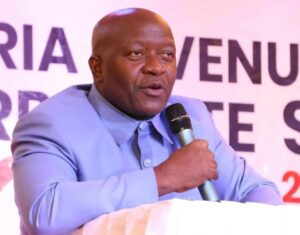
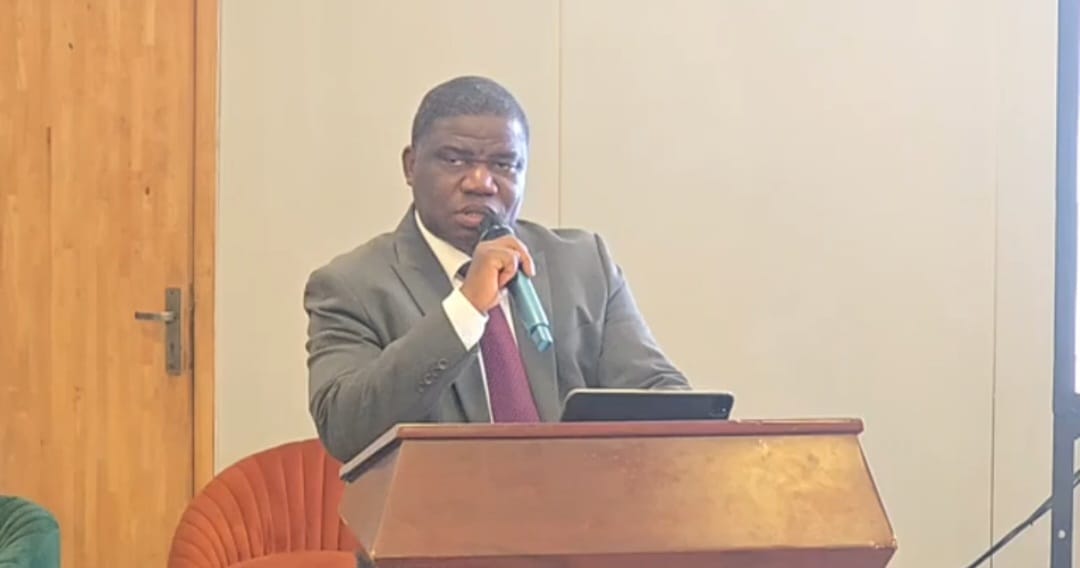
Speaking at the opening ceremony, Deputy Finance Minister for Economic Management Dehpue Y. Zuo said the review should go beyond presentations and become a mechanism for making concrete decisions about how development resources are mobilized, allocated and translated into improvements in the lives of Liberians.
“Our task here is to determine whether our collective resources are fully aligned with the priorities being highlighted and implemented efficiently under the ARREST Agenda for Inclusive Development,” Zuo said.
The review covers a UN cooperation framework that represents one of Liberia’s most significant multilateral development partnerships.
The Government of Liberia and the UN signed the five-year framework in December 2025 with an estimated US$883 million resource envelope, with some funding already secured and additional resources expected to be mobilized.
The framework is organized around three broad strategic priorities: human capital development; good governance and rule of law; and economic development and sustainability.
It is aligned with Liberia’s Vision 2030, the AAID, the UN Sustainable Development Goals, the African Union’s Agenda 2063 and ECOWAS Vision 2050.
Zuo said Liberia attaches particular importance to its longstanding relationship with the United Nations, describing the partnership as one that has evolved alongside the country’s own transition from conflict to peace and development.
The UN played a central role in Liberia following the country’s devastating civil wars, particularly through peacekeeping, humanitarian assistance, institution-building, recovery and post-conflict stabilization.
The UN Mission in Liberia (UNMIL), established in 2003, helped support the country’s transition toward peace and democratic governance before completing its mandate in 2018.
Zuo said the partnership has since increasingly shifted toward development priorities, including human capital, governance, accountability, resilience and sustainable peace.
“We are so delighted that, in the wake of regional challenges, Liberia remains a stable country with vibrant participation from the donor community, including the United Nations,” he said.
The review also comes against the backdrop of a rapidly changing international development-financing environment.
Liberia was significantly affected by the withdrawal of United States development assistance in 2025.
According to the International Monetary Fund, nearly all active USAID projects in Liberia worth approximately US$434 million over four years, equivalent to about 7 percent of GDP were permanently cancelled in February 2025.
The IMF estimated that the disruption could result in about US$3.5 million in lost tax revenues in 2025 alone, while creating significant financing gaps in health, education and agriculture.
The UN’s own 2025 results report acknowledged that reduced official development assistance, including the USAID drawdown, created additional fiscal and implementation pressures, prompting the UN Country Team to pursue strategic partnerships, innovative financing and stronger domestic resource mobilization.
Against this backdrop, Zuo urged development partners to make commitments and disbursements more predictable, transparent and fully reportable.
“It is time that we regain our courage as partners and ensure that our commitments, disbursements and expenditures are more predictable, transparent and fully reported, so that we see value for money and outputs translated into measurable outcomes for Liberian citizens,” he said.
He specifically highlighted women, children, persons with disabilities and vulnerable communities as groups that should remain at the center of development interventions.
Zuo stressed that Liberia’s development financing architecture must be anchored in national priorities, sector strategies and county development needs, particularly as the government works to expand domestic resource mobilization.
He said the Ministry of Finance and Development Planning’s Aid Management and Coordination Unit has a responsibility to track external resources and ensure that they remain aligned with national priorities.
The Deputy Minister also called for greater use of national institutions and systems, arguing that development assistance should strengthen not replace Liberia’s own institutional capacity.
“We expect this conversation to reinforce our national institutions, our sector plans, county development priorities and public-sector investment framework not to establish parallel institutions,” he said.
The emphasis on alignment is particularly significant because the AAID represents Liberia’s fourth post-conflict national development plan and is designed to move the country from a low-income economy toward lower-middle-income status.
The plan targets an increase in GDP from approximately US$4.75 billion to US$6.5 billion, while seeking to raise GDP per capita from about US$850 to US$1,050. It also targets average annual economic growth of around 5.9 percent.
On human development, the AAID seeks to increase life expectancy from 60 to 65 years, reduce maternal mortality from 742 to 440 deaths per 100,000 live births, and cut multidimensional poverty from approximately 45 percent to 36 percent.
The plan also prioritizes infrastructure, economic transformation, governance and anti-corruption, rule of law, environmental sustainability and human capital development.
Among its infrastructure ambitions is the paving of at least 485 kilometers of primary roads and expanding access to affordable electricity.
Government Seeks Joint Programming
Zuo called for deeper joint programming between UN agencies and Liberian ministries, agencies, commissions and authorities.
He said Liberia recognizes UN contributions across health, education, nutrition, social protection, food security, agriculture, youth employment, governance, rule of law, gender equality, climate resilience, peacebuilding and social cohesion.
However, he cautioned that these interventions must be reflected consistently in government reporting and national development priorities.
The Deputy Minister also urged UN agencies and other partners to place greater emphasis on capacity development and retention, saying Liberia must ensure that technical skills and institutional knowledge remain within national institutions after externally funded projects end.
The government identified several persistent constraints affecting development implementation, including procurement delays, fragmented implementation arrangements, aid coordination challenges, recruitment processes, limited counterpart funding, reporting weaknesses and gaps in data collection.
Zuo said these challenges must be addressed collectively rather than treated as isolated problems.
“We have to highlight these issues, but we are ready as a government,” he said.
He added that the ongoing review should feed directly into Liberia’s 2027 national budget process, allowing the government and the UN system to identify priority programmes, financing requirements and counterpart contributions early enough to accelerate implementation.
At the December 2025 signing, Finance Minister Augustine Kpehe Ngafuan stressed that the framework should not be judged merely by its financial size or the ambition of its plans, but by its execution and results.
That principle now forms the central challenge of the joint portfolio review.
With an indicative financing envelope of roughly US$883 million, the partnership represents a substantial opportunity for Liberia.
But government officials increasingly want development financing tied to clearly defined outputs, outcomes and impact.
Zuo said the success of the review should therefore be measured not by the number of presentations delivered, but by the quality of decisions taken afterward.
“Our shared objective is to look decisively at the reporting of activities and demonstrate outcomes and impact that are most strategic moving forward,” he said.
For Liberia, the stakes are considerable.
The country has enjoyed more than two decades of relative peace since the end of its civil wars, but continues to face high poverty, infrastructure deficits, limited fiscal space and significant human-development challenges.
The AAID itself notes that nearly 45 percent of Liberians live in multidimensional poverty, while more than 41.5 percent of the population is under 18, underscoring both the scale of current challenges and the importance of investing in the country’s next generation.
The Government-UN review is therefore expected to serve as more than an assessment of ongoing programmes. It is emerging as a test of whether Liberia and its international partners can convert a major financing commitment into coordinated, nationally owned and measurable development results.
As the government prepares the 2027 national budget, the message from the Finance Ministry is clear: Liberia wants development partnerships that are predictable, aligned with national priorities, accountable for every dollar spent and capable of producing tangible improvements in the lives of its citizens.


