



By: Julius Konton
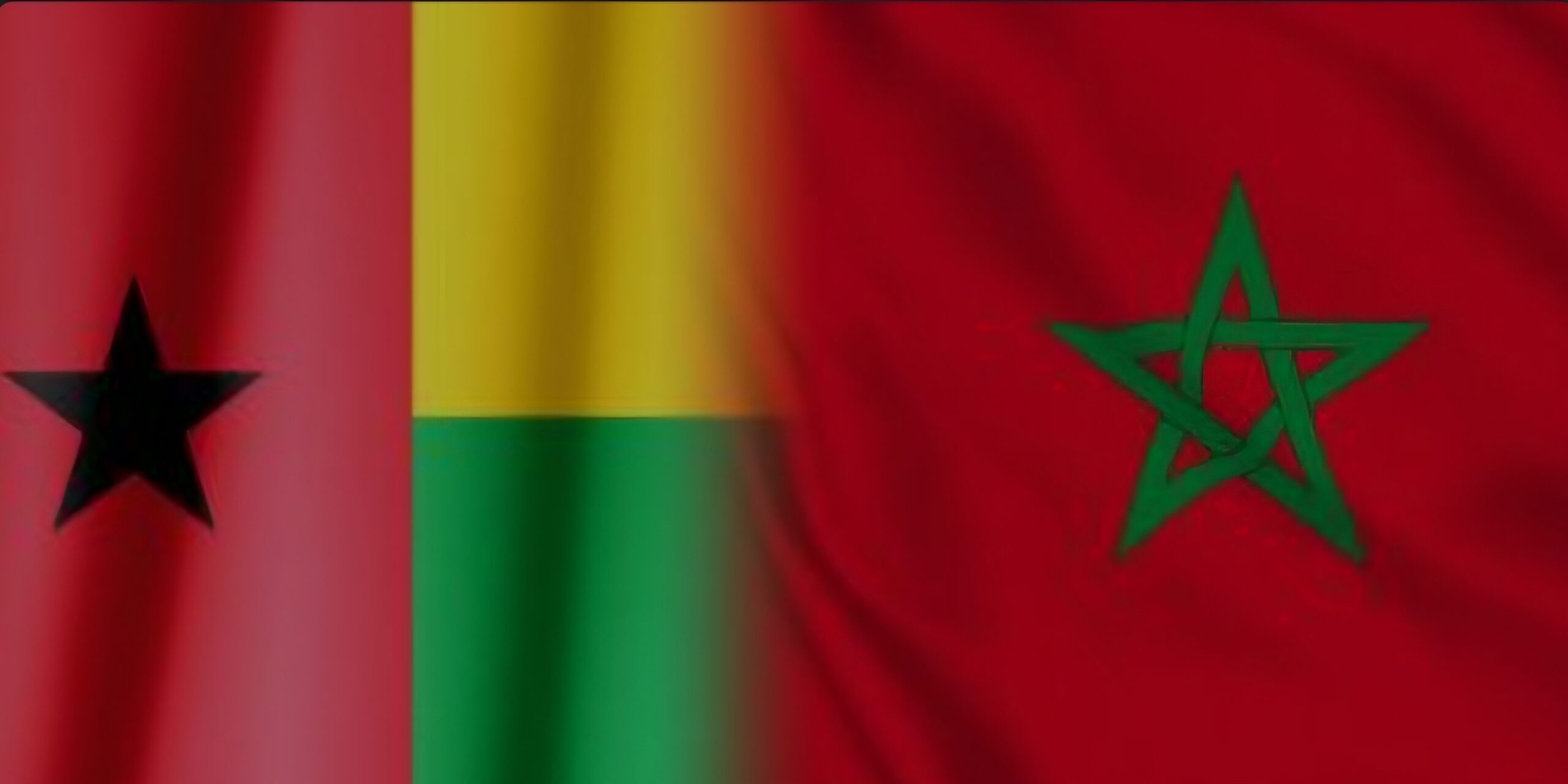
Guinea-Bissau has reaffirmed its support for Morocco’s territorial integrity and sovereignty over the Sahara, with Foreign Minister Fatumata Jau describing the West African nation’s position as “clear, consistent and unequivocal” during the 81st session of the United Nations General Assembly.
Jau made the declaration in a statement to journalists on the sidelines of the high-level UN gathering in New York, reiterating Bissau’s support for Morocco’s autonomy initiative as the framework it favors for resolving the long-running Western Sahara dispute.
“I wish to clearly reaffirm Guinea-Bissau’s consistent position regarding the Moroccan Sahara,” Jau said. “Guinea-Bissau would like to reiterate its consistent position in support of Morocco’s territorial integrity and sovereignty over the Sahara.”
Her comments reinforce a position Guinea-Bissau has publicly maintained in recent years and follows a June 2026 meeting in Rabat during which Jau again expressed support for Morocco’s territorial integrity, including the Sahara region, and for Morocco’s autonomy plan.
Dakhla Consulate Marks Diplomatic Position
Jau also pointed to Guinea-Bissau’s decision to establish a Consulate General in Dakhla in October 2020 as an important expression of its diplomatic position.
The consulate was officially inaugurated on October 23, 2020, with the ceremony co-chaired by Morocco’s then-Foreign Minister Nasser Bourita and his Bissau-Guinean counterpart Suzi Carla Barbosa. Moroccan Foreign Ministry records described it as the sixth consular representation opened in Dakhla during 2020.
The establishment of diplomatic missions in Dakhla has become an important element in Morocco’s broader diplomatic campaign surrounding the Sahara question, with several African states establishing consular representations in the city.
For Guinea-Bissau, the move has been repeatedly cited by its officials as evidence of the depth and continuity of bilateral relations with Rabat.
Bissau Backs Morocco’s Autonomy Proposal
Jau said Guinea-Bissau continues to support the autonomy plan proposed by Morocco, which Rabat presented to the United Nations in 2007 as a framework for granting the Sahara region extensive self-government while retaining Moroccan sovereignty.
The issue remains one of Africa’s longest-running territorial and decolonization disputes.
According to the United Nations, Western Sahara has been on the UN list of Non-Self-Governing Territories since 1963.
The UN currently lists the territory at approximately 266,000 square kilometers, with a population of about 612,000.
The territory was administered by Spain until 1976. Following Spain’s withdrawal, an armed conflict developed involving Morocco, Mauritania and the Polisario Front.
Mauritania abandoned its territorial claim in 1979, while Morocco subsequently administered areas vacated by Mauritania.
The United Nations has remained involved in efforts to broker a political settlement for decades.
Jau specifically welcomed UN Security Council Resolution 2797, which was adopted on October 31, 2025, by a vote of 11 in favor, none against and three abstentions, with one member not participating in the vote.
The resolution extended the mandate of the United Nations Mission for the Referendum in Western Sahara (MINURSO) until October 31, 2026.
The resolution reaffirmed the Security Council’s support for UN-led efforts to achieve a “just, lasting, and mutually acceptable political solution” to the dispute and called for continued consultations involving Morocco, the Frente POLISARIO, Algeria and Mauritania.
UN Secretary-General António Guterres’ office said in February 2026 that negotiations had been conducted with Morocco’s autonomy proposal serving as a basis for discussions, while emphasizing that significant work remained, including on the issue of self-determination for the people of Western Sahara.
That distinction remains important: Guinea-Bissau’s endorsement of Morocco’s autonomy proposal is its national diplomatic position, while the UN process continues to seek a mutually acceptable political settlement consistent with relevant UN principles and resolutions.
The UN established MINURSO through Security Council Resolution 690 in April 1991 following an agreement between Morocco and the Polisario Front on a UN-sponsored settlement process.
The mission was initially associated with preparations for a referendum in which the people of Western Sahara would choose between independence and integration with Morocco.
A ceasefire formally took effect on September 6, 1991, although the political process subsequently encountered significant obstacles.
The UN continues to maintain MINURSO as a conflict-prevention and monitoring mechanism while supporting the diplomatic process.
The Security Council’s 2025 Resolution 2797 extended MINURSO through October 2026, placing the Western Sahara question once again among the prominent diplomatic issues being addressed through the UN framework.
Guinea-Bissau-Morocco Relations
Guinea-Bissau’s position also reflects broader bilateral ties between Bissau and Rabat.
The two countries have expanded cooperation in areas including diplomacy, economic relations and development.
The Dakhla consulate has served as a visible symbol of that relationship, while Bissau’s repeated endorsement of Morocco’s autonomy proposal has placed the West African country among the African states publicly supporting Rabat’s approach to the Sahara dispute.
Jau’s latest declaration therefore represents both a reaffirmation of Guinea-Bissau’s established diplomatic position and another indication of the continuing international debate surrounding the future status of Western Sahara.
“Guinea-Bissau’s position is clear, consistent and unequivocal,” Jau concluded.


