
By: Julius Konton
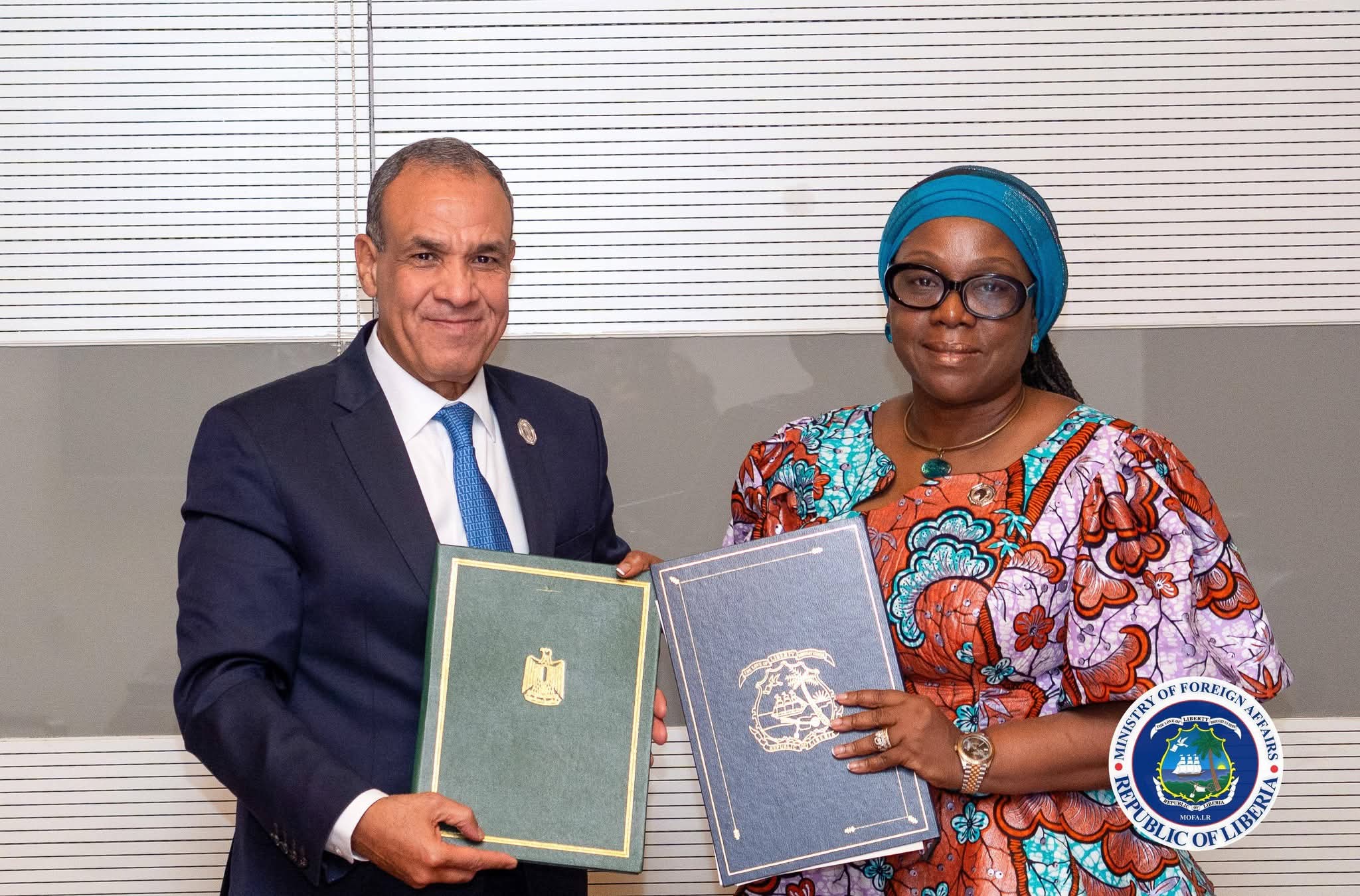
Liberia and Egypt have taken a significant step toward strengthening bilateral relations, signing a Memorandum of Understanding (MoU) on diplomatic training and academic exchange on the margins of the African Union Summit in Addis Ababa.
The agreement was signed by Liberia’s Minister of Foreign Affairs, Sara Beysolow Nyanti, and Egypt’s Minister of Foreign Affairs, Emigration and Egyptian Expatriates, Badr Abdelatty, underscoring a renewed commitment by both nations to diplomacy-driven cooperation at a time of shifting global and continental dynamics.
Building Diplomatic Capacity and Knowledge Exchange
At the core of the MoU is a formal partnership between Liberia’s Gabriel L. Dennis Foreign Service Institute and Egypt’s Institute of Diplomatic Studies.
The collaboration aims to enhance diplomatic capacity through structured training programs, academic exchanges, joint research initiatives, and sustained professional engagement.
Officials noted that diplomatic training has become increasingly vital as African states navigate complex issues such as peace and security, climate diplomacy, development financing, and reform of global governance institutions.
Africa accounts for 28.5 percent of UN member states, yet continues to advocate for more equitable representation and influence an agenda both Liberia and Egypt say this partnership will help advance.
Historic Ties and Shared Continental Vision
During the signing ceremony, both ministers reflected on the longstanding relations between Monrovia and Cairo, which date back to the early post-independence period of African diplomacy.
Minister Abdelatty conveyed warm greetings from Egyptian President Abdel Fattah el-Sisi to Liberian President Joseph Nyuma Boakai, congratulating Liberia on its recent election to the United Nations Security Council.
Liberia’s election to the Council, where Africa holds three rotating seats has been widely viewed as a diplomatic milestone for the West African nation and a platform to amplify African priorities in global peace and security deliberations.
Expanding Cooperation: Security, Energy, and Food Systems
Beyond diplomacy and education, discussions between the two delegations explored expanded cooperation in military, police, and intelligence coordination, as well as in energy development and food security, sectors that remain critical as Africa faces rising security threats and climate-related shocks.
The ministers also emphasized the importance of political consultations and coordinated African positions at the United Nations, noting that unified diplomacy has historically increased Africa’s negotiating leverage on issues ranging from peacekeeping mandates to development financing.
Economic Diplomacy and High-Level Engagements Ahead
Minister Nyanti welcomed Egypt’s proposals and expressed gratitude for Cairo’s support during Liberia’s successful UNSC bid.
She proposed the convening of a Liberia- Egypt Business Forum to stimulate trade, investment, and private-sector partnerships, highlighting opportunities in infrastructure, agriculture, and services.
She further suggested a State Visit by President Boakai to Egypt, an idea warmly received by the Egyptian side as part of efforts to elevate bilateral relations to a more strategic level.
Immediate Outcomes and Forward Agenda
As an immediate outcome of the engagement, Egypt committed to sponsoring five Liberian diplomats for advanced training programs in Egypt, a move expected to strengthen Liberia’s foreign service capacity in the short term.
Discussions are also underway for a proposed State Visit by President Boakai in August 2026, as well as an invitation for Minister Nyanti to Cairo in April 2026 to sign a Joint Commission Agreement that would institutionalize cooperation across multiple sectors.
Analysts say the MoU reflects a broader trend of intensified South–South cooperation within Africa, as countries invest in diplomacy, skills, and partnerships to better navigate an increasingly complex international system.
