
By: Julius Konton
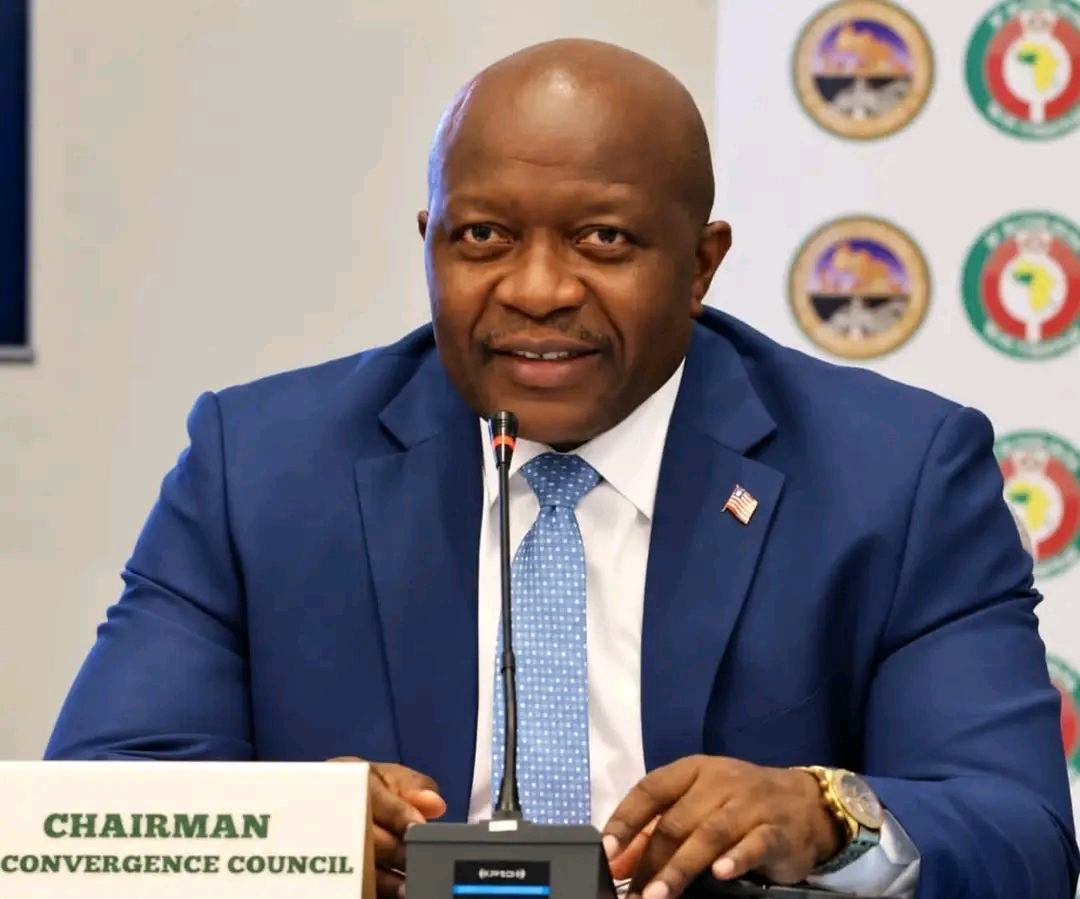
Liberia’s Minister of Finance and Development Planning, Augustine Kpehe Ngafuan, is expected to chair a high-level virtual meeting of the Convergence Council of the West African Monetary Zone (WAMZ) on Monday, as regional policymakers intensify efforts to advance macroeconomic convergence and lay the groundwork for the long-delayed ECO single currency.
The meeting is scheduled to begin at 10:00 a.m. and will bring together finance ministers and monetary authorities from the six WAMZ member states, The Gambia, Ghana, Guinea, Liberia, Nigeria and Sierra Leone. The zone represents one of the major components of ECOWAS’ long-running monetary integration programme.
Minister Ngafuan’s leadership comes at a critical moment for the regional monetary project, which has faced repeated delays because member states have struggled to achieve and sustain the required levels of macroeconomic convergence.
Ngafuan was elected Chairman of the WAMZ Convergence Council for a one-year term during the council’s annual meeting held at the Farmington Hotel in Margibi County, Liberia, in February 2026.
The Convergence Council plays a central role in the monetary integration process by monitoring the economic performance of participating countries, assessing progress toward established convergence benchmarks and considering policy measures needed to bring member economies closer together.
Its work is particularly important because a single currency requires participating economies to maintain a sufficient degree of fiscal, monetary and macroeconomic stability.
The broader ECOWAS monetary programme dates back decades.
ECOWAS was established through the Treaty of Lagos on May 28, 1975, with economic integration at the heart of its mandate.
The regional bloc now has 12 member states, following the withdrawal of Burkina Faso, Mali and Niger in January 2025.
The creation of a common West African currency has been under discussion for decades.
ECOWAS adopted a monetary cooperation programme in 1987, while a formal set of macroeconomic convergence criteria was adopted in 1999.
The objective was to progressively align the economic policies and performance of member states before establishing a single monetary area.
In 2019, ECOWAS countries reached consensus on “ECO” as the name of the proposed regional currency.
However, the currency has yet to be introduced, with disagreements, economic disparities and difficulties meeting convergence requirements repeatedly pushing back implementation.
The West African Monetary Agency (WAMA), established in 1996 from the former West African Clearing House, is among the institutions responsible for monitoring and supporting implementation of the regional monetary cooperation programme.
At the heart of Monday’s discussions will be the question of whether WAMZ economies are moving sufficiently close to the economic thresholds required for monetary integration.
The convergence framework includes benchmarks covering inflation, fiscal deficits, monetary financing of government deficits, foreign-exchange reserves and other fiscal and macroeconomic indicators.
Recent ECOWAS data demonstrate the scale of the challenge.
According to the ECOWAS 2024 Macroeconomic Convergence Report, only six ECOWAS member states met the applicable inflation convergence criterion in 2024, up from three in 2023.
Importantly, no WAMZ member state met that particular target during the review period.
Inflation remained particularly elevated in several WAMZ economies.
Ghana’s average inflation rate declined from 40.3 percent in 2023 to 22.9 percent in 2024, while Sierra Leone fell from 47.6 percent to 28.5 percent. Liberia recorded average inflation of 8.3 percent in 2024, compared with 10.1 percent in 2023.
Guinea recorded 5.1 percent, while The Gambia stood at 10.2 percent.
The figures highlight the considerable differences in economic conditions among countries expected eventually to share a common monetary policy.
The WAMZ was designed as a monetary integration arrangement bringing together The Gambia, Ghana, Guinea, Liberia, Nigeria and Sierra Leone.
The six economies have significant differences in population, economic size, currency regimes, inflation levels, fiscal conditions and foreign-exchange pressures. These disparities make economic convergence essential before a common central-bank and monetary-policy framework can operate effectively.
For Liberia, participation in the process carries particular significance because the country’s economy is closely linked to regional trade, investment and monetary developments.
A successful regional currency could potentially reduce transaction costs, facilitate cross-border commerce and investment, and strengthen monetary cooperation.
But policymakers must also address the risks of adopting a common monetary policy when individual economies experience different inflationary pressures, fiscal positions and external shocks.
Monday’s meeting also comes just days after General Birame Diop of Senegal assumed office as President of the ECOWAS Commission, succeeding Dr. Omar Alieu Touray of The Gambia.
Diop formally assumed office in Abuja on September 1, 2026, following his appointment by the ECOWAS Authority of Heads of State and Government at its 69th Ordinary Summit in Freetown, Sierra Leone, in July.
The newly installed ECOWAS Commission President is expected to deliver remarks during the opening session of Monday’s WAMZ Convergence Council meeting.
His participation gives the meeting added significance as the regional organization seeks to strengthen economic integration and advance its broader vision of a more interconnected West African market.
ECOWAS says its long-term vision is to build an integrated region capable of improving economic opportunities and prosperity for its estimated 300 million citizens.
Representatives of several key regional institutions are also expected to participate in Monday’s proceedings as observers and advisers.
They include the ECOWAS Commission, UEMOA Commission, West African Monetary Agency (WAMA), West African Monetary Institute (WAMI), and ECOWAS Bank for Investment and Development (EBID).
Their participation reflects the increasingly interconnected institutional architecture supporting West Africa’s monetary and economic integration agenda.
The WAMI, in particular, has historically played a major technical role in preparations for the proposed monetary union, while WAMA is responsible for supporting monetary cooperation and monitoring progress toward a single monetary zone.
For Liberia, Minister Ngafuan’s chairmanship provides an opportunity for the country to play a more visible role in shaping regional economic policy at a time when ECOWAS is reassessing its integration agenda.
The challenge before the council is considerable: translating the long-standing political ambition of a single West African currency into measurable economic convergence.
More than three decades after ECOWAS intensified efforts toward monetary integration, and seven years after the ECO name was formally agreed upon, the proposed currency remains unrealized.
Monday’s meeting will therefore be closely watched for indications of how WAMZ governments intend to accelerate convergence, strengthen fiscal and monetary discipline, improve the reliability of economic data and move the ECO project from a long-term ambition toward practical implementation.
For Liberia’s Ngafuan, chairing the council places the country at the center of one of West Africa’s most ambitious and most difficult regional economic projects.
