
By: Julius Konton
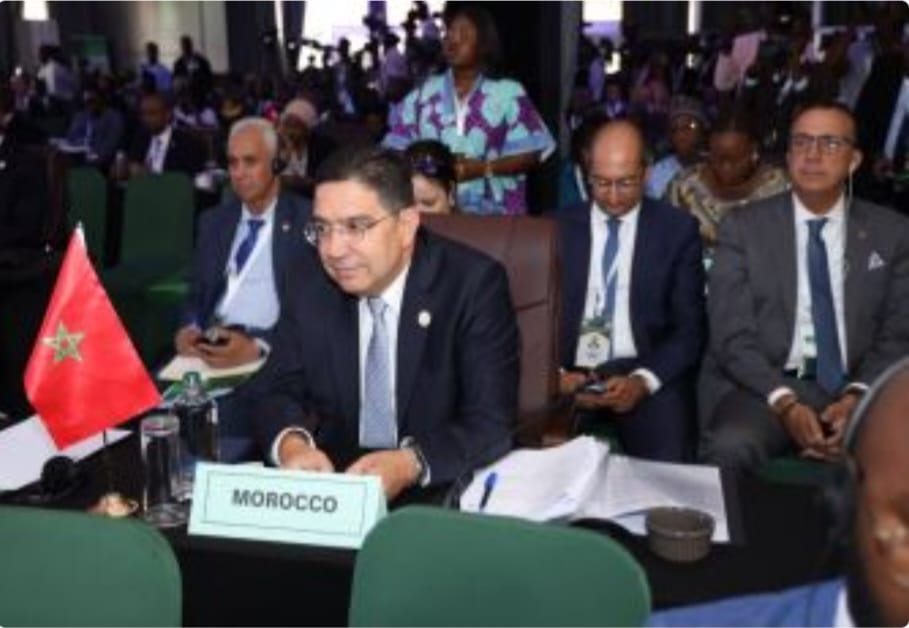
Morocco has reaffirmed its commitment to transforming Africa’s healthcare landscape, with Foreign Affairs, African Cooperation and Moroccan Expatriates Minister Nasser Bourita representing His Majesty King Mohammed VI at the African Union Extraordinary Summit on the Elimination of AIDS and Improving Maternal Health, held Wednesday in Accra, Ghana.
Convened under the African Union’s renewed public health agenda, the high-level summit brought together African Heads of State, ministers, health experts, development partners, and international organizations to accelerate progress toward eliminating AIDS, reducing preventable maternal deaths, combating communicable and non-communicable diseases, and strengthening resilient health systems across the continent by 2030.
Speaking on behalf of King Mohammed VI, Bourita underscored what he described as the King’s long-standing vision of African health sovereignty, founded on the principles of solidarity, social justice, regional integration, and the sharing of expertise.
He emphasized that Morocco has made healthcare one of the central pillars of its African cooperation strategy, aligning closely with the summit’s three strategic priorities: expanding local pharmaceutical manufacturing, mobilizing innovative healthcare financing, and strengthening political leadership and governance in the health sector.
“Health sovereignty is not merely an aspiration but a strategic necessity for Africa’s sustainable development,” Bourita stressed, highlighting Morocco’s growing investments in pharmaceutical production, medical training, vaccine manufacturing, and South-South cooperation initiatives across the continent.
Despite notable progress over the past two decades, Africa continues to shoulder a disproportionate share of the world’s disease burden.
According to UNAIDS, approximately 25.6 million people in sub-Saharan Africa are living with HIV, accounting for nearly two-thirds of the global HIV-positive population. Although AIDS-related deaths have fallen significantly since their peak in the early 2000s, hundreds of thousands of new infections continue to occur annually.
Maternal health also remains a major concern.
The World Health Organization estimates that about 70% of global maternal deaths occur in sub-Saharan Africa, with preventable complications during pregnancy and childbirth continuing to claim the lives of thousands of women every year.
The continent is simultaneously experiencing a rapid rise in non-communicable diseases (NCDs), including cardiovascular diseases, diabetes, hypertension, and cancer, while continuing to battle infectious diseases such as malaria, tuberculosis, Ebola outbreaks, and emerging pandemic threats.
Health experts estimate that Africa bears nearly 24% of the global disease burden but has only about 3% of the world’s health workforce and less than 2% of global health expenditure, highlighting persistent inequalities in healthcare access and capacity.
The Extraordinary Summit follows commitments adopted during the 38th Ordinary Session of the African Union Assembly of Heads of State and Government, where leaders agreed to prioritize evolving health challenges and strengthen continental preparedness.
Delegates reviewed a comprehensive African Union Roadmap to 2030 and Beyond, aimed at:
Sustaining progress toward ending AIDS as a public health threat;
Reducing preventable maternal and child mortality;
Building resilient healthcare systems capable of responding to future pandemics;
Expanding domestic pharmaceutical manufacturing;
Strengthening disease surveillance and health security across Africa;
Mobilizing sustainable financing for universal health coverage.
The roadmap also seeks to reduce Africa’s dependence on imported medicines by encouraging local production of vaccines, pharmaceuticals, diagnostics, and medical supplies an issue brought sharply into focus during the COVID-19 pandemic when many African nations struggled to access life-saving vaccines and essential medical equipment.
Under King Mohammed VI’s leadership, Morocco has increasingly positioned itself as a key player in African health cooperation.
In recent years, the Kingdom has expanded partnerships in medical education, pharmaceutical manufacturing, telemedicine, hospital infrastructure, and public health capacity-building across numerous African countries.
Moroccan pharmaceutical companies are among the continent’s leading medicine producers, while Rabat has strengthened cooperation with several African nations through bilateral health agreements and technical assistance programs.
Observers say Morocco’s emphasis on African-led solutions reflects a broader continental movement toward reducing dependency on external health supply chains and building stronger regional institutions capable of responding to future health emergencies.
The Moroccan delegation, headed by Minister Bourita, includes senior representatives from the Ministry of Health and Social Protection and the Ministry of Economy and Finance, reflecting Morocco’s integrated approach to linking health policy with economic development and sustainable financing.
As African leaders work toward achieving the African Union’s Agenda 2063 and the United Nations Sustainable Development Goals, the Accra summit is expected to shape the continent’s public health priorities for the remainder of the decade, with renewed emphasis on collective action, innovation, and African self-reliance in healthcare.
