
By: Julius Konton
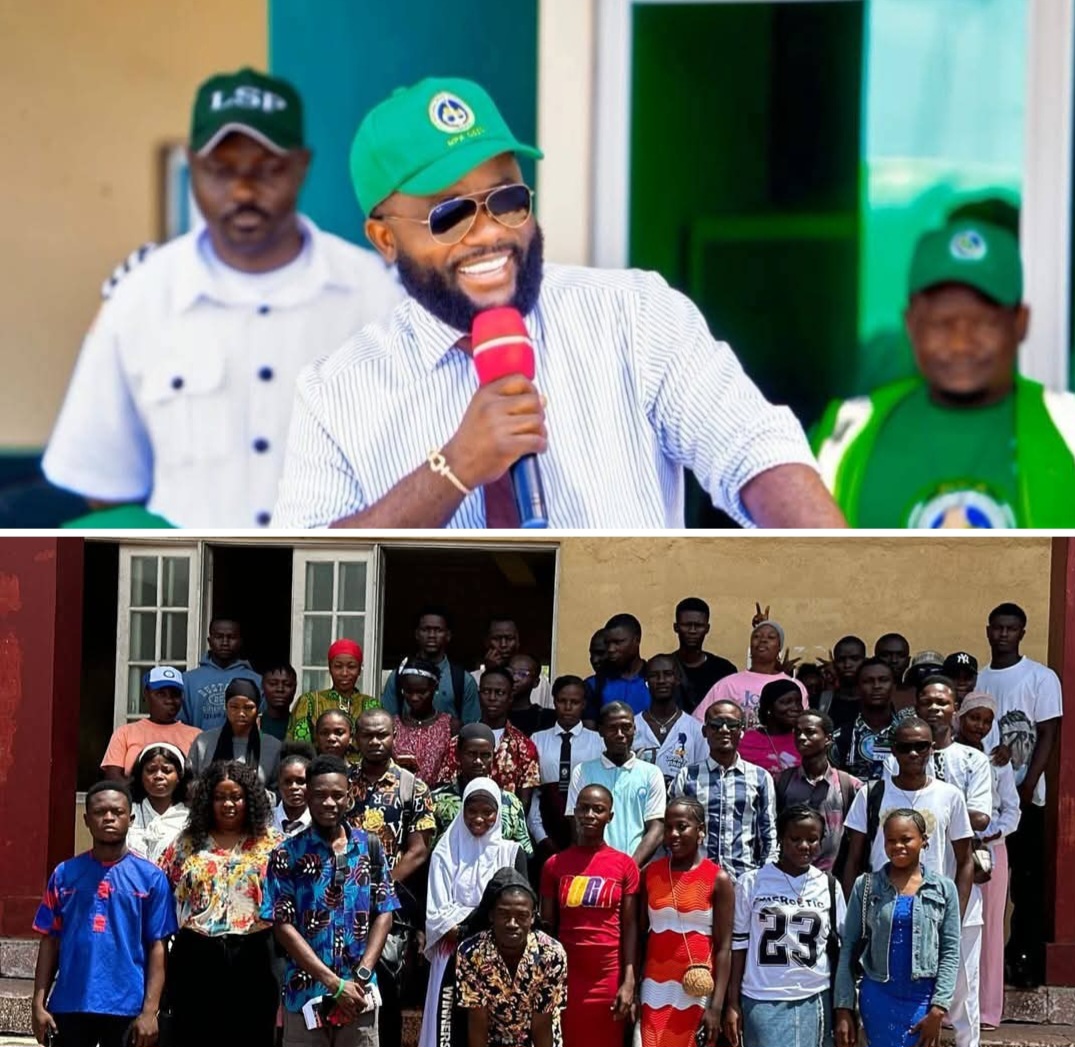
In a country where access to higher education remains a challenge for many young people, the Managing Director of the National Port Authority, Sekou Hussein Dukuly, has intensified his youth empowerment drive by sponsoring 220 young Liberians to sit the entrance examination of the University of Liberia.
The initiative, which fully covers examination fees for all beneficiaries, directly addresses one of the most persistent barriers to higher education in Liberia: affordability.
For many families, even modest fees associated with entrance exams can prevent capable students from pursuing university education.
A Critical Intervention in a Strained Education System
Liberia’s education sector continues to rebuild following years of disruption caused by the Liberian Civil War, which devastated infrastructure and weakened institutional capacity.
Despite progress in recent years, access to tertiary education remains limited.
According to estimates from the World Bank, gross enrollment in higher education across Sub-Saharan Africa averages below 10%, with Liberia falling within this range.
Financial constraints, including admission-related costs, remain a key factor limiting participation.
The University of Liberia established in 1862 and one of West Africa’s oldest degree-granting institutions admits thousands of applicants annually, yet many qualified candidates are unable to even attempt the entrance exam due to financial hardship.
Removing Barriers, Creating Opportunity
By underwriting the examination fees, Dukuly’s intervention opens doors for students who might otherwise be excluded from the admissions process.
Education advocates note that such targeted support can have multiplier effects, increasing enrollment while improving long-term economic prospects.
“This is more than a financial gesture, it is an investment in Liberia’s human capital,” said a local education analyst in Monrovia.
“When young people gain access to higher education, the entire economy benefits through increased productivity and innovation.”
Recognition from Student Leadership
The move has drawn praise from the University of Liberia Muslim Students Association (ULMSA), which publicly commended the NPA Managing Director for his intervention.
“Your timely and impactful support has not only eased the financial burden on these students but has also opened doors of opportunity for many young people aspiring for higher education,” the association said in a statement.
ULMSA described the initiative as a reflection of “true leadership, compassion, and a strong commitment to educational empowerment and national development,” adding prayers for Dukuly’s continued success.
Youth Empowerment Beyond Infrastructure
While the National Port Authority is primarily tasked with managing Liberia’s seaports critical gateways for trade that account for a significant portion of government revenue ,its leadership has increasingly engaged in social initiatives aimed at community development.
Analysts suggest that such interventions align with broader national goals, including improving literacy rates and expanding access to quality education.
Liberia’s literacy rate, estimated at around 48–50%, highlights the urgency of sustained investment in education at all levels.
A Model for Public Sector Engagement
Dukuly’s sponsorship initiative is being viewed as a model for how public institutions and their leaders can contribute beyond their core mandates.
By directly supporting students, the program bridges the gap between policy ambition and real-life opportunity.
As Liberia continues its post-conflict recovery and development journey, stakeholders say initiatives like this could play a crucial role in shaping a more inclusive and educated society.
With 220 students now able to take a critical step toward higher education, attention is turning to whether similar programs can be scaled nationwide.
Education advocates argue that public-private partnerships and sustained scholarship schemes will be essential to meet growing demand.
For the beneficiaries, however, the impact is immediate and personal: a chance to sit for an exam that could define their future and, potentially, the future of Liberia itself.
