
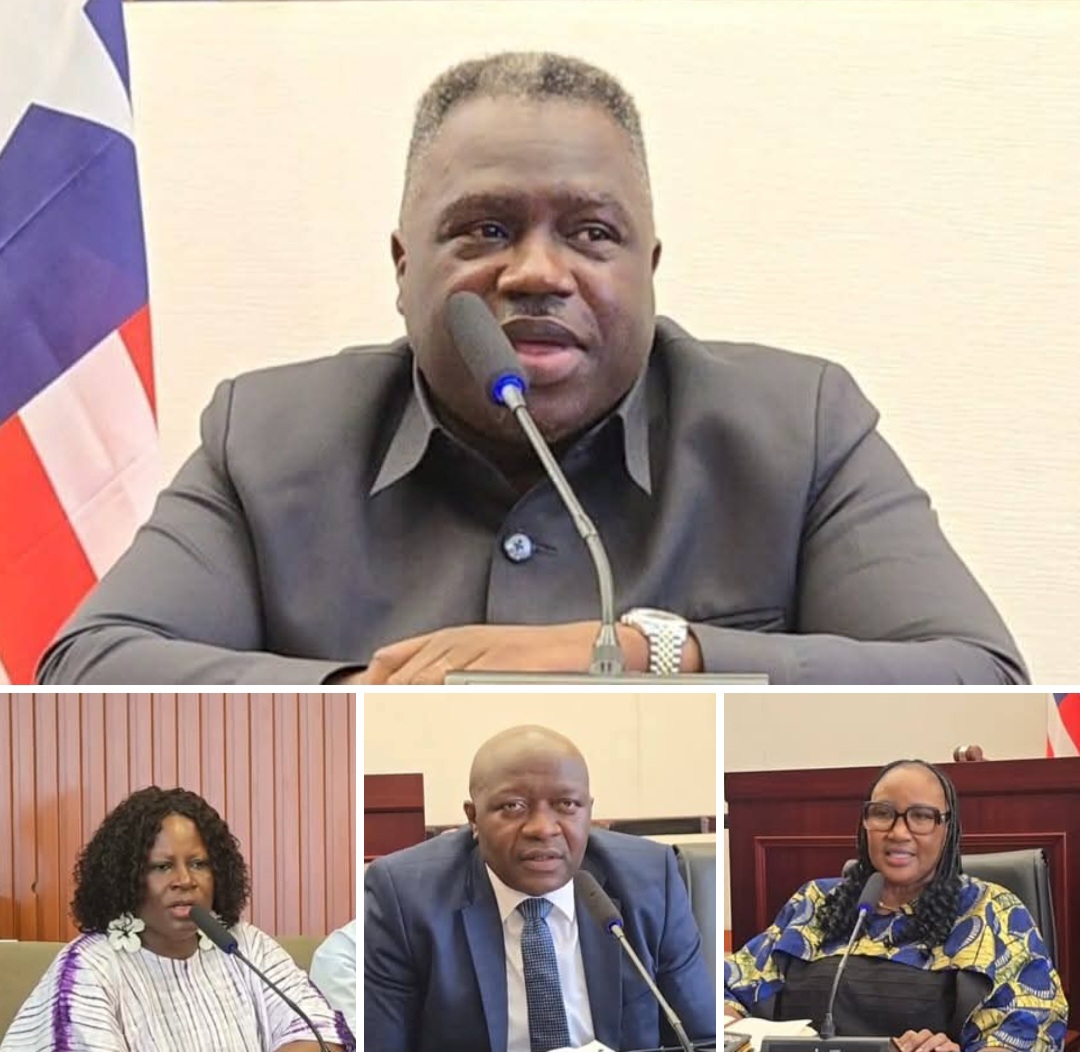
By: Julius Konton
In a dramatic display of legislative restraint and political diplomacy, the Liberian Senate voted overwhelmingly to spare two senior cabinet ministers from contempt charges after they failed to honor an earlier summons, opting instead to issue a warning and schedule a critical hearing on Wednesday to address the underlying issues affecting volunteer teachers and healthcare workers across the country.
The decision followed a motion introduced by Alex Tyler, Senator of Bomi County, who urged the Senate to “temper justice with mercy” by allowing the officials another opportunity to appear before the legislative body.
The ministers involved , Augustine Kpehe Ngafuan, Liberia’s Minister of Finance and Development Planning, and Louise M. Kpoto, Minister of Health had been cited for failing to attend a previous Senate session after being invited to discuss the integration and payment of volunteer teachers and healthcare workers into Liberia’s formal public payroll system.
In addition to the two ministers, the Senate has also requested the presence of Josiah F. Joekai, Director-General of the Civil Service Agency of Liberia, signaling a broader review of government payroll management and civil service policies.
A Growing Issue: Volunteer Workers in Liberia’s Public Sector
The controversy centers on thousands of volunteer teachers and healthcare workers across Liberia who have been serving in schools and clinics for years without full integration into the government payroll.
According to education and health sector estimates:
Liberia has over 12,000 volunteer or auxiliary teachers, many of whom support public schools in rural areas.
The health sector relies on thousands of unpaid or stipend-based community health workers, particularly in underserved counties.
Government payroll constraints and administrative delays have prevented many from receiving full salaries despite legislative budget allocations.
Lawmakers argue that funds had already been appropriated in the national budget to regularize these workers, prompting frustration when implementation stalled.
Senator Abraham Darius Dillon emphasized that the Senate’s concern was not merely procedural but tied directly to citizens’ livelihoods.
“The issue before us borders on volunteer teachers and healthcare workers whom the Legislature appropriated funds for in the national budget.
These workers must be incorporated into the system as regular employees,” Dillon stated.
Finance Minister Cites National Security and Economic Pressures
Appearing before the Senate to explain his absence, Finance Minister Augustine Kpehe Ngafuan stressed that his failure to attend the previous hearing was not deliberate.
Ngafuan described a convergence of urgent national matters requiring his presence, including economic management meetings, cabinet deliberations, and national security concerns.
He noted that as chair of Liberia’s Economic Management Team and a member of the National Security Council, he had been involved in continuous meetings addressing:
Regional security concerns along Liberia’s borders
Cabinet reviews of the government’s development agenda
Fuel supply stabilization efforts involving the Liberia Petroleum Refining Company
Ngafuan also revealed emerging financial sector challenges affecting the disbursement of government salaries.
“There is a bank experiencing difficulties paying government workers despite funds already being remitted,” he told lawmakers, suggesting the issue was affecting not only the Legislature but other public employees nationwide.
The minister apologized to the Senate and reaffirmed his respect for the legislative body.
“I have no intention whatsoever to disrespect the Liberian Senate.
I am always available to the House of Elders and remain at your disposal,” Ngafuan said.
Senate Debate: Punishment or Warning?
The Senate chamber witnessed an intense debate over whether the ministers should face sanctions.
Prince Kermue Moye, chair of the Senate Committee on Ways, Means, Finance and Budget, argued that Ngafuan had historically maintained a cooperative relationship with lawmakers.
“This is the first time the Minister or his deputies have failed to appear before the Senate,” Moye said, appealing for leniency.
However, Senator Samuel Kogar proposed a symbolic financial penalty.
He recommended that Ngafuan be fined L$4,999 (approximately US$26) and the amount paid into government coffers, emphasizing the importance of institutional accountability.
Other senators, including James Emmanuel Nuquay of Margibi County, supported issuing a warning instead of imposing a fine, citing the minister’s explanation and the broader national context.
Senate Leadership Calls for Respect and Cooperation
Senate Pro-Tempore Nyonblee Karnga-Lawrence reinforced the long-standing cooperation between the Finance Ministry and the Legislature.
She confirmed receiving a phone call from Deputy Finance Minister Tenneh Brunson, indicating that ministry officials had been en route to the Senate when the earlier session adjourned.
Meanwhile, Jeremiah Kpan Koung, Vice President of Liberia and President of the Senate, issued a caution to cabinet officials across government.
He stressed that ministers must respect legislative oversight and maintain collaboration between branches of government.
“Government officials must respect the Senate and fulfill their constitutional responsibilities in the interest of the Liberian people,” Koung said.
Why Wednesday’s Hearing Matters
The upcoming hearing is expected to be a pivotal moment in resolving longstanding grievances within Liberia’s public service sector.
Key issues likely to dominate discussions include:
Integration of volunteer teachers into the government payroll
Regularization of community health workers
Salary payment delays linked to banking system challenges
Civil service reforms aimed at improving payroll transparency
For thousands of workers who have served for years with minimal or inconsistent compensation, the Senate hearing could determine whether legislative promises translate into tangible policy action.
A Test of Governance and Accountability
Liberia’s governance framework, established under its 1986 Constitution relies heavily on legislative oversight of executive institutions.
Analysts say the Senate’s decision to issue a warning rather than a contempt citation reflects a delicate balance between enforcing accountability and maintaining constructive cooperation between branches of government.
However, lawmakers also signaled that patience is limited.
Should the ministers fail to appear or provide satisfactory answers during Wednesday’s session, the Senate retains the constitutional authority to impose sanctions, including contempt proceedings.
For now, the chamber has chosen reconciliation over confrontation placing the spotlight firmly on the substantive issue: ensuring fair pay and job security for the educators and health workers sustaining Liberia’s fragile public service system.
