
By: Julius Konton
Morocco and Bahrain have taken a significant step toward strengthening their long-standing bilateral relations with the signing of several high-level agreements and memoranda of understanding during the 6th session of the Morocco–Bahrain Joint High Committee, held on Monday in Laayoune.
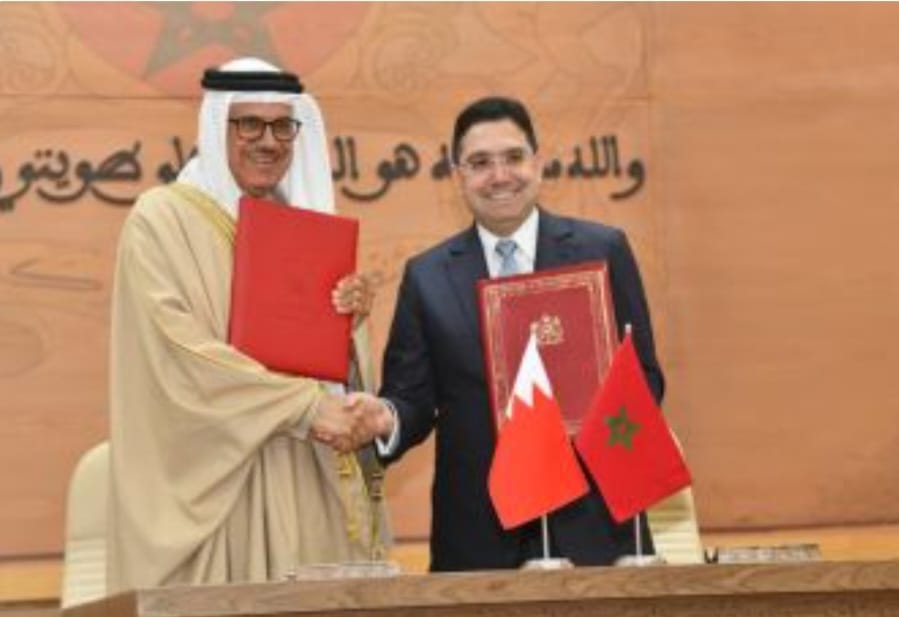
The session culminated in the inking of multiple legal instruments by Morocco’s Minister of Foreign Affairs, African Cooperation and Moroccan Expatriates, Nasser Bourita, and Bahrain’s Minister of Foreign Affairs, Abdullatif bin Rashid Al Zayani, underscoring the two kingdoms’ shared commitment to deepening political, economic, and institutional cooperation.
Key Agreements Signed
Among the most notable outcomes was the signing of two visa-exemption agreements, covering holders of diplomatic passports as well as special and service passports.
These measures are expected to facilitate official exchanges, enhance diplomatic mobility, and strengthen institutional coordination between Morocco and Bahrain.
In the economic and trade domain, both sides signed a memorandum of understanding on customs cooperation between Morocco’s Customs and Indirect Taxes Administration and Bahrain’s Customs Affairs.
The agreement aims to improve information exchange, streamline customs procedures, and enhance trade facilitation, an increasingly important priority as trade flows between North Africa and the Gulf continue to grow.
According to regional trade data, Morocco–Gulf Cooperation Council (GCC) trade has steadily increased over the past decade, with Bahrain emerging as a key financial and logistics hub linking North Africa to Asian markets.
While bilateral trade volumes remain modest compared to larger GCC economies, officials say the new customs framework could significantly boost exchanges in agriculture, manufactured goods, and services.
Focus on Food Security and Social Protection
Reflecting shared concerns over global food supply disruptions and climate pressures, the two countries also signed a memorandum of understanding in the fields of agricultural production, livestock development, and food security.
The agreement brings together Morocco’s Ministry of Agriculture, Maritime Fisheries, Rural Development, Water, and Forests and Bahrain’s Ministry of Municipalities Affairs and Agriculture.
Morocco, a leading African agricultural producer with extensive experience in irrigation, phosphate-based fertilizers, and climate-resilient farming, is expected to share technical expertise with Bahrain, which relies heavily on food imports and is pursuing long-term food security strategies.
In addition, a memorandum of cooperation on retirement systems and social security was signed between Morocco’s Caisse de Dépôt et de Gestion (CDG) and Bahrain’s Social Insurance Organization.
This agreement aims to promote best practices in pension management, institutional governance, and long-term social protection frameworks.
Strong Political Backing from Both Monarchies
At the close of the session, both delegations expressed satisfaction with the positive trajectory of bilateral relations, emphasizing that the progress reflects the clear political will and high-level guidance of King Mohammed VI and King Hamad bin Isa Al Khalifa.
Officials noted that the two monarchs share a determination to elevate Morocco–Bahrain ties to broader and more strategic horizons, injecting renewed momentum into cooperation that aligns with the aspirations of both peoples.
A Growing Partnership
Established decades ago, Morocco–Bahrain relations have been marked by consistent political coordination, mutual support on regional and international issues, and expanding economic engagement.
The outcomes of the 6th Joint High Committee signal a renewed phase in this partnership, one that combines diplomacy, economic integration, and social development.
As global uncertainty continues to reshape international alliances, Rabat and Manama appear intent on positioning their relationship as a model of South–South cooperation rooted in shared values, strategic interests, and long-term development goals.
