
By: Julius Konton
West Africa’s long-anticipated single currency project, the Eco, has entered what regional leaders describe as its most decisive phase, as Liberia called on Economic Community of West African States (ECOWAS) members to move from commitments to concrete action ahead of the July 2027 launch target.
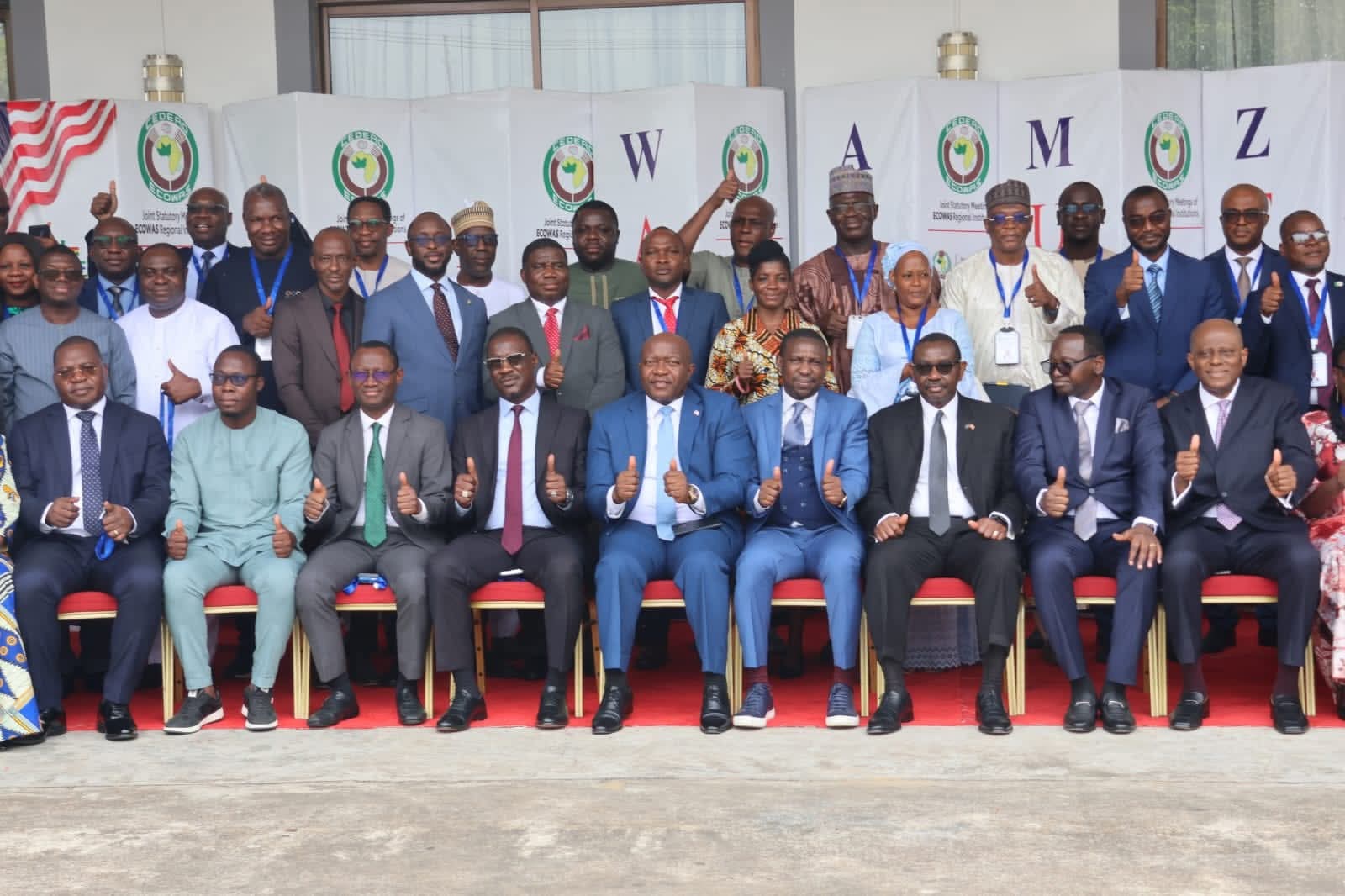
Speaking at the opening of the 55th End-Year Convergence Council Meeting at the Farmington Hotel, Liberia’s Minister of Finance and Development Planning, Augustine Kpehe Ngafuan, warned that continued delays could erode public confidence in one of Africa’s most ambitious monetary integration projects.
“The Eco, the single currency our region has pursued with determination, has faced multiple postponements.
With July 2027 now set as the new horizon, we no longer have the luxury of drifting,” Ngafuan said.
A Long Road Toward Monetary Union
The Eco project, championed by Economic Community of West African States, dates back more than two decades and is intended to unify the region’s fragmented monetary systems, reduce dependence on external currencies, and strengthen intra-African trade.
ECOWAS represents a combined population of over 400 million people and an estimated GDP exceeding US$800 billion, yet intra-regional trade remains below 15 percent, far lower than levels recorded in Europe or East Asia.
Economists argue that currency fragmentation, exchange rate volatility, and transaction costs have long constrained regional commerce.
Liberia’s Convergence Performance
Minister Ngafuan reported that Liberia made substantial progress by the end of 2025, recording improvements across all six ECOWAS convergence indicators, including:
Inflation control
Fiscal deficit management
Limits on Central Bank financing of government
Foreign reserve accumulation
Exchange rate stability
Debt sustainability
Regionally, he disclosed that four ECOWAS Member States are projected to meet all four primary convergence criteria by 2025, up from two in 2024, while eight countries are expected to meet at least three criteria, signaling incremental but uneven progress.
However, inflationary pressures in several economies remain a major concern, driven by global commodity price shocks, currency depreciation, and post-pandemic fiscal strains.
“Convergence is not a ceremonial exercise,” Ngafuan cautioned.
“It is a test of discipline and credibility.
Without it, a stable monetary union is impossible.”
Beyond Technical Targets
The Liberian finance minister stressed that the Eco is not merely a technocratic project but a transformative economic instrument.
He described the single currency as “a bridge that connects markets, reduces transaction costs, attracts investment, and brings West African communities closer together.”
Analysts estimate that a successful monetary union could significantly reduce cross-border transaction costs currently as high as 7–10 percent for some regional transfers while boosting trade, tourism, and capital mobility.
Ngafuan urged Member States to accelerate reforms, harmonize fiscal and monetary policies, and navigate political and economic pressures with a shared regional vision.
Liberian Presidency Weighs In
Delivering remarks on behalf of President Joseph Nyuma Boakai, Liberia’s Minister of Justice and Acting Cabinet Chairman, Cllr. N. Oswald Tweh, echoed calls for bold and coordinated action.
He emphasized that macroeconomic stability must translate into tangible benefits for citizens, including job creation, entrepreneurial growth, improved healthcare, and expanded access to education.
“Low inflation and sound fiscal management are not ends in themselves,” Tweh said.
“They are tools for improving lives and ensuring that growth is inclusive and sustainable.”
Regional Institutions in Focus
The meeting formed part of the Joint Statutory Sessions involving regional monetary and financial institutions, including the West African Monetary Agency (WAMA),
the West African Monetary Institute (WAMI), and the West African Institute for Financial and Economic Management (WAIFEM).
Held in Liberia from February 4–13, the sessions brought together Finance Ministers, Central Bank Governors, and senior technocrats to assess macroeconomic performance and chart a path toward deeper integration.
A Defining Moment
As ECOWAS inches toward the 2027 deadline, regional experts warn that failure to meet the target could weaken confidence in West Africa’s broader integration agenda, particularly at a time when the African Continental Free Trade Area (AfCFTA) is gaining momentum.
“The people of West Africa are counting on us,” Ngafuan concluded.
“They deserve a monetary union that lowers costs, facilitates trade, attracts investment, and improves livelihoods.”
With less than eighteen months to the target date, the Eco project now stands at a crossroads, one that may determine whether West Africa’s monetary union remains an aspiration or finally becomes a reality.
