
By: Julius Konton
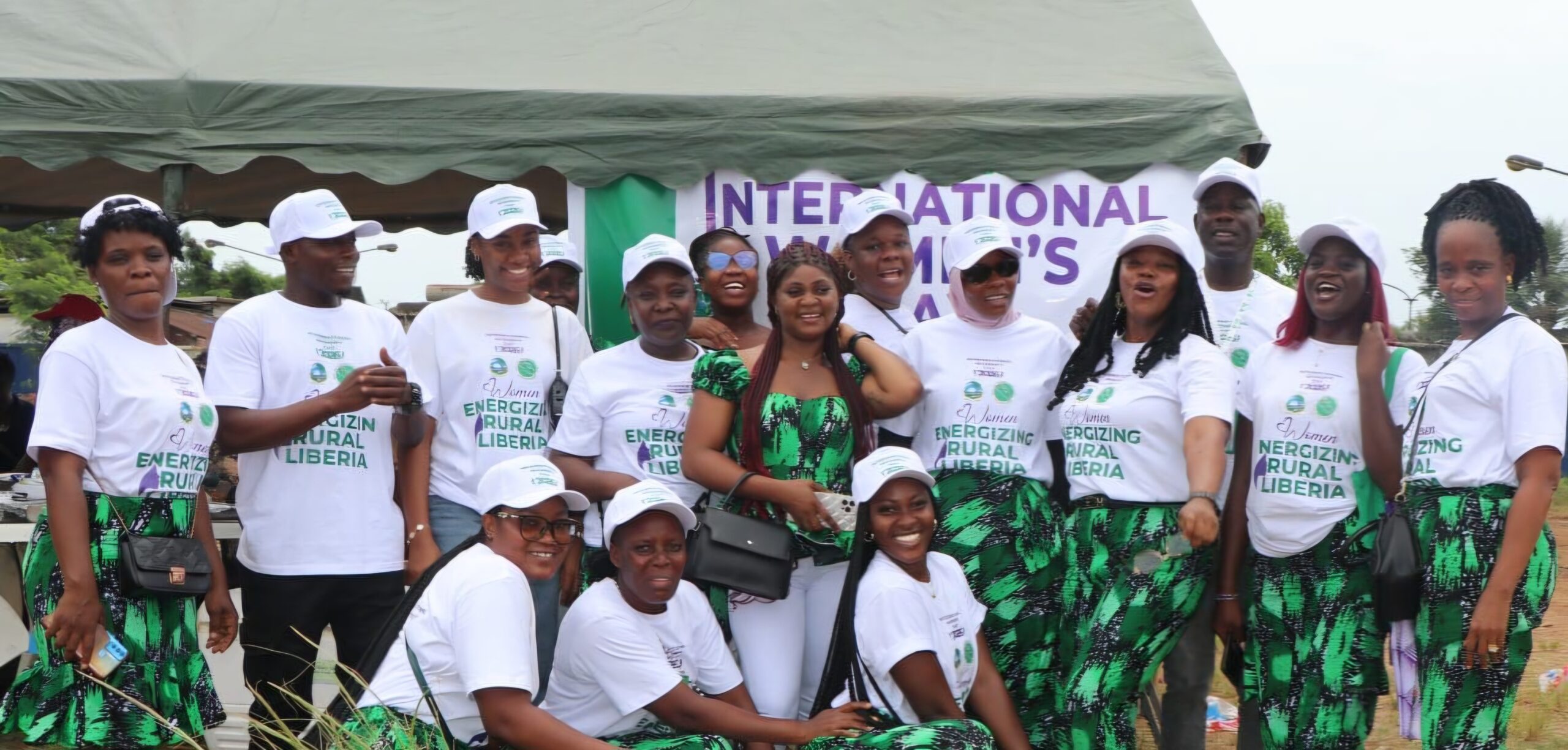
Women of Liberia’s Rural and Renewable Energy Agency (RREA) made a historic debut in the country’s official celebration of International Women’s Day, joining hundreds of women from government ministries, civil society organizations, development partners, and private sector institutions in a nationwide observance dedicated to advancing gender equality and recognizing the achievements of women.
The national celebration, held in Monrovia under the theme “Give to Gain: Support Women for National Development,” brought together women leaders, advocates, policymakers, and young professionals from across Liberia to reflect on progress made in promoting women’s rights while renewing commitments to expand opportunities for women and girls in all sectors of society.
The event forms part of the global observance of International Women’s Day, celebrated annually on March 8.
The international day traces its origins to early 20th-century women’s labor movements and was formally recognized by the United Nations in 1975.
Today, it is observed in more than 100 countries and serves as a platform for promoting women’s empowerment, leadership, and social inclusion.
First Lady Calls for Greater Investment in Women
Delivering the keynote address, Kartumu Yarta Boakai, First Lady of the Liberia, emphasized that empowering women is essential to national development and economic transformation.
She urged policymakers and development partners to increase investments in women’s education, entrepreneurship, and leadership opportunities, noting that societies thrive when women are fully integrated into economic and governance structures.
“Supporting women is not only a moral obligation but a strategic investment in the future of our nation,” the First Lady said.
“When women are empowered, families prosper, communities grow stronger, and national development accelerates.”
She further called for stronger gender-responsive policies to address persistent inequalities and to protect the rights of women and girls.
According to the First Lady, collaboration between government institutions, civil society organizations, and international partners remains critical in eliminating barriers that hinder women’s participation in decision-making and economic activities.
RREA Women Mark a Historic Milestone
For the women of the Rural and Renewable Energy Agency (RREA), the celebration marked a milestone in the agency’s institutional journey toward promoting gender inclusion in Liberia’s energy sector.
Speaking during the event, RREA’s Communication and Visibility Officer, Oretha Bundoo Seh, described the agency’s participation as both symbolic and inspirational.
“Participating in the International Women’s
Day celebration for the first time is a proud moment for the women of RREA,” she said.
“It demonstrates our commitment to advancing women’s empowerment while contributing to sustainable development through expanded energy access in rural communities.”
She emphasized that women have an increasingly important role in the renewable energy sector, a field historically dominated by men.
“Our involvement reminds us that women can lead, innovate, and make meaningful contributions to Liberia’s development, particularly in sectors such as renewable energy that are transforming rural livelihoods,” Seh added.
Women’s Role in Liberia’s Energy Transformation
RREA plays a central role in expanding access to electricity in rural Liberia, where energy poverty remains a significant development challenge.
According to national energy statistics, more than 70 percent of Liberia’s population still lacks reliable electricity, particularly in rural communities.
Since its establishment in 2010, RREA has led initiatives aimed at expanding decentralized energy systems, including mini-grids and solar power installations.
Through partnerships with international institutions such as the World Bank, the African Development Bank, and the European Union, the agency has supported dozens of rural electrification projects designed to improve economic opportunities, healthcare delivery, and educational outcomes.
Energy experts note that women are among the primary beneficiaries of improved electricity access in rural areas.
Electrification reduces household labor burdens, improves healthcare services, and expands opportunities for women-led businesses.
Increasing female participation in the energy sector is therefore viewed as a critical component of sustainable development.
Honoring Champions of Women’s Empowerment
As part of the national celebration, several prominent Liberian women were honored for their contributions to advancing women’s rights, leadership, and social welfare.
Among those recognized were Leymah Gbowee, founder of the Gbowee Peace Foundation Africa and Nobel Peace Prize laureate, who was celebrated for her continued advocacy for women’s leadership and peacebuilding.
Also honored was Facia Boyenoh Harris of the Paramount Young Women Initiative, recognized for her work addressing gender-based violence and empowering young women across Liberia.
Another award recipient was Sara Beysolow Nyanti, Liberia’s Minister of Foreign Affairs, whose leadership in diplomacy and advocacy for women’s participation in governance has gained international recognition.
Renewing the Commitment to Gender Equality
The participation of RREA women in this year’s celebration reflects the agency’s growing commitment to gender inclusion within Liberia’s renewable energy sector.
Experts say gender equality remains a key challenge in Liberia despite significant progress since the end of the country’s Second Liberian Civil War in 2003.
Women constitute roughly half of Liberia’s population, yet they remain underrepresented in leadership roles across politics, business, and technical sectors.
However, recent initiatives aimed at increasing female participation in science, technology, engineering, and energy industries are gradually reshaping the landscape.
For RREA’s women professionals, their participation in the national celebration symbolizes more than a ceremonial presence it represents a growing movement of women determined to shape Liberia’s development agenda.
As Liberia continues its efforts to expand renewable energy access and promote inclusive economic growth, women working in institutions like RREA say they remain committed to empowering the next generation of female leaders.
The women of the agency reaffirmed their dedication to creating opportunities for women and girls while contributing to Liberia’s broader goals of sustainable development, gender equality, and economic transformation.
For many participants, the celebration served as a reminder that empowering women is not only about recognition but about ensuring that women have a meaningful voice in building Liberia’s future.
