
By: Julius Konton
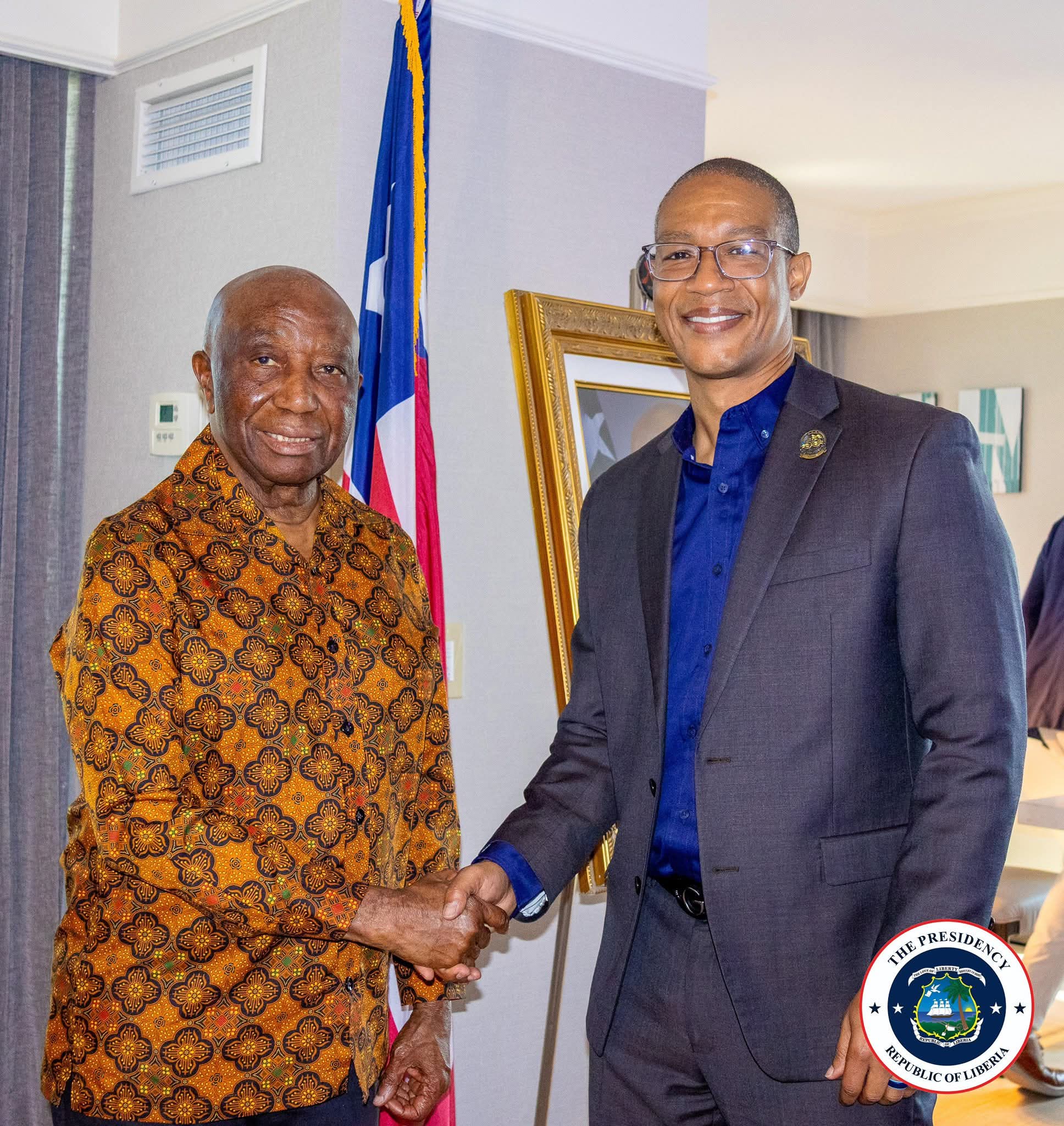
Liberia’s efforts to modernize its national security institutions gained fresh international attention this week as Colonel Jeffrey Glover, Director of Public Safety for the State of Arizona, paid a courtesy visit to President Joseph Nyuma Boakai Sr. during the Liberian leader’s transit stop in Washington, D.C.
The high-level meeting focused on strengthening cooperation in public safety and supporting Liberia’s ongoing police reform agenda, with discussions centered on technical assistance, leadership development, training partnerships, and institutional capacity-building for the Liberia National Police (LNP).
President Boakai was in Washington briefly before continuing to California for official engagements.
Police Reform at the Center of Liberia’s Governance Agenda
During the meeting, President Boakai reaffirmed his administration’s commitment to building a professional, accountable, and modern police service capable of responding to the security needs of Liberia’s more than 5.5 million citizens.
He emphasized that a trusted and well-equipped police force is essential to maintaining peace, enforcing the rule of law, and attracting economic investment.
“A professional security sector is fundamental to national stability and democratic governance,” officials close to the discussions said.
Liberia has spent the last two decades rebuilding its security institutions following the country’s devastating civil conflicts between 1989 and 2003, which claimed an estimated 250,000 lives and displaced nearly half the population.
Since then, successive governments have pursued reforms aimed at restoring confidence in state institutions, particularly in policing and justice systems.
Arizona Offers Expertise in Modern Public Safety Management
Colonel Glover expressed appreciation for the opportunity to meet President Boakai and signaled readiness to explore partnerships between Arizona institutions and Liberian authorities.
He highlighted the growing importance of international cooperation in tackling modern security threats such as cybercrime, trafficking networks, organized crime, emergency response challenges, and urban safety management.
Security analysts note that U.S. state-level public safety institutions often bring valuable expertise in:
Community policing models
Emergency response systems
Leadership and command training
Crime data analysis
Forensic investigations
Technology-driven policing methods
Border and migration management coordination
Arizona, which shares a border with Mexico, has developed extensive experience in law enforcement coordination, crisis response, and public safety innovation.
Community Policing and Public Trust Prioritized
Sources familiar with the meeting said both sides discussed community policing strategies designed to improve trust between citizens and officers.
Liberia has faced recurring public concerns over police logistics, response capacity, training standards, and accountability mechanisms.
International observers say reforms in these areas could significantly improve national confidence in law enforcement.
The Liberia National Police currently operates nationwide but continues to face challenges including:
Limited vehicles and communications systems
Officer training gaps
Resource constraints in rural counties
Need for digital crime reporting systems
Infrastructure and housing shortages for personnel
Top Officials Present at Strategic Meeting
Officials who joined President Boakai during the discussions included:
National Security Advisor Samuel Kofi Woods
Director-General of the Cabinet Nathaniel Kwabo
Inspector General of Police Gregory Coleman
Their presence underscored the strategic significance of the talks and Liberia’s intention to place security reform at the center of national governance priorities.
Liberia Seeking Broader International Partnerships
Since taking office in January 2024, President Boakai has pursued stronger ties with international partners to support economic recovery, institutional reform, infrastructure development, and governance modernization.
Security sector analysts say partnerships with U.S. agencies and international law enforcement bodies could help Liberia accelerate reforms while improving training standards and operational professionalism.
The courtesy visit by Colonel Glover is being viewed as part of a broader trend of renewed foreign engagement with Liberia under Boakai’s administration.
Historical Context: Security Reform Since UNMIL
Liberia’s security reforms intensified after the deployment of the United Nations Mission in Liberia (UNMIL) in 2003.
Over a 15-year period, the UN helped stabilize the country and supported the restructuring of police and military institutions before completing its withdrawal in 2018.
Since then, Liberia has borne full responsibility for internal security, making police modernization a top national priority.
Observers say if discussions translate into practical programs, Liberia could benefit from:
Specialized police training exchanges
Leadership academies
Joint public safety workshops
Technology transfers
Community engagement initiatives
Crime prevention systems modernization
For President Boakai’s government, success in policing reform may prove critical not only for national security, but also for economic growth, investor confidence, and democratic consolidation.
