


By: Julius Konton
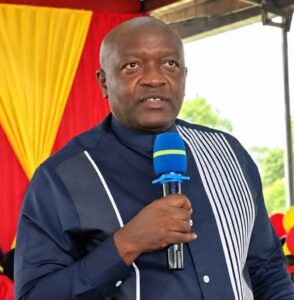
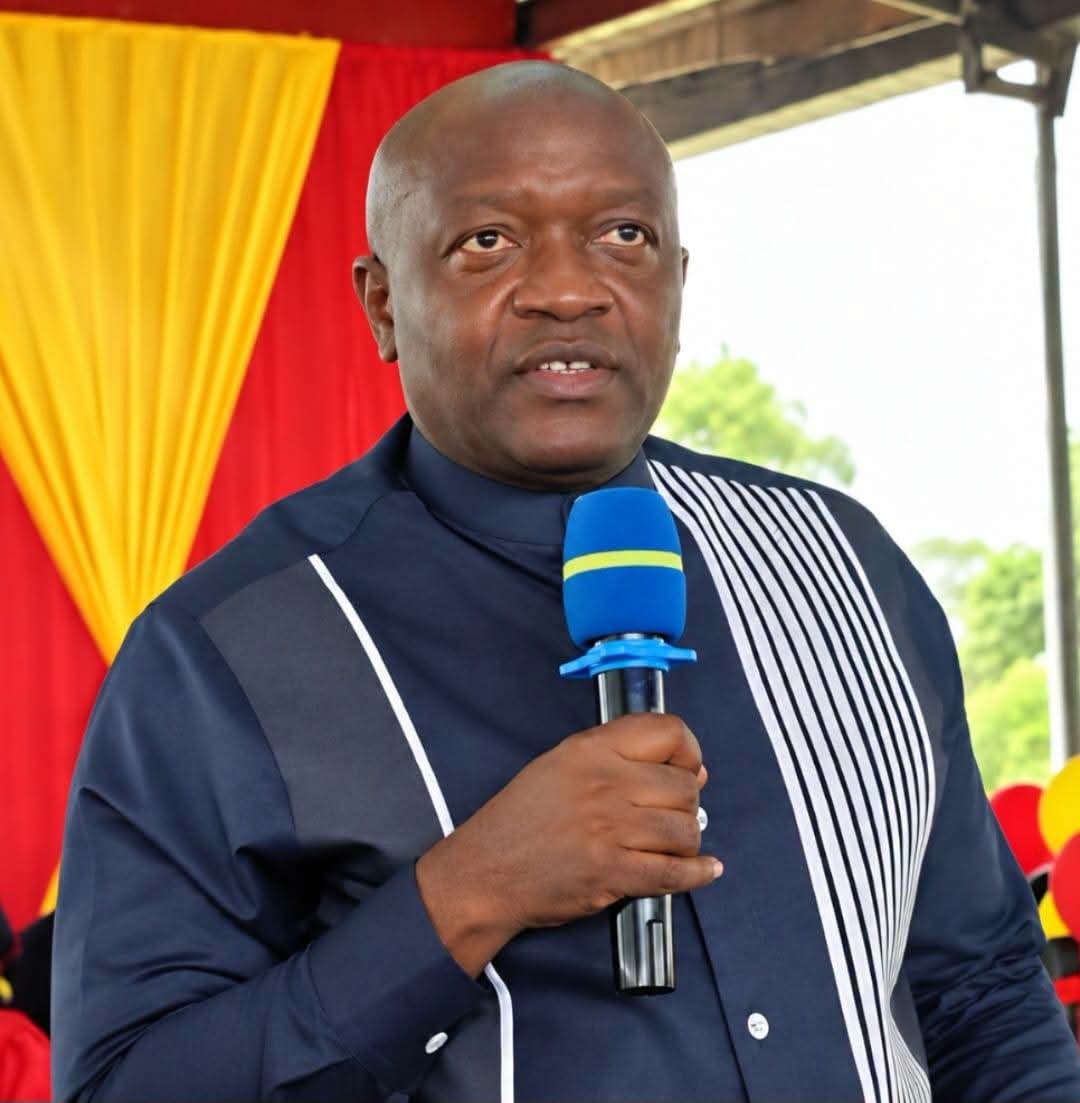
Finance and Development Planning Minister Augustine Kpehe Ngafuan has called on William V. S. Tubman University to position itself as a national center for knowledge, innovation and problem-solving, as Liberia marks the institution’s 17th anniversary as a full-fledged public university.
Speaking Monday in Harper at the university’s 17th Founders’ Day celebration under the theme “Seventeen Years of Excellence: Advancing Knowledge, Innovation and Service,” Ngafuan described the institution as a powerful symbol of Liberia’s ability to recover from war and transform public investment into long-term national development.
Tubman University’s history stretches well beyond its 17 years as a university.
The institution began in August 1978 as William V. S. Tubman College of Technology, with an initial enrollment of 87 students.
Maryland County residents donated land for the institution in honor of former President William V. S. Tubman, while construction was undertaken during the administration of President William R. Tolbert Jr.
The college initially focused heavily on technical disciplines, including architectural, civil, electrical, electronic and mechanical engineering. University records say the institution later became a major producer of Liberia’s technical manpower, with estimates that its graduates accounted for between 50% and 60% of the country’s technocrats in those fields.
The trajectory was violently interrupted by Liberia’s civil war, which began in 1989.
The conflict devastated infrastructure, disrupted academic programs and scattered faculty and students. Institutional records describe extensive damage and looting of buildings, libraries, equipment and other facilities during the conflict.
The rebuilding process gathered momentum after the war. Assessments conducted by the Ministry of Education and the National Commission on Higher Education in 2006–2008 concluded that the institution could be revived and transformed into a full university.
On September 14, 2009, President Ellen Johnson Sirleaf signed legislation transforming the former college into William V. S. Tubman University.
The university opened its new chapter with 287 students, according to historical records.
Seventeen years later, Ngafuan said enrollment has grown to nearly 3,000 students, spread across six colleges and more than 20 degree programs.
The transformation, he argued, demonstrates what can happen when public investment is combined with institutional leadership and community commitment.
Ngafuan said government’s support for Tubman University should be understood as a national investment rather than a regional favor.
He said approximately US$1.5 million in early government support helped launch the institution’s transformation around 2009, while the university’s allocation under the 2026 national budget stands at approximately US$6.4 million.
Liberia’s approved national budget documents show substantial public allocations to Tubman University, reflecting the institution’s continuing importance within the country’s public higher-education system.
The minister said approximately US$1.1 million in the current program is supporting priority capital works and rehabilitation.
Projects cited in his address include rehabilitation of the Academic Complex and Elizabeth Davis-Russell Building, renovations to residences and staff quarters, classroom rehabilitation, work on the old Engineering Building and Monrovia office, reconstruction of the perimeter fence and drainage improvements.
A new College of Engineering and Technology Building is also being developed.
For Ngafuan, the projects represent more than physical construction.
“An unfinished building teaches no class, and an unequipped laboratory conducts no experiment,” he said, calling for government and university authorities to prioritize completion, equipment and maintenance.
Liberia’s Revenue Push Comes Into Focus
The minister’s revenue announcement placed the university celebration within a broader national debate over Liberia’s ability to finance its own development.
The World Bank estimates Liberia’s population at approximately 5.7 million, with the economy valued at about US$5.25 billion in 2025.
The country recorded estimated economic growth of 5 percent in 2025, following 4 percent growth in 2024.
The World Bank has nevertheless continued to identify weak job quality, limited financing, poverty and the need for stronger domestic revenue mobilization as major development challenges facing Liberia.
Against that backdrop, Ngafuan argued that increasing domestic revenue gives the state greater room to finance roads, health facilities, schools, salaries, public transportation and higher education.
But he cautioned against treating US$1 billion as evidence that Liberia’s development challenges have been solved.
The minister said the real measure of government revenue is ultimately whether it improves citizens’ lives through better services and infrastructure.
“The true measure of revenue is not what enters the government’s account. It is what enters the life of the citizen,” he said.
Ngafuan also used his trip to Maryland County to highlight infrastructure improvements in southeastern Liberia, while acknowledging that significant challenges remain.
He pointed to road improvements, public transportation and the expansion of government services outside Monrovia.
The minister said National Transit Authority buses are now operating along routes connecting the Southeast with other parts of the country, describing the development as evidence of Liberia’s gradual effort to reduce the isolation historically experienced by southeastern communities.
But he acknowledged persistent concerns over roads, schools, healthcare, employment and transportation.
Liberia’s infrastructure and human-capital challenges remain significant. World Bank data show that only about 34.9 percent of Liberia’s population had access to electricity in 2024, while internet use stood at approximately 32 percent.
For the government, Ngafuan said, the challenge is therefore not simply to collect more money but to translate increased fiscal capacity into measurable improvements.
At the center of the minister’s address was a broader argument about the economic value of higher education.
Ngafuan said universities should not be viewed simply as institutions that award degrees.
Instead, he described laboratories, trained faculty, scholarships, research grants, reliable internet and modern classrooms as forms of national infrastructure because they create the human capital needed to build and maintain the physical economy.
He challenged Tubman University to connect academic knowledge more directly to Liberia’s development needs.
Agriculture graduates, he said, should help farmers increase productivity; engineers should design infrastructure capable of surviving Liberia’s climate; health professionals should expand access to medical care; teachers should improve learning outcomes; and business graduates should help create employment.
“Knowledge must leave the textbook and enter the rice field. Innovation must leave the laboratory and reach the marketplace,” Ngafuan said.
He argued that this approach would help transform education into an engine for economic growth.
Ngafuan welcomed Tubman University’s move toward greater digitalization.
The university’s Smart School System has introduced digital processes for registration, billing and course selection, while a homegrown online testing platform is being used to modernize examinations.
The minister also highlighted efforts to improve telecommunications connectivity and the approval of graduate programs in Educational Leadership, Business Administration and Construction Management.
He said the expansion of graduate education could create a new platform for advanced professional training in southeastern Liberia.
The challenge, however, will be ensuring that technological modernization translates into improved academic outcomes, stronger research and better employment opportunities for graduates.
Ngafuan proposed what he called a compact for Tubman University’s next five years.
The first priority, he said, should be to complete before multiplying finishing and equipping projects already under construction rather than continuously starting new ones.
Second, the university should strengthen the connection between education and employment through internships, apprenticeships, entrepreneurship programs and closer partnerships with employers.
Third, greater investment should be made in faculty development, including advanced degrees, research and retention of highly qualified academic staff.
Fourth, students should have a meaningful voice in policies affecting their education and welfare.
And fifth, Tubman University should become a problem-solving laboratory for southeastern Liberia.
Ngafuan identified areas such as coastal erosion, climate-resilient infrastructure, renewable energy, sustainable mining, public health, fisheries, food processing, sanitation and trade as potential research priorities.
The minister said the university’s new five-year strategic plan, “Transformation for Worthy Service,” provides a framework built around five pillars: governance, academic excellence, research and innovation, sustainability, and infrastructure.
Among its targets are having 80 percent of graduates employed within six months, at least 10 percent of graduates establishing businesses within three years, and increasing non-government revenue by 20 percent over five years.
Ngafuan said sustaining Tubman University’s expansion will require more than government funding.
He called on Liberia’s private sector to support laboratories, internships, research and curriculum development, while encouraging development partners to align assistance with the university’s strategic plan.
He also urged alumni to contribute through scholarships, mentorship, equipment, professional expertise and internship opportunities.
The university, he said, should diversify its own revenue through professional education, applied research, consulting, grants and other carefully managed activities while ensuring that financial sustainability does not make education inaccessible to poorer Liberian students.
Turning directly to students, Ngafuan urged them to treat their university years as preparation for national service rather than merely a pathway to obtaining certificates.
He recalled visiting Tubman University in February 2014 for Career Day while serving as Foreign Minister, saying his long journey from Monrovia had reinforced his belief that Liberian policymakers must understand conditions beyond the capital.
Twelve years later, he said, the message remains relevant.
Students, he argued, must develop competence, integrity, communication skills, discipline, adaptability and a willingness to solve problems.
“Do not come here only to collect a degree,” Ngafuan told students. “Develop the competence to solve problems, work with others, communicate clearly, act with integrity and continue learning.”
He also warned students against drugs, dishonesty, idleness and destructive peer pressure, urging them to recognize the value of time and opportunity.
The minister encouraged students to remain ambitious while ensuring that their ambitions contribute to the country’s broader development.
In one of the most memorable lines of his address, Ngafuan urged young Liberians not to disconnect themselves from the country’s problems.
“We cannot log out of our country. We must remain logged in to our country,” he said.
For the minister, the message was particularly relevant to students at Tubman University because southeastern Liberia possesses significant agricultural, mineral, fisheries, forestry, coastal and tourism potential.
The Southeast, he argued, should not be viewed as the geographical edge of Liberia but as a frontier of economic opportunity.
The challenge is turning natural resources into sustainable economic value through knowledge, innovation, infrastructure and responsible management.
The World Bank’s latest figures underline both Liberia’s economic progress and the scale of the challenge ahead.
Liberia’s economy expanded by about 5 percent in 2025, but the country continues to face poverty, limited access to infrastructure and weak job quality.
That makes institutions such as Tubman University strategically important, Ngafuan said.
A stronger university in the Southeast could help supply engineers, teachers, health professionals, entrepreneurs, agricultural specialists, researchers and public administrators needed to transform the region.
The institution’s development therefore has implications beyond Maryland County.
‘This Is Not Only Maryland’s University’
As he concluded his address, Ngafuan framed Tubman University as a national institution whose location in southeastern Liberia should be viewed as an advantage rather than a limitation.
“This is not only Maryland’s university. It is not only the Southeast’s university. It is a national university located in the Southeast and serving the Republic of Liberia,” he said.
Seventeen years after the transformation of Tubman College of Technology into a university, the institution has moved from a postwar reconstruction project toward a broader question of sustainability and excellence.
Its challenge now is not simply survival.
It is whether a public university thousands of miles from the centers of global knowledge can become a competitive institution that produces research, skills, businesses and public services capable of changing Liberia.
Ngafuan said the answer must be yes.
The minister pledged that government would seek predictable support within the limits of the national budget, prioritize completion of ongoing infrastructure, demand value for money and work with the university and partners to strengthen transportation, connectivity, student housing, faculty development, research and learning facilities.
His closing message returned to the history of the institution.
The grounds in Harper, he said, remember the optimism of 1978, the devastation of war, the rebuilding that followed and the creation of the university in 2009.
The next chapter, he argued, must be about excellence.
“The task of the next seventeen years is not merely to keep it alive. The task is to make it excellent, innovative, sustainable and second to none,” Ngafuan said.
He called on the university to rise in knowledge, innovation and service and for its progress to become part of Liberia’s broader national renewal.
Seventeen years after its rebirth as a university, Tubman University now stands at another turning point: from rebuilding what war destroyed to creating the knowledge economy Liberia needs for the future.


