


By : Julius Konton
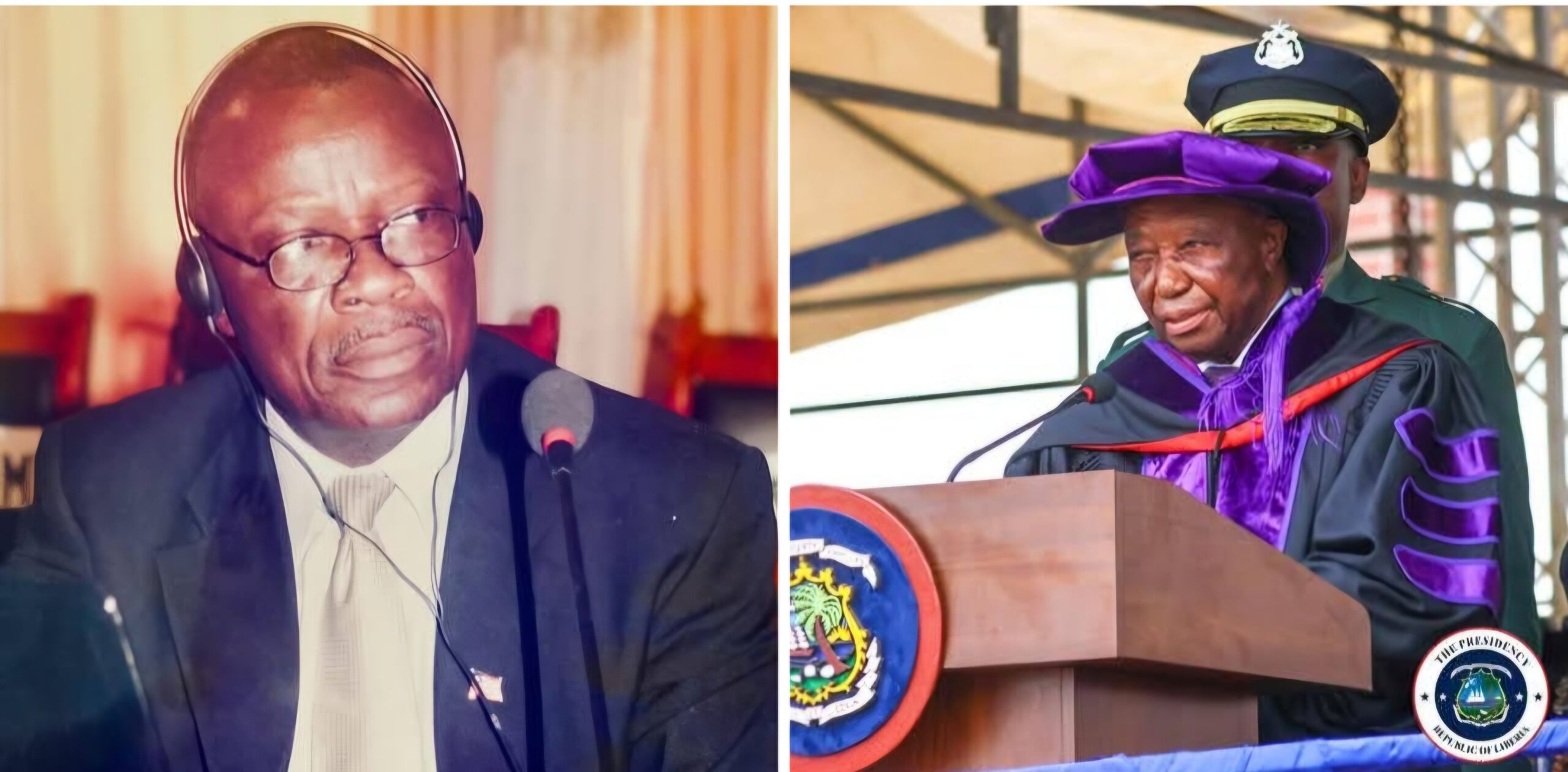
In a symbolic and financially significant intervention aimed at revitalizing Liberia’s struggling research ecosystem, President Joseph Nyuma Boakai has made a personal donation of US$50,000 toward the construction of a modern research laboratory at the University of Liberia, a move widely praised by education stakeholders as a bold commitment to academic innovation and national development.
Former Director General of the National Commission on Higher Education, Dr. Michael P. Slawon, described the gesture as “visionary, timely, and deeply consequential” for a country seeking to rebuild its intellectual and scientific foundations after decades of conflict, underinvestment, and institutional decline.
A Graduation Proposal Turned Presidential Action
The donation was announced during the 105th Commencement Convocation of the University of Liberia, where graduating students formally proposed the establishment of a modern research laboratory, an infrastructure gap that has long constrained scientific inquiry, innovation, and postgraduate research in the country.
President Boakai, serving as Visitor to the University, immediately embraced the proposal and committed his personal funds to initiate the project.
According to the President, the money was sourced from savings accumulated through a voluntary reduction of his presidential salary, a policy he has maintained since taking office to redirect resources toward targeted national priorities.
“Education remains the most sustainable investment for any nation,” the President noted, emphasizing that research capacity is central to Liberia’s long-term competitiveness and development.
Why Research Matters: Liberia’s Structural Deficit
Liberia allocates less than 0.2% of GDP to research and development, far below the African Union’s recommended minimum of 1%, according to regional education benchmarks.
Most public universities lack functional laboratories, peer-reviewed research output remains limited, and postgraduate research opportunities are scarce.
Education experts argue that this deficit has contributed to:
Low global university rankings,
Limited innovation in agriculture, health, and engineering,
Overdependence on foreign expertise and donor-driven research.
Dr. Slawon stressed that the President’s intervention, though modest in financial size, carries outsized symbolic and strategic importance.
“A leader who supports research is not merely funding infrastructure, he is shaping the intellectual future of the nation,” Slawon said.
Dr. Slawon’s Legacy: Reform, Expansion, and Quality Control
As former Director General of Higher Education, Dr. Slawon was instrumental in some of Liberia’s most consequential tertiary education reforms.
Under his leadership:
Public higher education institutions expanded beyond Monrovia, reducing rural-urban migration pressures on students.
National enrollment in tertiary institutions increased significantly, easing congestion at the University of Liberia.
Dozens of bogus and unaccredited universities were shut down, restoring credibility to Liberia’s degree system and protecting students from fraudulent qualifications.
These reforms helped rebuild public confidence in the higher education sub-sector and aligned Liberia more closely with regional accreditation standards.
Education as Nation-Building
Dr. Slawon framed President Boakai’s donation as part of a broader philosophy of governance, one that sees education not as expenditure, but as nation-building infrastructure.
“A president who thinks about laboratories, research, and innovation is thinking beyond elections, he is thinking about generations yet unborn,” Slawon emphasized.
Analysts note that the President’s action also sets a precedent for private-sector leaders, alumni, and development partners to co-invest in research-driven education.
A Catalyst, Not a Conclusion
While US$50,000 alone cannot resolve Liberia’s deep research financing gap, education advocates say it can serve as a catalyst for broader reforms, including:
Increased government budgetary allocation to research,
Stronger university industry partnerships,
Incentives for postgraduate and applied research.
For the graduating class that made the proposal and for the wider academic community the President’s response has transformed a ceremonial moment into a tangible step toward institutional renewal.
As Liberia seeks to reposition itself in a knowledge-driven global economy, many observers believe this gesture could mark the beginning of a more research-centered future for the nation’s universities.


