


By: Julius Konton
President Joseph Nyuma Boakai Sr. has called on ministries, agencies and government institutions across Liberia to accelerate efforts to modernize their infrastructure, strengthen human capital and improve public service delivery as his administration seeks to advance its national development agenda.
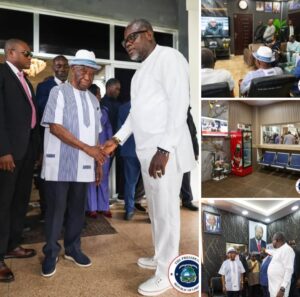
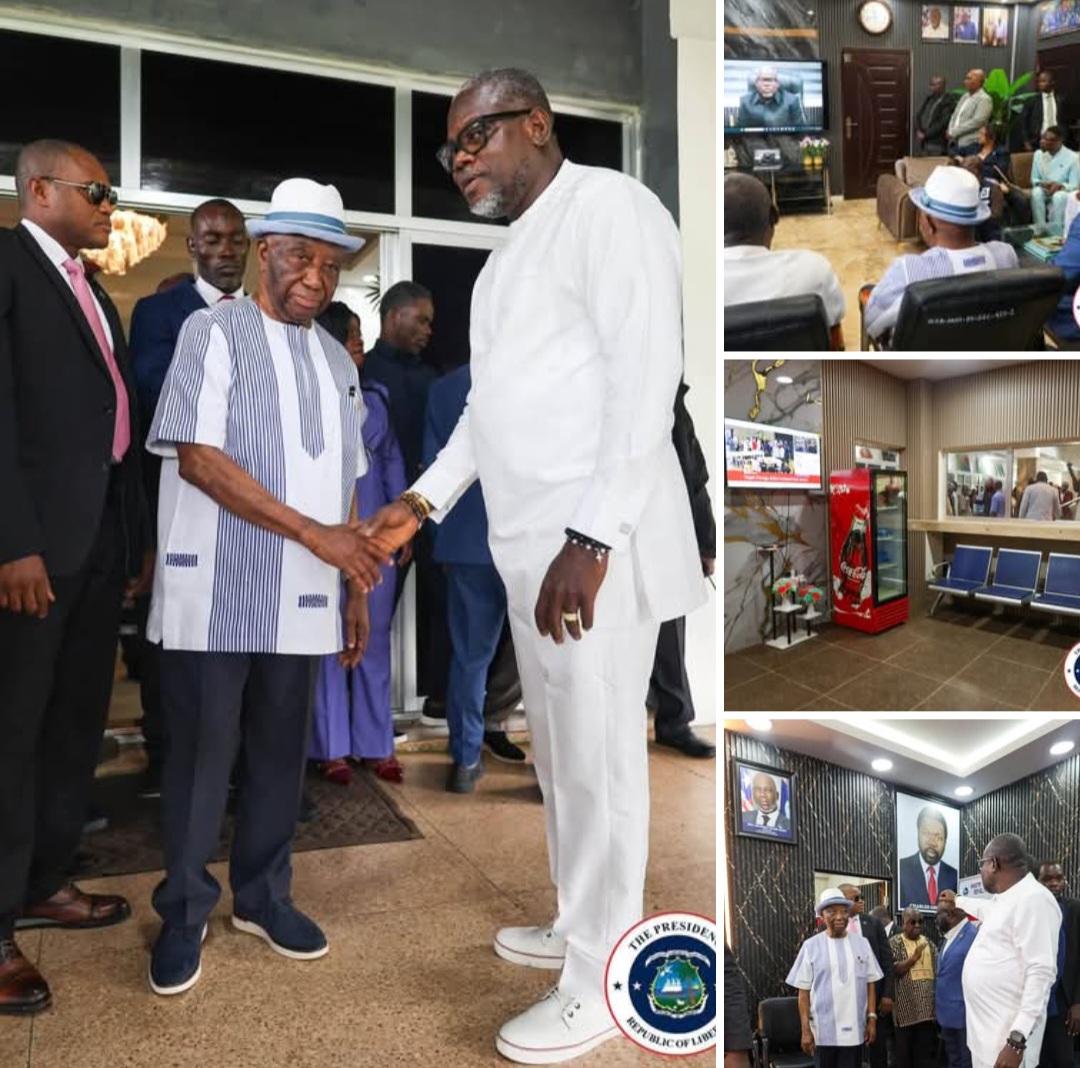
President Boakai made the appeal Wednesday during a guided tour of the newly refurbished Ministry of Information building in Monrovia, where he praised the ministry’s leadership for improving its physical facilities and urged other government institutions to pursue similar investments.
The President said modern government infrastructure must be matched by a modern, capable workforce capable of maintaining facilities, adopting new technologies and delivering efficient services to citizens.
“When our people’s minds are built, development will thrive unimaginably,” President Boakai said, emphasizing human capital as one of the country’s most important long-term development assets.
The President commended Information Minister Jerolinmek Matthew Piah and the ministry’s management and staff for what he described as a development-oriented approach to improving the institution.
“Thank you very much for the renovation of the building and thanks to everyone for the maintenance of its facilities.
We encourage everyone to do the same,” President Boakai told Minister Piah and ministry officials.
The President’s remarks come as Liberia attempts to translate improving macroeconomic indicators into tangible improvements in public services and living conditions.
The International Monetary Fund reported in June that Liberia’s economy was projected to grow by 5.5 percent in 2026, supported largely by mining, manufacturing and construction, after strong economic performance in the previous year.
The IMF’s April assessment also said Liberia’s economy grew by 5.1 percent in 2025, while warning that continued progress would depend on effective implementation of reforms under the government’s ARREST Agenda for Inclusive Development.
But economic growth alone remains insufficient to address Liberia’s substantial development needs.
World Bank data show that only about 32.5 percent of Liberia’s population had access to electricity in 2023, compared with more than 90 percent globally.
Internet use stood at approximately 32 percent of the population in 2025, highlighting both the scale of Liberia’s digital divide and the potential importance of modernizing government institutions and public communications.
With a population of roughly 5.85 million, Liberia faces the challenge of expanding public infrastructure and services while simultaneously developing the skills required to operate an increasingly digital and interconnected economy.
The Ministry of Information occupies a particularly important position in the government’s modernization effort because it serves as a principal interface between the state, the media and the public.
The ministry, established in 1965, is responsible for disseminating government information, coordinating public communication and facilitating engagement between government and citizens.
Its Press and Public Affairs Department conducts press conferences, public outreach and public-diplomacy activities, while its information services include press, audiovisual and broadcasting functions.
That mandate has become increasingly significant as Liberia moves toward digital communication, with government institutions facing growing demands for timely, transparent and accessible information.
The ministry’s current leadership includes Minister Jerolinmek Matthew Piah, Deputy Minister for Administration Johnny S. Tarkpah, Deputy Minister for Press and Public Affairs Daniel O. Sando and Deputy Minister for Technical Services Nat Bayjay among others.
President Boakai’s message extended beyond the physical renovation of the ministry.
He urged heads of government institutions to recognize that buildings, equipment and other infrastructure can only produce sustainable results when supported by qualified personnel and a culture of professionalism, accountability and maintenance.
The President therefore challenged officials to become more responsive to the citizens they serve and to ensure that government programs produce measurable improvements in people’s lives.
He stressed that the people of Liberia remain the country’s greatest national asset.
The emphasis on human capital also comes at a critical moment for Liberia, where the government’s broader development strategy requires stronger institutions capable of implementing infrastructure, education, healthcare, energy, digital-transformation and economic-development programs.
The President’s call for modern government institutions also places greater responsibility on public officials to demonstrate that investments in government facilities translate into better services.
For many Liberians, the central question is not simply whether government buildings are renovated, but whether those investments lead to faster services, greater transparency, improved communication and more responsive institutions.
As Liberia’s economy expands and development financing increases, the effectiveness of government institutions will remain crucial to determining whether growth can be converted into broad-based national development.
The IMF has said Liberia’s medium-term economic prospects remain favorable but has also highlighted the need for continued structural reforms, fiscal discipline and stronger implementation.
President Boakai’s visit to the Information Ministry therefore carried a message extending beyond the refurbished building: modern infrastructure, he argued, must be accompanied by modern thinking, capable people and a stronger culture of public service.
Following the President’s remarks, Minister Piah, senior management and staff led the Liberian leader on a guided tour of the refurbished facilities, showcasing improvements made to the ministry’s working environment and infrastructure.
For an administration seeking to demonstrate that development should be visible in government institutions as well as in major national projects, the renovated Information Ministry has emerged as a symbolic test of whether Liberia can combine physical modernization with institutional transformation.


