




By: Julius Konton
President Joseph Nyuma Boakai Sr. has announced a new round of strategic appointments affecting key economic and energy institutions, reinforcing his administration’s commitment to strengthening governance, enhancing institutional performance, and advancing Liberia’s long-term development agenda.
The latest appointments target the Ministry of Finance and Development Planning (MFDP) and the Liberia Petroleum Refinery Corporation (LPRC), two critical pillars in the country’s fiscal management and energy infrastructure.
Strengthening Fiscal Leadership at MFDP
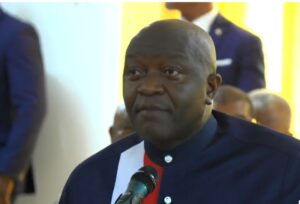
In a move widely seen as pivotal to improving administrative efficiency, President Boakai has appointed Bennedict Harleyson as Deputy Minister for Administration at the Ministry of Finance and Development Planning.
The Ministry, which oversees Liberia’s national budget estimated at approximately US$738 million for the 2025 fiscal year plays a central role in economic planning, revenue mobilization, and public financial management reforms.
Analysts note that strong administrative leadership within the MFDP is essential for ensuring fiscal discipline and effective implementation of national development programs.
Mr. Harleyson’s appointment comes at a time when Liberia continues to implement reforms aligned with international financial standards, including commitments under programs supported by institutions such as the International Monetary Fund (IMF) and the World Bank.
These reforms emphasize transparency, digitization of public finance systems, and improved expenditure controls.
In an official statement, the MFDP welcomed the appointment, describing it as a “timely reinforcement of administrative capacity” necessary to meet evolving governance demands.
Enhancing Strategic Oversight at LPRC
Simultaneously, President Boakai has appointed Jones R. Taylor, Sr. as a Member of the Board of Directors of the LPRC, the state-owned entity responsible for petroleum storage and distribution across Liberia.
The Liberia Petroleum Refinery Corporation has historically played a vital role in ensuring national fuel security, managing petroleum reserves, and stabilizing supply chains in a country where energy access remains a critical development challenge.
According to regional energy data, Liberia imports 100% of its refined petroleum products, making effective governance of the LPRC essential to mitigating supply disruptions and price volatility.
Strengthened board oversight is expected to enhance strategic planning, operational transparency, and accountability within the corporation.
Industry observers point out that governance reforms in state-owned enterprises like LPRC are crucial for attracting private sector investment and improving service delivery in the energy sector.
A Broader Reform Agenda Rooted in History
President Boakai’s appointments align with a broader historical trajectory of governance reform in Liberia, particularly following the end of the country’s civil conflict in 2003.
Over the past two decades, successive administrations have prioritized rebuilding institutions, restoring public trust, and modernizing economic management systems.
Under the current administration, there has been renewed emphasis on:
Public sector efficiency and accountability
Anti-corruption measures
Digital transformation in financial governance
Energy sector reforms to support economic growth
Experts argue that leadership appointments particularly in finance and energy are instrumental in sustaining these gains and positioning Liberia within the wider West African economic landscape.
Legislative Oversight and Accountability
In accordance with Liberian law, the President’s nominations where applicable will be subject to confirmation by the Liberian Senate, a process designed to ensure transparency and merit-based public service appointments.
President Boakai has urged all newly appointed officials to uphold the highest standards of professionalism, integrity, and dedication to national service.
Governance and Development Outlook
These appointments come at a critical juncture as Liberia seeks to accelerate economic recovery, strengthen institutional resilience, and address persistent challenges such as infrastructure deficits, unemployment, and energy access.
With global economic pressures and regional competition intensifying, the effectiveness of public institutions like the MFDP and LPRC will play a decisive role in shaping Liberia’s development trajectory.
As Liberia continues its reform journey, the success of these appointments will likely be measured by their impact on fiscal stability, energy reliability, and public confidence in government institutions.


