
By: Julius Konton
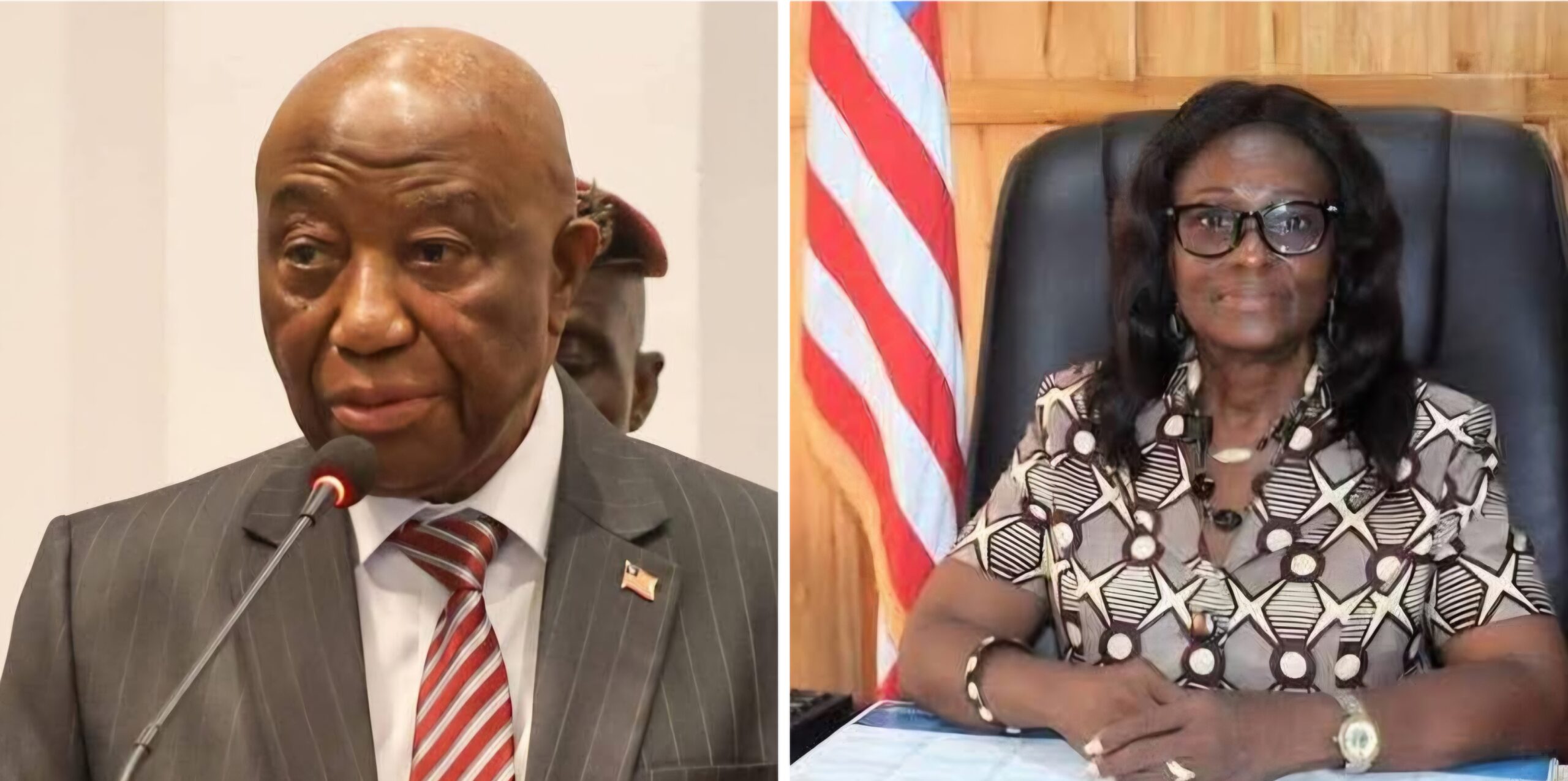
President Joseph Nyuma Boakai Sr. has formally acknowledged the resignation of Davidetta Browne Lansanah, Chairperson of the National Elections Commission (NEC), marking a significant leadership transition in one of Liberia’s most critical democratic institutions.
In an official communication released by the Executive Mansion, the President confirmed that Browne Lansanah’s resignation took effect on March 15, 2026, following what she described as “extensive consultations with family” and a personal decision to step aside after more than 12 years of continuous service to the Commission.
A Decade of Electoral Stewardship
Browne Lansanah’s tenure spans a transformative period in Liberia’s democratic evolution.
First appointed as a Commissioner, she later rose to Chairperson, overseeing multiple electoral cycles in a country still consolidating democratic governance after years of civil conflict that ended in 2003.
During her time at the NEC, Liberia conducted three presidential elections (2011, 2017, and 2023) and several legislative by-elections.
According to electoral data from the NEC, voter turnout has fluctuated between 61% and 75% in presidential elections over the past decade, reflecting both progress and persistent challenges in civic participation.
Her leadership was particularly pivotal during the 2017 elections, which resulted in Liberia’s first democratic transfer of power between two elected presidents in over 70 years, an event widely hailed by international observers, including the European Union Election Observation Mission and ECOWAS, as a milestone for regional stability.
Boakai Praises ‘Institutional Integrity’ Amid Uncertainty
President Boakai commended Browne Lansanah’s “dedicated and exemplary service,” emphasizing her role in strengthening the credibility and institutional resilience of Liberia’s electoral system.
“Her leadership significantly enhanced public confidence in electoral processes and contributed to national stability,” the President noted.
However, the timing of her departure, less than three years after the 2023 general elections has sparked quiet concern among governance analysts about continuity within the NEC, an institution often at the center of political contestation in Liberia.
Transitional Extension Signals Caution
In a move interpreted by analysts as a bid to avoid institutional disruption, President Boakai has requested that Browne Lansanah remain in her role until March 31, 2026, to oversee a smooth transition.
This temporary extension underscores the sensitivity surrounding leadership changes at the NEC, particularly in a country where electoral disputes have historically triggered tensions.
Liberia’s post-war democratic journey has been marked by efforts to strengthen electoral dispute resolution mechanisms and improve transparency.
Experts note that abrupt leadership vacuums in election management bodies across Africa have, in some cases, led to administrative delays and political uncertainty.
By contrast, Liberia’s approach reflects an attempt to maintain continuity while adhering to constitutional procedures.
The Road Ahead: Constitutional Mandate and Political Stakes
President Boakai confirmed that he will initiate the process of nominating a new NEC Chairperson in accordance with Liberia’s Constitution and electoral laws.
The appointment will likely require Senate confirmation, a process that could introduce political scrutiny depending on the nominee.
The NEC plays a central role not only in organizing elections but also in regulating political parties, adjudicating electoral disputes, and maintaining voter registration systems.
With Liberia’s next senatorial and local elections expected within the next electoral cycle, leadership at the Commission remains critical.
Historical Context: Elections and Stability in Liberia
Since the end of its civil war in 2003, Liberia has held four post-conflict presidential elections, gradually building a reputation as a relatively stable democracy in West Africa.
International partners, including the United Nations and the African Union, have consistently supported electoral reforms, voter education, and institutional capacity-building.
Despite these gains, challenges persist.
Issues such as voter roll credibility, logistical constraints, and political polarization continue to test the NEC’s effectiveness.
A Legacy and a Moment of Reflection
In her resignation statement, Browne Lansanah expressed gratitude for the opportunity to serve and highlighted her commitment to ensuring a “smooth and orderly transition.”
Her departure marks the end of an era for Liberia’s electoral governance.
For President Boakai, the task ahead is both administrative and symbolic: appointing a successor capable of sustaining public trust while navigating the complex political landscape of a young democracy.
As Liberia stands at this institutional crossroads, the transition at the NEC will be closely watched both domestically and internationally as commitment to electoral integrity is key for the Country’s democratic process.
