



By : Julius Konton
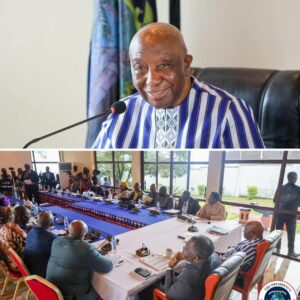
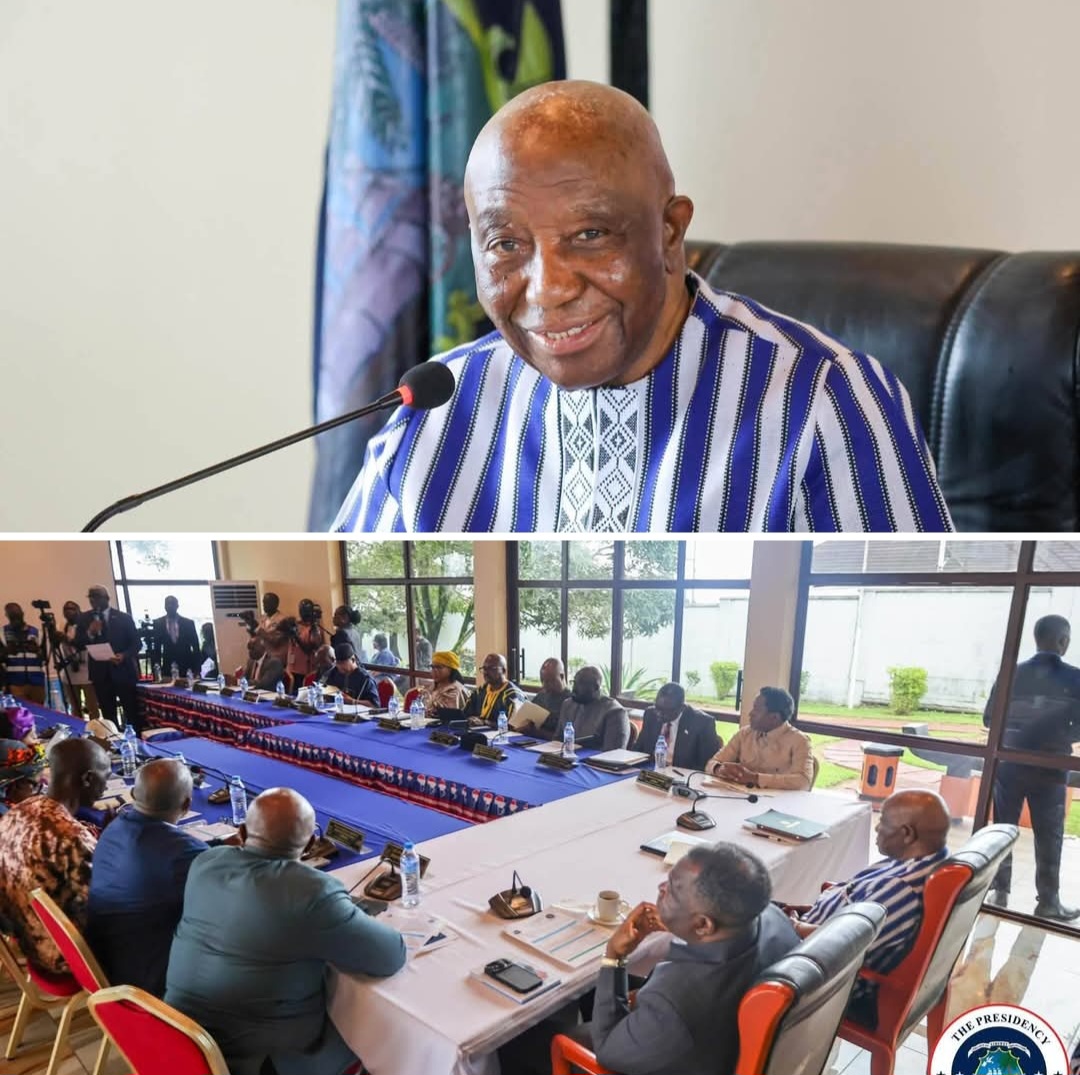
President Joseph Nyuma Boakai Sr. has called on members of his Cabinet and government institutions to strictly comply with Liberia’s public procurement laws, warning that transparent and competitive contracting is essential to protecting state resources, preventing favoritism and ensuring that qualified Liberians have a fair opportunity to participate in government business.
The President made the call Thursday at the opening of the 24th Cabinet meeting in Monrovia, which focused on public procurement and concessions under the theme, “Value for Money; Maximizing Fiscal Space through System Efficiency and Government Asset Security.”
The meeting comes as Liberia continues efforts to strengthen public financial management and improve the efficiency with which scarce government resources are converted into public services and development projects.
President Boakai acknowledged that procurement procedures can sometimes be lengthy and frustrating for government officials and suppliers, but argued that the safeguards are necessary to protect public funds.
“Sometimes people get frustrated about all what you have to do to go through to buy this and buy that; but just imagine if these things were not in place, and even if they are in place, that people there were not implementing them, the resources you are talking about, you will not have them,” the President said.
Procurement as a Governance Tool
Boakai said procurement should not be viewed simply as an administrative process for purchasing goods and services. Instead, he described it as a central component of accountability, fair competition and citizen participation in the national economy.
“When we say procurement in the sense of procurement, it helps with accountability.
It helps with fair play in the market. It also helps with making sure that every citizen has access to rendering services to this country,” he said.
The President stressed that government participation extends beyond public employment, arguing that Liberians can contribute to national development by competitively providing goods, works and services to the state.
“Participation in the government doesn’t mean that everybody will work with the government, but you can serve, you can provide goods and services,” he said.
His comments effectively placed procurement within the broader question of economic opportunity, emphasizing that government contracts should be awarded through transparent procedures rather than personal relationships or political connections.
“To do that in a competitive society, you need to have a process by which everybody can have access without going around saying, well, they give it to their friend, they have this, they have that,” Boakai added.
Liberia’s modern procurement framework emerged from the country’s post-civil-war governance reforms.
Following the end of Liberia’s prolonged conflict, a joint assessment by the Government of Liberia, the United Nations and the World Bank identified significant weaknesses in public procurement and concessions, including inefficiency, limited transparency and inadequate accountability.
Those shortcomings raised concerns about whether government was receiving value for money from public contracts.
The reform process initially established the Contract and Monopolies Commission (CMC) under the 2003 Comprehensive Peace Agreement to oversee contracts and concessions during the National Transitional Government period.
Liberia subsequently enacted the Public Procurement and Concessions Act in 2005, creating the Public Procurement and Concessions Commission (PPCC) as the principal regulatory institution for public procurement and concessions.
The framework was amended and restated in 2010 to address implementation challenges and strengthen transparency, efficiency and accountability.
The PPCC has since become a central institution in Liberia’s public-sector governance architecture, with responsibilities that include regulating procurement, monitoring compliance, reviewing procurement plans and contract awards, building institutional capacity and handling complaints and appeals.
Digital Procurement Expands Oversight
Liberia is also moving toward greater digitization of government contracting.
According to the PPCC, the country’s electronic government procurement system, or e-GP, has been introduced as part of efforts to improve transparency, efficiency and public access to procurement information.
The PPCC reported in its 20-year institutional review that the e-GP system had registered 543 vendors and recorded 132 procurement transactions at the time of that report.
The publicly accessible e-GP contract-award database has since expanded considerably. As of August 2026, it displayed 329 awarded contracts, providing information including procuring entities, suppliers, award dates and contract values.
The figures illustrate the growing importance of digital systems in making government contracting more visible to businesses, oversight institutions and the wider public.
2026 Procurement Reforms Add New Rules
President Boakai’s remarks also come against the backdrop of a significant update to Liberia’s procurement legal and regulatory framework.
The PPCC lists amendments and restatements of the Public Procurement and Concessions Act of 2026, published in January, alongside amended procurement regulations issued in February 2026.
The 2026 regulations provide for procurement thresholds to be reviewed annually, taking into account factors including inflation, exchange-rate movements, prevailing market prices and regional procurement benchmarks within ECOWAS.
The framework also provides mechanisms for complaints, appeals and reviews, giving bidders avenues to challenge alleged irregularities in procurement proceedings.
Under Liberia’s procurement framework, violations involving practices such as kickbacks, bribery, collusion, conflicts of interest and improper contract execution can result in criminal penalties.
The PPCC says a person convicted of violating relevant provisions may face imprisonment of up to five years and/or a fine of up to US$100,000, while violations can also constitute grounds for debarment.
The President’s emphasis on “value for money” reflects a wider challenge confronting Liberia: how to maximize development outcomes from limited fiscal resources.
Public procurement touches virtually every major sector of government from roads and schools to healthcare, agriculture, security, energy and public administration.
Consequently, weaknesses in contracting can have consequences far beyond individual transactions, potentially increasing costs, delaying projects and reducing the resources available for public services.
Conversely, competitive procurement can encourage businesses to compete on price, quality and delivery, while stronger oversight can reduce opportunities for waste, conflicts of interest and abuse.
The PPCC itself describes value for money, transparency, accountability, integrity and fair competition as core principles of Liberia’s procurement system.
Boakai Thanks Cabinet for Service
Beyond procurement, President Boakai used the Cabinet meeting to recognize the work of members of his administration, noting that public officials often attract greater attention when mistakes occur than when they perform their duties effectively.
“People wait for the mistake you make, but we’re in leadership. So we watch and listen. We want to appreciate you very much,” he told Cabinet members.
His message combined appreciation with a renewed demand for institutional discipline: government officials, he suggested, must remain committed to procedures even when those procedures appear inconvenient.
For the Boakai administration, the procurement agenda therefore represents more than compliance with paperwork.
It is increasingly being framed as a test of public-sector efficiency, economic fairness and the government’s ability to protect taxpayers’ money while ensuring that legitimate businesses have an equal opportunity to compete for state contracts.
As Liberia strengthens its procurement laws, expands digital contracting and updates its regulatory thresholds, the President’s directive places implementation at the center of the reform agenda: public resources, he emphasized, must be procured and managed with accountability, competition and measurable value for money.


