
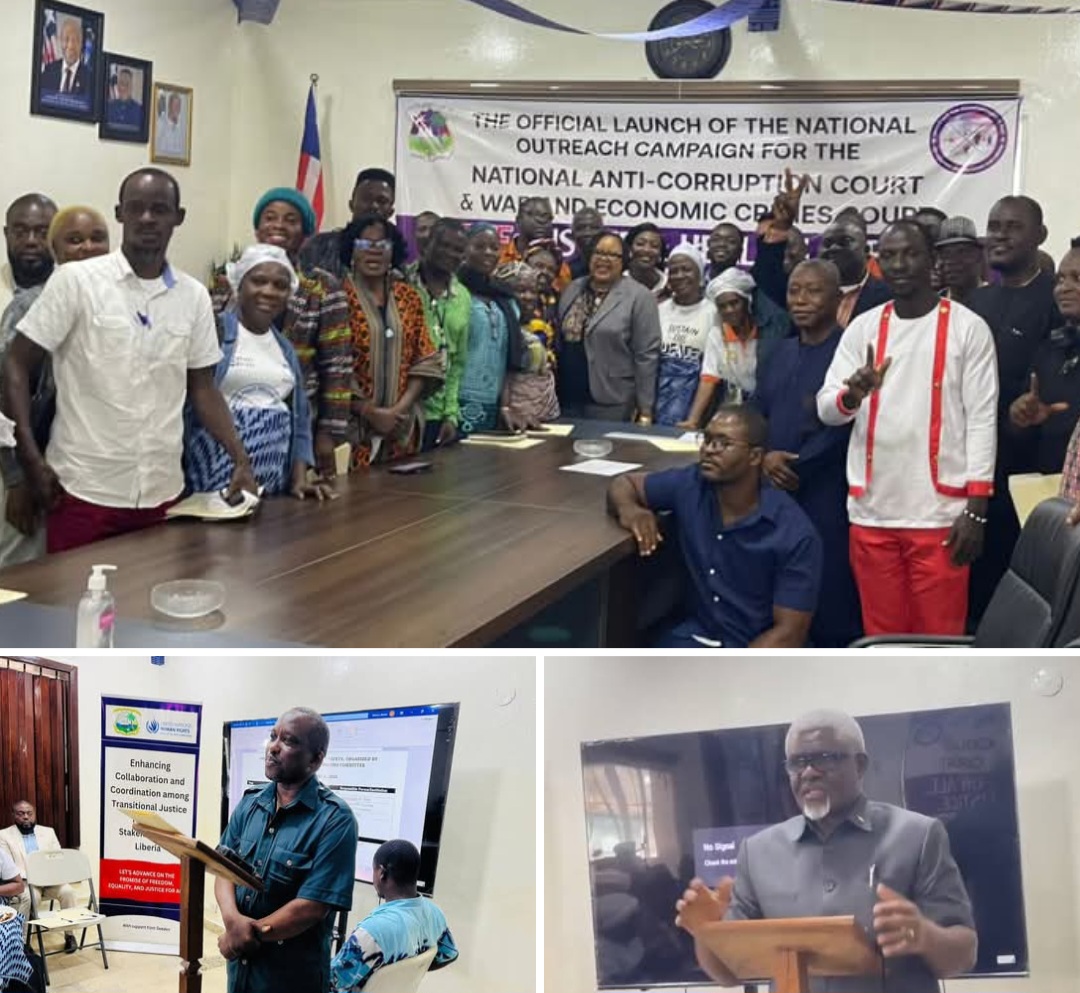
In a move to ensure an effective and efficient information dissemination about the activities of the Office of the Establishment of War and Economic Crimes Court in Liberia, the National outreach coordinating committee has ended an intensive day long training session.
Focused and well determined to make an impact during the process, the one day training among other things centered around proper messaging and safety.
Speaking at the end of the training the Executive Director of OWECC-L Cllr. Jallah Barbu underscored the need for consistent, clear and accurate messaging to ensure that they meet their desire objectives.
Cllr. Barbu reassured OWECC-L’s commitment to an inclusive process which will involve all parties at every step of the way.
He acknowledged the pivotal role the Ministry of Internal Affairs has to play in the process and welcome their full involvement to the core.
Dr. Barbu stressed that it is only through collaboration and collective approach they will succeed in the establishment of the courts in Liberia.
Also speaking was the director of the cabinet Nathaniel Kwaibo who pledged President Joseph Nyuma Boakai’s support to the process.
He said even before President Boakai took over as head of the Country he knew exactly what he wanted to do especially with the issue of transitional justice.
“The President has always been concern about this process and has renewed his commitment to ensure that final closure through this process is done”, he added.
Mr. Kwaibo who also commended the OWECC-L for the level of work done thus far and disclosed that the government is working with other partners in soliciting funding to help empower and support the work of OWECC-L.
“I am excited that the process is on course and we do acknowledged challenges in funding support but the government remains committed to this process “, he reechoed to the gathering.
According to him, Information and education towards such exercise is key as such the training is a welcoming initiative by the OWECC-L.
Meanwhile, the one day session brought together key actors including the traditional leaders, civil society organizations, transitional justice actors among others.
