
By: Julius Konton
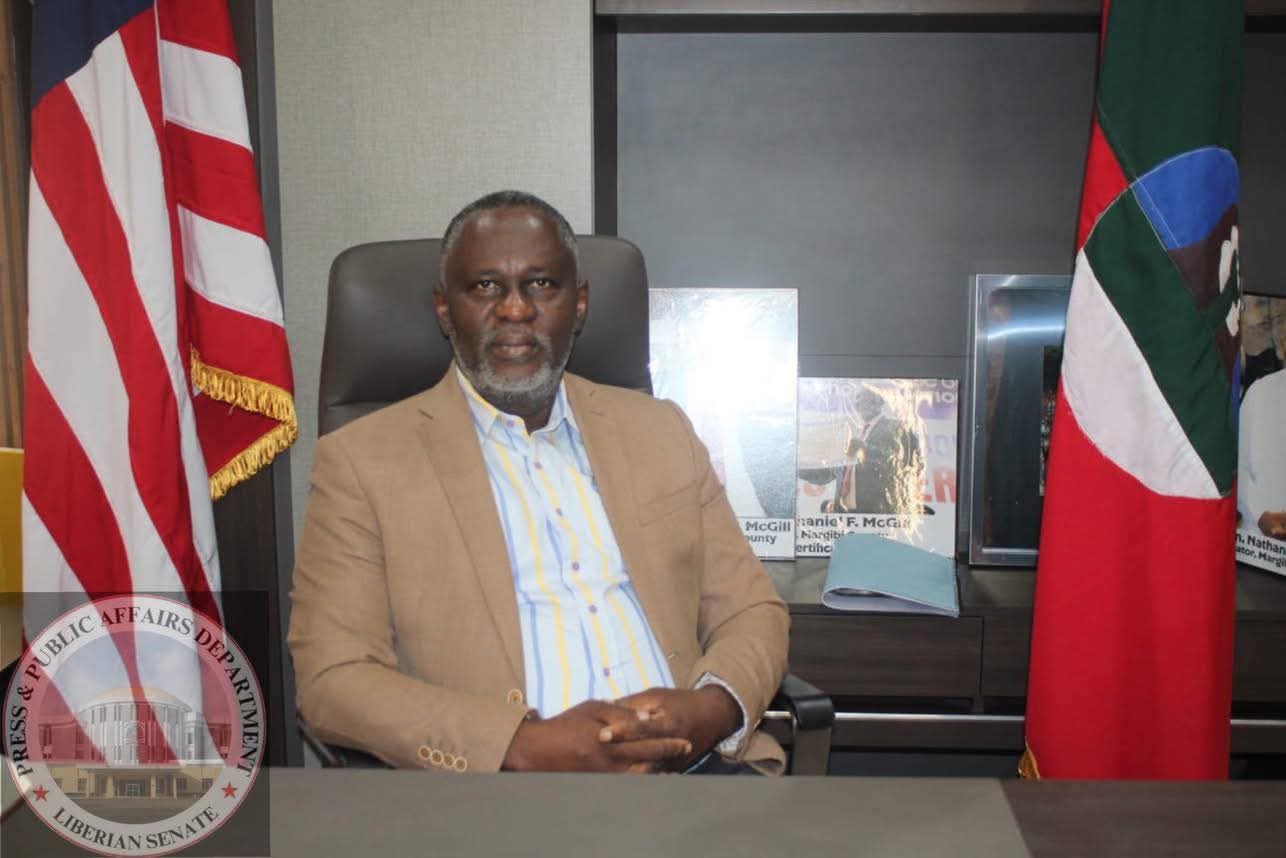
Margibi County Senator Nathaniel F. McGill, has publicly outlined his reasons for voting against the controversial Orantos Petroleum deal, a decision that has intensified debate across Liberia’s political and social landscape.
The Orantos agreement, which recently passed amid heated deliberations at the National Legislature, has polarized lawmakers, civil society actors, and policy analysts, with critics questioning its long-term value to the Liberian economy.
Senator McGill has now positioned himself firmly among those opposed, describing the deal as fundamentally flawed and misaligned with national interests.
“I voted against the Orantos deal because I believe it is a bad agreement that does not serve the best interests of the country,” McGill stated in a public post that quickly gained traction nationwide.
Backing Some Deals, Rejecting Others
In a move that underscores the complexity of the debate, McGill clarified that his opposition is not ideological but selective and evidence-based.
He disclosed that he voted in favor of the HPX and TotalEnergies agreements, which he argued present clearer economic benefits and stronger alignment with Liberia’s development priorities.
“I supported the HPX and TotalEnergies deals because they offer greater value and are more consistent with our national development objectives,” he noted.
Analysts say this distinction challenges the narrative that opposition lawmakers are reflexively blocking investment deals and instead raises questions about transparency, valuation, and national benefit in the Orantos agreement.
Budget Passage Overshadowed by Fresh Controversy
Beyond the Orantos deal, Senator McGill also took a firm stance against the 2026 National Budget, which was passed at an estimated US$1.2 billion, one of the largest fiscal envelopes in Liberia’s history.
Although McGill acknowledged that he physically left the Capitol during the final passage of the budget due to an urgent family emergency, he emphasized that his absence should not be mistaken for consent.
“I strongly oppose the budget,” he declared.
Unresolved Salary Disputes at the Core
McGill cited unresolved and critical concerns, particularly regarding salary increments for civil servants and employees of the Capitol Building, as central to his opposition.
According to him, the relevant legislative committee alledgelly failed or refused to adequately address these issues despite repeated engagements.
Critics argue that while the budget size has expanded significantly, the distribution of benefits remains uneven, with frontline public servants still struggling under rising living costs.
“Despite the budget increasing to US$1.2 billion, these concerns remain unaddressed, making the budget unacceptable in its current form,” McGill stated.
A Broader Political Signal
McGill’s outspoken position is widely seen as a strategic and political signal ahead of intensifying debates over governance, public finance management, and foreign investment oversight under the current administration.
With Liberia facing mounting public pressure over economic accountability, critics say the controversy surrounding the Orantos deal and the national budget reflects deeper concerns about value-for-money, legislative scrutiny, and social equity.
As debates rage on at Capitol Hill and beyond, McGill’s dissent has ensured that both the Orantos agreement and the 2026 National Budget will remain under public and political scrutiny long after the votes have been cast.
Editor’s Note
This article examines Senator Nathaniel F. McGill’s opposition to the Orantos Petroleum agreement and Liberia’s US$1.2 billion national budget, two decisions that have sparked intense national debate.
The piece reflects Senator McGill’s publicly stated positions and contextualizes them within broader legislative, economic, and governance concerns currently facing Liberia.
While the article highlights criticisms raised by the senator and aligned analysts, it does not constitute an endorsement of any political stance.
Readers are encouraged to consider responses from the executive branch, proponents of the Orantos deal, and budget architects to gain a balanced understanding of the issues shaping Liberia’s investment climate and fiscal policy.
