



By: Julius Konton
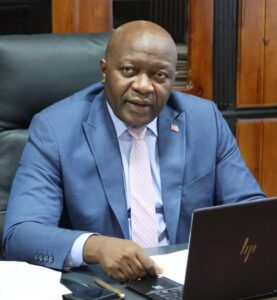
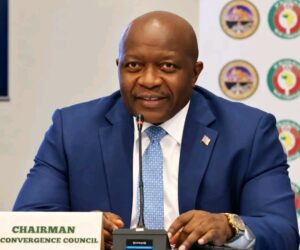
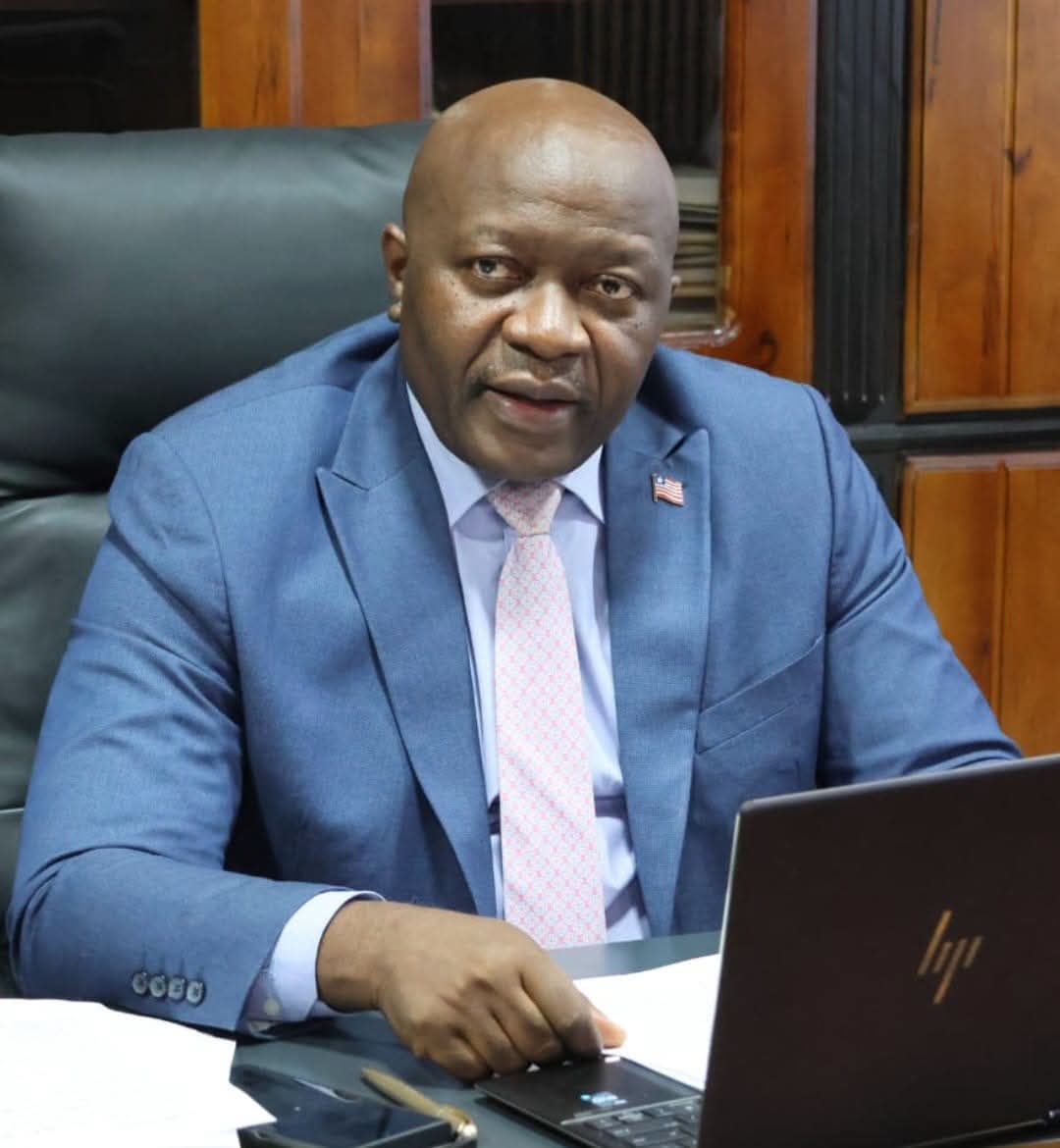
Liberia has taken a prominent role in West Africa’s renewed drive toward monetary integration, with Finance and Development Planning Minister Augustine Kpehe Ngafuan chairing the 56th Meeting of the Convergence Council of the West African Monetary Zone (WAMZ) on Monday, September 7, 2026.
The virtual meeting brings together Finance Ministers, Central Bank Governors, regional monetary institutions and development partners to assess progress toward macroeconomic convergence and the long-standing ambition of establishing a single West African currency, the Eco, targeted for launch in 2027.
Opening the high-level session, Ngafuan said the meeting represented another critical step in the region’s efforts to strengthen economic coordination, harmonize policies and establish the conditions necessary for a stable monetary union.
He said Liberia’s participation reflected President Joseph Nyuma Boakai’s administration’s commitment to regional integration, noting that Monrovia hosted the end-year Joint Statutory Meetings of ECOWAS, the West African Monetary Agency (WAMA), the West African Monetary Institute (WAMI) and the West African Institute for Financial and Economic Management (WAIFEM) earlier in 2026.
The September meeting follows the 59th Meeting of the WAMZ Technical Committee held August 27–29 and the 53rd Meeting of the Committee of Governors held September 3–4.
Those meetings reviewed the WAMZ Macroeconomic Developments and Convergence Report through December 2025, policy research on currency-crisis vulnerability and inflation-targeting frameworks, progress toward integrating regional debt and capital markets, and developments surrounding the Pan-African Payment and Settlement System (PAPSS).
The deliberations also examined financial-sector supervision and regulatory cooperation involving banking, non-bank financial institutions and insurance institutions across the monetary zone.
The meeting comes as WAMZ economies show measurable improvement in their convergence performance, although substantial gaps remain.
According to figures presented to the Council, compliance with the primary convergence criteria increased to 45.8 percent in 2025, compared with 41.7 percent in 2024.
Compliance with the secondary criteria also rose sharply to 91.7 percent, bringing the overall convergence score to 61.1 percent, up from 52.8 percent a year earlier.
Despite the progress, no WAMZ member state met all four primary convergence criteria in 2025, underscoring the scale of the challenge facing policymakers as they work toward the proposed 2027 Eco timetable.
The monetary integration effort is rooted in the broader ECOWAS Monetary Cooperation Programme, with member states seeking stronger fiscal discipline, price stability, sustainable public debt, adequate foreign-exchange reserves and greater coordination of monetary policies before adopting a common currency.
Ngafuan warned that the path toward monetary union would be tested by external shocks, geopolitical tensions, commodity-price volatility and structural weaknesses within member economies.
“As we advance toward the 2027 target for the launch of the Eco, our collective progress will continue to be tested by external headwinds, geopolitical tensions, commodity price volatility, and structural constraints across our economies,” he told delegates.
Despite a difficult global environment, economies within the WAMZ are showing signs of strengthening.
The regional economy grew by an estimated 4.7 percent in 2025, compared with 4.2 percent in 2024, and is projected in the Council’s presentation to expand by approximately 5.3 percent in 2026.
The improvement comes against a backdrop of continued global uncertainty, including conflicts in the Middle East, elevated energy and transportation costs, tighter international financial conditions and weaker external demand.
For West Africa, these global developments are particularly significant because many economies remain highly exposed to movements in international prices for fuel, food, minerals and other commodities.
The renewed emphasis on convergence therefore extends beyond currency policy.
It encompasses fiscal management, debt sustainability, financial-sector stability, payment systems and the creation of an integrated regional market capable of absorbing external shocks.
For Liberia, Ngafuan presented a picture of improving macroeconomic stability, with real GDP growth estimated at 5.1 percent in 2025, compared with 4.0 percent in 2024.
The latest IMF assessment is even more positive about the near-term outlook, projecting 5.5 percent real GDP growth for 2026, supported primarily by mining, construction and manufacturing.
Mining particularly iron ore is expected to remain one of the principal engines of growth, while construction and manufacturing are also projected to contribute to economic expansion.
The IMF has likewise noted that Liberia’s recent growth momentum has been supported by robust mining activity, especially iron ore production, alongside manufacturing and construction.
Inflation has also emerged as an important indicator of Liberia’s improving macroeconomic position.
Ngafuan said end-period inflation declined to 4.0 percent in December 2025, from 10.7 percent a year earlier.
Although imported fuel-price pressures pushed inflation higher during 2026, the IMF reported that inflation averaged 4.5 percent during the first half of 2026, while warning that it could rise toward approximately 6 percent in the near term because of spillovers from the Middle East conflict.
Inflation remains particularly important for Liberia because price stability is one of the principal conditions for meeting regional monetary-convergence requirements.
The government therefore faces the dual challenge of maintaining economic growth while preventing renewed price pressures from undermining household purchasing power and macroeconomic stability.
Fiscal performance has been another central feature of Liberia’s recent economic story.
The government has reported significant improvements in domestic revenue mobilization, supported by stronger tax administration, digitalization and compliance.
IMF data show that Liberia’s tax revenue reached approximately 15.9 percent of GDP in 2025, compared with 14.5 percent in 2024.
The government has also placed increasing emphasis on reducing dependence on external financing by strengthening domestic resource mobilization.
President Boakai reported that Liberia collected approximately US$847.7 million in domestic revenue during FY2025, exceeding the budget target and representing the country’s highest domestic revenue collection on record at the time.
The improvement comes as Liberia seeks to finance major investments under its ARREST Agenda for Inclusive Development, which prioritizes agriculture, roads, the rule of law, education, sanitation and tourism.
Liberia’s public debt position has also improved when measured against the size of the economy.
IMF data put total public debt at approximately US$2.86 billion at the end of 2025, equivalent to 54.9 percent of GDP, down from 56.4 percent of GDP in 2024.
That remains below the 70 percent regional ceiling referenced in the WAMZ convergence framework.
Ngafuan said Liberia met three of the four primary convergence benchmarks in 2025—covering the fiscal deficit, central bank financing of the budget deficit and international reserves while inflation remained the principal outstanding primary criterion.
Liberia also met both secondary convergence benchmarks, according to the minister.
The government is simultaneously linking macroeconomic stability to infrastructure development.
Major road projects highlighted by Ngafuan include the Monrovia–Freetown corridor, the southeastern road network connecting Liberia toward Côte d’Ivoire, and the Bong–Lofa road corridor, which is expected to strengthen domestic connectivity and regional trade.
The projects are part of a broader effort to reduce transportation costs, improve market access and strengthen Liberia’s participation in regional trade networks.
Energy infrastructure is another major priority, with the government pursuing additional hydropower capacity, expansion of the national electricity grid and increased access in Grand Bassa and southeastern Liberia.
Liberia is also preparing for a major transformation of its indirect-tax system.
The government has been working toward the introduction of a Value Added Tax (VAT) regime, with the transition linked to broader ECOWAS tax-harmonization objectives.
The country has also expanded digital systems for tax administration and payments while advancing financial-sector reforms.
These include the Liberia Integrated Tax Administration System, the Inclusive Instant Payment System and participation in PAPSS, which is designed to facilitate cross-border payments in African currencies and reduce reliance on external currencies for intra-African trade.
The government has also strengthened the legal framework governing financial institutions, including the Banking and Financial Institutions Act of 2025 and measures designed to improve crisis management and financial stability.
The outlook for Liberia remains broadly positive, although policymakers face considerable risks.
The IMF expects growth to remain around 5.5 percent in 2026, with mining, construction and manufacturing continuing to provide momentum.
Inflation is expected to remain manageable but could face pressure from international energy and food prices, while the current-account deficit is projected to widen because of strong import demand.
The IMF also expects Liberia’s external financing position to remain supported by foreign direct investment and concessional borrowing.
For the government, the immediate challenge will be to preserve fiscal discipline while expanding infrastructure investment and social spending.
The broader challenge is to convert improved macroeconomic indicators into sustained improvements in employment, incomes, electricity access, transportation and living standards.
For WAMZ policymakers, however, the central issue extends beyond Liberia.
The proposed Eco represents one of West Africa’s most ambitious regional integration projects, but the road to a common currency has been marked by repeated delays, economic shocks and differences in macroeconomic performance among member states.
The experience of the European Union’s euro project demonstrates that monetary union requires more than the introduction of a common currency.
It depends on durable fiscal discipline, strong institutions, financial-sector coordination, credible monetary policy and the ability of member economies to withstand asymmetric economic shocks.
For West Africa, those requirements are particularly significant given differences in economic structures, inflation rates, exchange-rate regimes, fiscal positions and levels of development.
Ngafuan called on member states to maintain the reform momentum.
He said the region must continue implementing monetary, fiscal and structural reforms if it is to establish a stable and prosperous monetary union capable of delivering tangible benefits to its citizens.
As chair of the WAMZ Convergence Council, Liberia has pledged to support the WAMZ work programme and the wider ECOWAS single-currency agenda.
The September 7 meeting therefore represents more than another statutory regional gathering.
It is part of a continuing effort to determine whether West Africa can transform decades of monetary-integration ambitions into a functioning common currency by 2027.
For Liberia, the challenge is twofold: maintaining its own improving macroeconomic performance while helping build the regional economic foundations that would make the proposed Eco viable.
With convergence indicators improving but key benchmarks still unmet across the region, the next phase will depend on whether governments can translate policy commitments into sustained reforms and whether those reforms can withstand the external shocks increasingly shaping the global economy.


